|
Blunkett the big winner with raft of bills
The Home Office was the big winner in the Queen's Speech, receiving parliamentary time for a range of bills in the run-up to the general election.
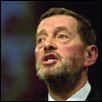
David Blunkett got the lion's share of legislation in a bid to ensure Labour is not outflanked on law and order during the election campaign.
Tough new measures on drugs, anti-social behaviour and crime were introduced alongside bills paving the way for new correctional services.
The home secretary also got the chance to pilot his Charities Bill through parliament, which defines the work of the voluntary sector and sets public interest tests for organisations to qualify for charitable status.
But Blunkett's flagship bill for is set to establish a legal footing for identity cards to combat terrorism, illegal immigration and employment abuses.
Drugs
As part of a renewed crackdown on anti-social behaviour - a key theme of Labour's second term in power - compulsory drug testing will be introduced for minor offences.
A Drugs Bill will extend the department's drug intervention programme will be so that more tests on offenders will take place, while tightening the law on supplying illegal substances.
But a spokesman denied media reports that it would make it possible to be prosecuted for the possession of drugs based on blood tests alone.
The Home Office will have heavy input into the Clean Neighbourhoods Bill - a joint collaboration between itself, the Department for Environment, Food and Rural Affairs and the Office of the Deputy Prime Minister.
It will give town halls new powers to tackle graffiti, abandoned cars, fly posters and devolve decisions on using fixed penalty notices for environmental offences and anti-social behaviour to a local level.
And Blunkett's drive to create a new offence of religious discrimination will be included in the Department of Trade and Industry's Equality Bill.
Agencies
In two big structural changes, the new FBI-style Serious Organised Crime Agency (SOCA) and National Offender Management Service (NOMS) will be put on a legal footing.
The Serious Organised Crime and Police Bill will bring together more than 5,000 staff from the Criminal Intelligence Service, National Crime Squad, parts of the Immigration Service and Customs and Excise in a bid to co-ordinate efforts against offences such as smuggling, people trafficking and fraud.
It will also implement radical reforms of police services, giving councillors more power over setting local priorities.
And plans to impose new restrictions on animal rights extremists will be included in this legislation in response to concerns that intimidatory tactics are hindering scientific research in the UK.
At the other end of the criminal justice system the Management of Offenders Bill will complete the merger of the prison and probation services that will join up custodial and rehabilitation policies.
Like the SOCA, the NOMS has already begun its operations in shadow form - with senior staff already appointed.
Ministers want to use more community-based punishments for minor offences, put out more contracts to the private sector and "ensure that new advances in technology are used to better protect the public and victims of crime".
However, they are facing resistance from the probation service unions who fear "contestability" is a codeword for privatisation.
Terrorism
The Home Office will also introduce three draft bills, on counter terrorism, youth justice and corporate manslaughter.
The first will propose allowing the use of wiretap evidence to be used and restricting trial by jury but, after further consultation, will not be introduced in full unless Labour wins a third general election.
The draft Youth Justice Bill will outline plans for more effective community sentencing of young offenders and preventative programmes.
Corporate manslaughter proposals have been included after intense lobbying from trade unions resulted in a promise from the prime minister they would be published this year.
However, campaigners will be unhappy that the plans to hold firms to account for fatal negligence remain only in draft form.
The TUC added that it was also "disappointed that the bill doesn't threaten individual directors with the ultimate sanction of a jail sentence, nor does it end crown immunity".
Themes
With the glut of Home Office bills the government hopes to set the scene for an election campaign based on security issues.
In the face of threats from international terrorism and low level "yobbishness" ministers want to address the public's fears.
By appearing to be "tough" Labour also expects to see off Tory charges that crime is "out of control".
But Blunkett denied he was creating a "climate of fear".
"Fear of crime and insecurity remain too high, partly because the incidence of crime is moving from the impersonal to the personal - in the anti-social behaviour and drink-driven thuggery we see on our streets, or in the unseen but ever present threat from new forms of terrorism," he said.
"The legislative programme set out today addresses these concerns, taking on the challenges of rapid social and economic change and protecting the community and the nation from existing and new threats.
"This is not about the politics of fear, but taking sensible and common-sense measures to protect people. These measures will make communities safer and strengthen democracy."
Criticisms
However the Crime and Society Foundation said that by pandering to insecurities the debate was failing to address the real reasons behind lawlessness.
"The law and order roadshow of crackdowns, tough action and punishment has become a displacement activity, preventing us from thinking seriously about why members of the public might be fearful," said director Richard Garside.
"There are many good reasons why members of the public might feel insecure. The poverty gap has grown not reduced under New Labour.
"If the government wishes to tackle the public's insecurities it should focus on these questions of social justice rather than talking up the need for ever more criminal justice.
"Draconian anti-social behaviour laws or tough action on drug addicts are part of the problem not part of the solution."
Both the Conservatives and Liberal Democrats said the government could not hope to get all its measures into law in time for a May poll.
"Given the likely date of the election, the Home Office's programme of legislation is unrealistic," Lib Dem home affairs spokesman Mark Oaten said.
"With 10 Home Office-related bills and only a dozen weeks to discuss them, the government are clearly trying to sound tough when they know they can't deliver."
And Tory policy coordinator David Cameron said the speech was "a charade".
"We have got a programme for a year, yet no-one expects this parliament to last longer than a few months," he told the BBC.
"They [ministers] simply haven't delivered on crime, and people will just think this is more talk," he added.
"I think it is a missed opportunity. What we need really is more police on the streets rather than more bills.
"What we are in danger of having with all this criminal justice legislation is actually a police state without the police."
|