|
Party leaders exchange blows over terror law
Tony Blair and Michael Howard have engaged in bitter clashes over the government's anti-terrorism legislation.
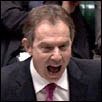
In a series of Commons exchanges, the prime minister and Opposition leader accused each other of playing politics with the Prevention of Terrorism Bill.
Liberal Democrat leader Charles Kennedy said ministers should offer further concessions is the law is to reach the statute book.
Their comments after the government detailed a series of further climbdowns on the role of judges in the issuing of control orders and the annual renewal of the Bill.
Ministers stopped short of accepting the nine month sunset clause that the Lords voted for, and also rejected calls for the burden of proof needed for the orders to be raised from "reasonable grounds" to the "balance of probabilities".
Commons clash
Blair said it was vital to have powers to tackle terrorists, and said concessions had been made to win over critics.
"They are right, they are necessary, it is the advice we are being given by the security services and the police and I believe it would be irresponsible to flout that advice," he said.
But Howard told the prime minister to "reconsider" his position on the sunset clause.
Blair ruled the option out, adding that he would also not give way on the level of proof needed to issue a control order. "I am simply not prepared to do it," he insisted.
Terror threat
The clashes grew increasingly heated as both leaders sought to establish who would be responsible if the Bill failed to gain the approval of parliament.
Howard questioned whether the prime minister would allow the Bill to fail rather than accept the version with the sunset clause that had been passed by peers.
"Is he seriously saying he would prefer to have no bill at all than a bill which would last for eight months so that parliament could have a proper opportunity to discuss the terrorist threat?"
Blair said: "It is important we send a clear signal now that this legislation is on the statute book and will remain on the statute book."
He said it would be "sending out the wrong signal" not to have permanent legislation.
"The advice that we have is that we need these control orders," he said.
"In particular we cannot accept the burden of proof being different from reasonable suspicion."
But the Tory chief said Blair was "living on another planet" if he thought only Conservatives had doubts about the plans.
The prime minister said the government had its "level best to meet reasonable concerns".
He insisted the issue for Howard was whether he would back legislation supported by the security services.
"I believe, even if he doesn't, that national security comes first," Blair added.
Playing politics
Howard told MPs that he had come to the conclusion that the prime minister "wants this Bill to fail".
"He wants to pretend that he is the only one who is tough on terrorism," the Conservative leader said.
"Isn't it a dreadful measure from a desperate prime minister, and shouldn't he be thoroughly ashamed of himself?"
But Blair said the debate on the plans would be had in the country.
"In my judgement the shame will lie with the Conservative Party, faced with legislation to prevent terrorism, faced with legislation advised to us by our police and security services, that are going to vote against it.
"If they want to vote against it, let them. We will be content, ultimately, to have the verdict of the country on it."
Reverse gear
Liberal Democrat leader Charles Kennedy welcomed the latest "climbdown over judicial scrutiny".
But he disputed Blair's claim that "it was never an issue of principle".
"A few weeks ago he and the home secretary were saying that the issue of principle was that the executive should take the decision, not a judge," Kennedy told the prime minister.
And he added that there are "two outstanding issues of principle", the burden of proof and the issue of suspects knowing the charges against them.
Blair replied: "In our view the burden of proof is necessary as it is."
"Should a terrorist attack occur the debate would not be about civil liberties, it would be about what advice we got and whether we followed it," the prime minister repeated.
"I've got the advice and I intend to follow it."
However Kennedy called on the prime minister to "rediscover his reverse gear", pointing to the opinion of former Labour lord chancellor Lord Irvine who voted against the Bill.
But Blair said: "On any of these things there will be conflicting views."
He added that ex-Metropolitan Police commissioner Sir John Stevens was backing the plans.
"The most basic civil liberty is the right to life," he concluded, arguing that people need protection from terrorists above anything else.
Peaceful protests
Blair was initially left on the back foot during the exchanges when the Tory chief said the prime minister was quoted as saying that the control orders could be used against G8 summit protestors.
The prime minister, however, then moved to clarify remarks he denied knowledge of making.
"Let me make it absolutely clear, of course these terror laws are not to be used against protestors, they are to be used against terrorists," he told MPs.
"This has nothing to do with people making protests."
|