|
Treasury blocking release of 'Black Wednesday' papers
Leaks to the BBC have revealed that the Treasury is refusing to publicise parts of documents giving details about "Black Wednesday", despite requests under the new Freedom of Information Act.
September 16, 1992 has become the centre of political controversy again after new laws came into force last month.
The Financial Times has asked for background information on Britain's exit from the European Exchange Rate Mechanism to be made available and is set to see some of its demands met on Thursday.
However the chancellor's ministry is holding back sections of the documents due to fears that they could set a precedent prompting more recent information to be released or even expose intelligence sources, according to the Radio 4 Today programme.
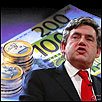
The leaks reveal civil servants' fears over demands for Gordon Brown to make public the full basis of his growth and revenue forecasts, which are the subject of dispute among economists.
Leaks
Another paper says that in 1992 the Treasury discovered that France was set to raise its interest rates through a source which "could be covert and still in use".
However the department said in a statement that the leaks were not representative of its position.
"It would be wholly wrong to draw conclusions about the content of the Black Wednesday papers on the basis of this misleading and outdated leak," it said.
"The Treasury's concern throughout this is to ensure maximum fairness to former ministers and civil servants while ensuring that we publish as much material as is required under the terms of the Act.
"The final papers to be published tomorrow will show that we have achieved that balance.
"Throughout this process we have worked closely with, have taken advice from, and shared all drafts of paper with the Cabinet Office and the Department for Constitutional Affairs and ensured that at all stages we have operated in line with standard guidance."
Delay
The publication of the documents was delayed to allow time for John Major and Lord Lamont, Conservative prime minister and chancellor at the time, to study them.
Accusations of dirty tricks were levelled by both Labour and the Tories, with some reports saying the former ministers had blocked their release, while Major accused Alastair Campbell of being behind the request in order to make trouble during the general election campaign.
Although neither charge turned out to be true, the latest leaks do refer to "open warfare" between Major and Lamont, government "hype about economic miracles" at the time and "undiplomatic" behaviour by the then chancellor.
Shadow chancellor Oliver Letwin said the revelations were the latest example of the government using the new Act for political ends.
"The operation of this Act is not meant to be a basis for freedom of propaganda. It is supposed to be the basis for open government," he said.
The Tory said there should be "even handedness" about what was disclosed.
"Whatever the rules are for disclosure of things about the present government should apply to past governments," he added.
|