|
Broad welcome for minimum wage increase
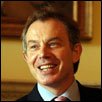
The adult national minimum wage rate will increase from £4.85 to £5.05 in October, Tony Blair said at his monthly press conference.
The prime minister also welcomed news that the rate for 18 to 21-year-olds will rise from £4.10 to £4.25.
Some 1.4 million people on low wages are set to benefit from the rise.
Business gave a cautious welcome to the news. Unions expressed satisfaction at the continued upwards trend of the wage.
Blair said the increase should be seen "in the context of an economy that is getting stronger and a society that is getting fairer".
"The national minimum wage benefits the whole country," Blair said.
"The benefit of Britain's strong and stable economy should be shared by every hard-working family in Britain and by middle-income and low-income families alike.
"For too long, poverty pay capped the aspiration and prosperity of far too many hard-working families.
"Too often, people were told to make a choice between the indignity of unemployment or the humiliation of poverty pay."
The prime minister said the minimum wage increase was the latest confirmation that under Labour, "work pays".
The increases were recommended by the Low Pay Commission, whose proposed increase to £5.35 for October 2006 has been provisionally accepted by the government.
Rise welcomed
Adair Turner from the Low Pay Commission said despite the concerns of businesses, the national minimum wage had not affected the economy or employment levels.
He said the recommended increases over the next two years were above average wage increases, but not by much.
Trade and industry secretary Patricia Hewitt said the government "has succeeded in installing the minimum wage at a time when employment has also increased".
She said there was no evidence of the minimum wage damaging employment in any sectors, and through the minimum wage, ministers were achieving their objectives of social justice and a stronger economy.
Hewitt added that many of those to benefit from the rise will be women, who still earn lower wages than men.
Michael Howard indicated that he would not seek to reverse the planned increase in the minimum wage if the Conservatives won the upcoming election.
The Conservative leader told BBC Radio 4's Woman's Hour programme: "We've accepted the principle of the minimum wage and we certainly wouldn't seek to reduce the level of the minimum wage."
Modest boost
The CBI said that this modest increase in the minimum wage was a sensible reaction to business concerns.
Director general Sir Digby Jones said: "Minimum wage increases exceeded average earnings growth for the past two years and business has become increasingly worried about its impact.
"Firms will be relieved that this year's rise is more in line with earnings predictions and this is a sensible reaction to business concerns."
On the 2006 minimum wage increase of 5.9 per cent, Sir Digby cautioned that "a rise to £5.35 will be difficult for some companies to accommodate".
"The impact of all increases must be monitored closely by the government and the LPC," he added.
TUC general secretary Brendan Barber said he warmly welcomed the news.
"The government was right to dismiss employer calls for a freeze, particularly at a time when profits are rising and boardroom pay shows no sign of moderation," he said.
"The minimum wage remains one of this government's most popular policies. Employers and politicians who said it would cause job losses have been proved wrong year in, year out.
"We will continue to argue for the minimum wage to increase more than earnings in future years.
"A disappointment today is that the government has rejected the commission's renewed recommendation that the adult rate should start at 21, but this is still a good day for Britain's low paid workers."
Retail reaction
The retail industry, which warned that large rises could lead to substantial job losses, indicated it could live with the planned increase.
Kevin Hawkins, director general of the British Retail Consortium, said he was "pleased the LPC has taken our evidence into account and only recommended an increase of four per cent".
He said retailers would be "relieved" at the news.
Unison general secretary Dave Prentis said the move was "good news for low paid workers".
"Let's not forget the minimum wage was introduced by a Labour government only six years ago and faced fierce opposition from the Tories and CBI who predicted meltdown and two million job losses," he added.
|