|
Blair apologises for bomb jailings
The prime minister has apologised to two families over the wrongful imprisonment of 11 people following the bombing of pubs in Guildford and Woolwich in the mid-1970s.
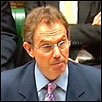
Tony Blair made a short televised statement on Wednesday on behalf of the British government.
"I'm very sorry that they were subject to such an ordeal and such an injustice," he said.
"That's why I'm making this apology today. They deserve to be completely and publicly exonerated."
Members of the Conlan and Maguire families were in Westminster to hear the announcement, having campaigned for the official apology since their jail terms were quashed at the Court of Appeal in 1989 and 1991 respectively.
The Number 10 spokesman said the move was part of a wider process of reconciliation in Ulster.
"All those involved in Northern Ireland who have been caught up in the troubles have experienced pain," he said.
"You cannot change what has happened in the past but what we can do is acknowledge mistakes made in the past if this helps ease present suffering."
Gerry Conlan, one of the Guildford four wrongly convicted for the Guildford pub bombing in 1974, said "if you have the ability to try and repair their lives in some shape, you have to do it".
He claimed there has been a "whispering campaign" branding the Appeal Court decision to quash the jail terms as a technicality, which he hoped the apology would end.
Statement
The prime minister's statement was made in response to a question from SDLP MP Eddie McGrady during Blair's weekly Commons grilling.
However the Commons speaker refused to call McGrady amid criticism that the media should not have been briefed that he would necessarily be selected.
The Tories, however, questioned both the timing and the reasoning of the statement.
Shadow Northern Ireland secretary David Lidington said: "If the prime minister wants to make a statement to Parliament on any matter, he can do so at any time. That is what he should have done.
"This device of attempting to slip a statement into prime minister’s questions looks as if it was a deliberate attempt to avoid the prolonged questioning that would follow a formal statement.
"The original convictions in both these cases – and their subsequent quashing – were decisions taken by the courts and not by politicians."
|