|
US-UK rift over Iraqi sovereignty
A rift appears to have opened between London and Washington over the question of control over coalition troops in Iraq.
The interim Iraqi government will be able to veto major military operations after June 30, the prime minister said yesterday.
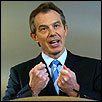
Speaking at his monthly press conference, Tony Blair vowed that the transfer of sovereignty would be "real and genuine".
He accepted that the question of whether Iraqi authorities would be able to veto key operations was a "tough" issue.
But Blair confirmed that they would be given the final say.
"The final political control remains with the Iraqi government. That is what the transfer of sovereignty means," he said.
"That doesn't mean to say that our troops are going to be ordered to do something our troops don't want to do. That remains as it is now.
"But the transfer of sovereignty has to be real and genuine, and the issue of our troops remaining after then is an issue of necessity because they have to remain until the Iraqi capability is sufficiently developed."
However speaking later in the day American secretary of state Colin Powell insisted that "US forces remain under US command and will do what is necessary to protect themselves".
Both sides deny a dispute but the two positions appear difficult to reconcile.
Violence
Blair also said that the troops could only remain in Iraq "with the consent of the Iraqi government".
And the prime minister warned that violence will continue in Iraq in the run up to the transfer of sovereignty.
"There will be a lot of hard going over the next few months," he said. "There will be a lot of difficulties along the way."
Blair insisted that the UK remained committed to the coalition effort in Iraq, but also emphasised the possibility of an eventual withdrawal from the country.
"We stay until we get the job done, but obviously the sooner and the better we are available to get Iraqi security forces in charge of their own security then the easier it is for us to leave," he said.
As discussions continue at the United Nations in New York, Blair also said there had been a warm response to the draft resolution put forward by the US and UK.
He accepted that the Iraqi Governing Council had expressed reservations on some issues, but said their response was generally positive.
|