|
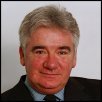
Pat Watters - COSLA president
Question: From the point of view of the Convention of Scottish Local Authorities, what are the main issues for Scottish local councils at the moment?
Pat Watters: As ever, the main issue for Scottish local government is probably finance: having enough money to deliver the services that we think [council tax-payers] are entitled to at a local level.
The major issue facing us is that we haven't the means to finance, and actually then deal with the problems we see within our communities.
Question: Is it a problem of the Executive, and the Westminster government as well, giving you extra responsibilities without actually providing the finance to carry them out?
Pat Watters: I think it's a mixture. We have a commitment from the Executive that new duties and responsibilities will be followed by new cash. And to date, although we may argue from time to time about the exact cost of new responsibilities that have come local government's way, the Executive has put cash up.
If you look at the backdrop of local government, we have been in a period before the last five years of reduced budgets and reduced services as a result of that. We are trying to get back to a level of service that we believe that the communities want and expect, and it is a fine balancing act.
It's not just a matter of new responsibilities and no money coming with it. There are new responsibilities and we welcome those, and there is cash coming with it - although not always totally funded 100 per cent, but at least we do get new funding coming with it.
But there is a long history of reducing finance to local government and it takes a lot to address that.
Question: Do you find that councils are under a lot of pressure to keep council tax rises to a minimum, does that create further problems?
Pat Watters: That is true, there is a desire from national government and indeed from local government not to increase council taxes.
At the end of the day, we are charged with balancing our books. The range of tax rises in Scotland has certainly not been of the enormity of the tax rises in England and Wales, so we are certainly in a better position to look at how we deal with things.
There is a joint desire from both national and local government to ensure that what we have is the lowest possible council tax rises for communities.
At the end of the day, we are responsible for delivering services and communities that want low council tax increases also want a high level of service delivery.
Question: How difficult do councillors find it to strike that balance?
Pat Watters: It is a balance. In Scotland what we have been doing for the past four to five years is continually looking at how we deliver services, how we can shift from backroom services to frontline services, how we join up services better, who we deliver the services to and what we are delivering.
That has been a welcome opportunity in Scotland because sometimes when you are doing things for a long time you just continue to do them, even though it is not the best way to do it. We have had the opportunity over recent years to look at how we are doing that.
That is how, when the government brought in the efficiency measures right across the public sector, we believe that we are in the lead in that.
Other parts of the public sector can learn from how local government is dealing with efficiencies within service delivery.
Question: There is a lot of pressure for councils, and other bodies, to rationalise back office functions and areas such as purchasing. Is there scope for further savings?
Pat Watters: I think it would be foolish to say you can never improve, you can always improve. I personally feel, after discussion with leaders in Scotland, from our point of view just looking at efficiencies within one area of the public sector is really not the way to tackle local efficiencies.
For instance, we have got a myriad of non-governmental bodies which are funded directly from the Executive who deliver services within our communities. We believe we should use this opportunity to have a real look at the myriad of quangos. What is spent on their backroom services? Can we provide that for them? Can we provide the service?
We believe in looking at rationalisation in that way, looking at efficiencies in the public sector in total, rather than looking at it as individual sections of the public sector as if they are not linked in any way.
If you look at enterprise companies, they are coterminous on a lot of occasions with the authority, and if they are not, then sometimes with one, two or three authorities. The same applies to health boards, and other non-governmental bodies.
We should be looking at that whole range of things where we could deliver services better and more efficiently, but looking right across the public sector and not just individual elements.
Question: Has the position for local authorities changed since the Scottish parliament and Executive took over from ministers in Westminster?
Pat Watters: I think there are several issues. I welcomed the establishment of the Scottish parliament, as it gives us instant access to government.
In local government we previously saw a government minister two times a year - maybe four - but we probably had to travel to London to meet that minister and we would have about 45 minutes to hold the meeting and discuss what we thought were the important issues.
Now we have access almost on a daily basis to ministers - they are on our doorstep. That has had the effect that we can have much more discussion with our ministers. The accessibility is something that has improved tremendously.
We are still building a relationship. I'm not saying we have a perfect relationship, because we don't. Sometimes we argue and fall out. Sometimes they are unhappy with what we are doing, sometimes we are unhappy with what they are doing. But that's politics and that's government.
I think there has been a difference in the approach of the Scottish Executive to local government compared to the position in England, where they have taken a much more legislative approach.
In Scotland, what we have got is a much more co-operative approach with the Executive.
Question: So councils and ministers south of the border have something to learn from how Scotland has approached these things?
Pat Watters: I would say so. Yes, we have differences with the government. We are fearful at times that there is a centralisation agenda and we are discussing that with ministers at the present time.
But because we have the access we can work things through and I think we can co-operate.
I have said on many occasions that when both national government and local government work together, we deliver best. That is the aim we should have - to work much closer with each other.
Question: One of the big changes to come out of the Scottish parliament is the move to proportional representation in council elections. What effect is that going to have?
Pat Watters: I have got a difficulty in dealing with that because there is a wide range of views in COSLA. Sections of COSLA support the move to proportional representation - not always the system the Executive has selected, but there is support.
The vast majority of councils are very much opposed to it. There are only three or four councils who support the move to proportional representation.
We don't believe that it will improve governance in Scotland, we don't believe there is a groundswell of support for the move. I have yet to sit in a surgery and be harassed by a constituent because we are not using proportional representation. They harass me about delivery of service, they harass me about education, about social work, about the state of the roads, about lighting. But I have never had someone come to me and say, "We really need to change this voting system".
If I felt that the voting system change would improve the way we deliver services I would support it, but it will not improve the way we deliver services.
I think part of the problem in Scotland is that there is a long tradition of independent councillors with no political background and no political affiliation, and the change to proportional representation will damage that.
Proportional representation supports the party system, and not the independents. The second biggest grouping within my organisation is independent councillors who have no political affiliation.
I believe that instead of improving democracy you could see a backward step in democracy. This will not improve turnout, it will not improve democracy, and it will not improve delivery of service. If you put all those things together, we are going to spend an awful lot of money doing something that has no effect on our communities except changing the system.
Voting is not about elected members, it is about people who go and vote. I think what we are doing is going to make it extremely confusing. We have got two different systems for voting for the Scottish parliament, we have a different system again for voting for the European parliament, a different system again for voting for the national government, and we are going to bring in another different system for voting for local councillors. I believe that will be confusing for the electorate, and it will damage democracy as a result of that.
Question: How do you respond to those who say that the present system leads to one-party fiefdoms?
Pat Watters: I think the one-party fiefdoms idea is something that has been dreamt of by people outside of politics. For instance, in Scotland we have got 1,220 councillors and people talk about Labour fiefdoms and Labour-dominated local government. But out of those 1,220 councillors only just over 500 are Labour. The rest are a mix of independent, SNP, Conservative, Liberal Democrat and other smaller political parties.
To say that there are large fiefdoms is not true. Yes, there are areas where Labour is very strong, but there are equally areas where the Liberals are very strong, or where the SNP is very strong. What has happened is the people trust that group of elected members within that community. That is not wrong, that is right.
|