I have been asked to address the issue of rectifying theshortages of skills in the housebuilding sector. Specifically I have been asked to cover 4 questions:
What additional people and skills are required if wewant to build 225 thousand houses per annum?
The impact of the nature of housebuilding on attractingpeople into the industry?
The role of CITB?
What additional support particularly extra funding isrequired, and where it should come from?
I shall address each of these issues in turn, but first Ishould like to consider the extent and nature of the current skillsshortage. Finally I will consider howto build the additional houses and achieve the Governments targets.
WHAT IS THECURRENT SHORTAGE?
Looking at craft skills across the whole constructionindustry, the Construction Confederation conducts a regular state of tradesurvey that includes questions on skill shortages. Since 2001, 80% of firms have indicated difficulties inrecruiting bricklayers, carpenters and plasterers. This is a level of reported shortage similar to that during thelast construction boom at the end of the eighties. But what does it mean?
Fig. 1
Source: ConstructionConfederation
To investigate, CITB surveyed 500 companies at the end oflast year a structured random sample across Scotland Wales and all Englishregions. 80% of them also reportedrecruitment difficulties indeed housebuilding reported almost 90%. But when interrogated it turned out thatonly 20% had a long term job that they were unable to fill. It would appear that much of the reportedskills shortages relate to temporary jobs.An aspect I will return to shortly.
Fig. 2
|
Employers Skills Needs Survey |
||||
|
|
% Employers reporting |
Great Britain |
Housing |
|
|
|
Recruitment Difficulties |
79% |
88% |
|
|
|
Unfilled Vacancies |
20% |
22% |
|
|
|
|
|
|
|
CITB Survey, April 2003
Turning specifically to housebuilding, the HousebuildersFederation conducted an employment survey in October 2001. This figure shows the types of staff thathousebuilders were short of. The mainshortages were for management and professional staff at 25% - 35%; site operationsshortages (2nd from the right) were found in less than 20% ofhousebuilders.
Fig. 3
Source: HBF EmploymentSurvey, October 2001
The majority of site operatives were employed bysub-contractors, but here too shortages of bricklayers and carpenters (4thand 5th from the left) wereonly about 10%, with roofers being the highest at almost 18%.
Fig. 4
Source: HBF Employment Survey: October 2001
What is the effect of skills shortages on the industry? CFR conduct a regular survey of constraintson output. Since the mid 1990s thepercentage of firms citing lack of demand has declined from 50% to 20%. Labour shortage has risen from under 5% to10%, having touched 20% in 2001. Infact labour shortage appears to have had a less immediate effect on output thanbad weather notably during the winter of 2000/2001. It is probable that the main effect of labour shortages has beenon wage rates and increasing employment in construction.
Fig. 5
Construction Forecasting Research 2002
WHAT ADDITIONALPEOPLE AND SKILLS ARE REQUIRED?
What ever the current extent of skill shortages theGovernments plans for extra housebuilding will further increase demand. How significantly is the question. In an historical context increasing the rateof housing completions to 225 thousand per annum does not look so large. Back in the early 1970s completions wererunning at 350 thousand. Howeverabout half of that was provided by public housebuilding including high riseunits. Private sector output hascycled around just over 150 thousand per annum. London, the South East, the South West and the East which Ishall loosely term the South, has tended to account for 40% of totalcompletions.
Fig. 6
Housing & ConstructionStatistics 1970-2002
However when considering housebuilding skills it isessential to also take account of repair and maintenance activities. In fact as total housing completions havefallen from 30% of construction output to under 15%, housing repair andmaintenance has risen significantly from 10% in the early seventies to over 20%now. The Governments plans forsignificant housing repair and maintenance work will further increase demandsfor craft skills, for example the target to refurbish 500 thousand socialhousing units by 2004.
Fig. 7
Housing & ConstructionStatistics 1970-2002
The outlook for other construction activity is also relevant. Private industrial and commercialconstruction and maintenance demand appears to be weakening. In the absence of a resurgence in growth inthe private sector of economy it is likely that some of the skills required tomeet the Governments commitments on schools, hospitals, new houses, innercity/social housing refurbishment, transport and infrastructure constructionmay be satisfied by skills becoming available from the private industrial andcommercial construction activity. Forconstruction as a whole the CITB is not anticipating significant growth inemployment but some 380 thousand people are still expected to be needed to jointhe industry in the next 5 years, mainly to replace those leaving.
Construction Sector Output
Fig.8
Housing & ConstructionStatistics 1970-2002
It is difficult to be definitive about what additionalpeople and skills will be required to build 225 thousand houses per annum. The recent Housing Forum publicationHoming in on Excellence refers to some 200 thousand people employed in UKhousebuilding. The House Builders Federation Employment Survey estimatedapproximately 180 thousand. Given thenumber of general builders who occasionally also build a house, perhaps 200thousand is as good an estimate as any.
If 200 thousand people can build 170 thousand houses thenmathematically 65 thousand extra people would be required to build an extra 55thousand houses. In practice therewill be many factors influencing marginal productivity including the size offuture housing developments compared to the recent experience with small brownfield developments. Longer term workprogrammes could offer greater incentives for off-site manufacture. Higher building densities would reduce skillrequirements per unit. Larger sitescould ease access and offer economies in terms of site management.
Fig. 9
CITB analysis of ONS LabourForce Survey 2002
The location of the extra housing demand will also affectthe demand and the supply of skills. Ifthree quarters of the extra houses are planned in the South this could requirean increase over 50% in the new housebuilding labour force. What is the likelihood of supply meetingsuch an increase in demand?
Fig. 10
CITB analysis of ONS LabourForce Survey 2002
THE IMPACT AND NATUREOF HOUSEBUILDING ON ATTRACTING YOUNG PEOPLE INTO THE INDUSTRY
The nature of housebuilding its industrial structure andgeographical location has significant implications for attracting people intothe industry. In common withconstruction generally the housebuilding industry (both private and socialhousing) is a heavily SME industry with a high degree of sub-contracting tocarry out the actual work on site. Ofemployers on the CITBs register giving housebuilding as their main activitysome 94.4% are small on the Governments definition of employing less than 50people. The most significant differencefrom general construction is an even heavier reliance on labour-onlysub-contracting (LOSC) 43% compared with an average of 26% for constructionas a whole. This is an industrialstructure that is well designed to manage uncertainty about future housingdemands and the peripatetic location of sites with planning permission. However this short term flexibility appearsto be at the expense of the long term sustainability of the industrys skillsbase. Amongst housebuilders there aremany good training companies. Indeedthe major homebuilders have just funded CITB to run an apprentice of the yearaward in memory of the late Frank Eaton of Barratts. Overall housebuilders are about the average for apprentices perdirectly employed staff, but much lower once the total labour force, includingLOSC, is considered.
Fig. 11
|
Industry Structure and Training |
||||
|
|
||||
|
|
|
Total Construction |
Housebuilding |
|
|
|
Employers |
|
|
|
|
|
Large (250+) |
0.4% |
0.9% |
|
|
|
Medium (49-249) |
2.4% |
4.7% |
|
|
|
Small (0-49) |
97.3% |
94.4% |
|
|
|
|
|
|
|
|
|
Employment Costs |
|
|
|
|
|
LOSC% |
26% |
43% |
|
|
|
|
|
|
|
|
|
Apprentice per Worker |
|
|
|
|
|
Direct Employees |
5.3% |
5.9% |
|
|
|
All Workers |
4.3% |
3.0% |
|
|
|
|
|
|
|
CITB RegisteredEmployers 2002
At the end of last year the DfES and the CITB commissionedindependent research into the effect of employment status on investment intraining. The main finding was thatlabour only sub-contracting militated against formal training: 32% of employers with directly employedstaff provided off-the-job training to most of them, compared to only 13% ofemployers with LOSC staff providing off-the-job training for them. Indeed 86% of the self employed who hadachieved an apprenticeship had done so whilst directly employed.
Fig. 12
|
The Effect of Employment Status on Investment in Training |
|
|
|
32% of employers with directly employed manual staff provided off-the-job training to most of them. 13% of employers with LOSC manual staff provided off-the-job training to most of them.
86% of self employed who had achieved an apprenticeship did so whilst directly employed |
|
|
IFF Survey April 2003
Currently about 70% of painters and decorators, floorers andplasterers are self employed, about 60% of roofers and bricklayers and 50% woodtrades. Indeed self employment appearsto be rising again following a slight decline in the last 3-4 years.
Fig. 13
Labour Force Survey Winter2002/3
The preponderance of self employment is particularly markedin the South, with self employment in the South East, London and the East ofEngland and the South West (on the left) twice as high as in Scotland and theNorth East (on the right).
Fig. 14
Labour Force Survey Winter2002/3
With relatively little direct employment of craft workers inthe South there are few employers who perceive a business case to invest in apprenticetraining, statistics for CITB registered employers show that constructionapprentice training in the South (the far right) is much lower than elsewherein Great Britain particularly Wales, Scotland and the North (on the left).
Fig 15
CITB Register December 2903
The annual intake for craft trainees at FE colleges in theSouth is running about 18 thousand per annum with 13 thousand per annumcompleting their apprenticeship, against an estimated annual craft requirementof some 32 thousand merely to maintain the labour force. Traditionally the South has relied on a netmigration of skilled construction workers from the North and Ireland and morerecently the wider Europe. If theGovernment wishes to build sustainable communities using local labour,construction apprentice training will need to increase in the South.
THE ROLE OF CITB
What then is the role of CITB in meeting the skillschallenges facing the construction industry?In addition to its role as a Statutory Industry Training Board the CITBis partnering with the Construction Industry Council covering professionalconsultancies, and CITB Northern Ireland to develop the Construction SectorSkills Council.
Fig. 16
|
|
|
|
|
|
|
|
|
|
||
|
|
|
|
|
ConstructionSkills |
|
|
|
|
||
|
|
|
|
|
citb (ni) |
CITB |
CIC |
|
|
|
|
|
|
|
|
|
In liaison with SUMMITSkills |
|
|
|
|
||
|
|
|
|
|
|
|
|
|
|
|
|
In consultation with employers in the industry the CITB hasdeveloped a Sector Workforce Development Plan to address the 3 key skillschallenges facing the industry
image and recruitment,
qualifying the workforce
improving business performance.
IMAGE AND RECRUITMENT
To address image and recruitment the CITB has conductedmarket research to find the buttons to press to attract the interest of youngerpeople. Yes theres sex and drugs androck and roll. Weve stayed off thefirst two but weve also identified sport, money, travel and theenvironment. Our campaigns targeted attheir youth magazines and web sites have achieved an amazing 30% improvement inperceptions about careers in construction.We have managed an increasingly successful National Construction Weekfor the last 3 years. New careersmaterials have been distributed with an all industry approach from architectsand engineers to labourers. In the pastconstruction has been perceived by schools as just about crafts andconsequently the more academically capable have not been encouraged to considerconstruction as a career. We have alsodeveloped the biggest school connection programme of any industry, now coveringsome 20% of all secondary schools.
Building on this recruitment activity, the CITB supports theemployment of 30 thousand apprentices through its levy-grant arrangements. Large and medium companies pay most of thelevy but it is the small firms who receive most of the grants as they do mostof the craft training; two thirds of the industrys apprentices are employed bysmall firms. Indeed the CITB givesaround 20m per annum in grants to micro firms (employing less than 3 or 4direct employees) who are too small to be liable to pay any levy.
Fig. 17
|
|
|
|
Media Campaign Sport, money, travel, music, environment |
|
|
|
|
|
National Construction Week - 1,052 days of Events (2002) |
|
|
|
|
|
Careers Materials - all industry approach, not lowest academic capability |
|
|
|
|
|
School Work - 120 curriculum centres/construction partnerships |
|
|
|
|


In addition we have developed Local Collaborative Programmessupporting ethnic minorities and women to join the industry and become excitingrole models for their peers to emulate.We have also convinced most of the major employers of graduates in theindustry to stop just fishing on their own for talent and to come together andcreate a much bigger splash. We stillhave a lot to do at graduate level but we now appear to have turned the cornerat craft level with a huge increase in people wanting to join the constructionindustry.
Fig. 18
|
|
|
|
Local Collaborative Projects - Diversity/sustainability |
|
|
|
|
|
Designajob graduate recruitment - pan industry/bigger splash |
|
|
|
|
|
|
|
|
|
|
|
|
|
|
|
|
|
|
|
|
|
|
|
|
|
|
|
|
|
|
|
|
|
|
|
|
|
|
|
|
|
|
|
|
|
|
|
|
|
|
|
|
|
|


Jobsfor Apprentices
- Kick up in applicants/shortage of starter jobs
Indeed the problem thatwe now face is a shortage of starter jobs so that people can join the industryas apprentices and become competent on the job. The FE colleges are full of full time students who are now in aCatch 22 situation: they need a job to practice and become qualified andcompetent at commercial speeds, but they cannot get a job without already beingable to operate at commercial speeds.
QUALIFYING THE WORKFORCE
Following the Prescott Health & Safety Summit in 2001there has been a large push to create an all qualified workforce. The major contractors have introduced alicence to practise system on their sites using CSCS approved cards as anassurance of competence, and they are working with their sub-contractors toensure coverage of their supply chain.As yet this has not had much effect in private housebuilding andmaintenance. But there are now over500 thousand workers with CSCS approved cards, and 200 thousand have passedtheir touch screen computerised Health & Safety Test. CITB has obtained 9million this year fromthe LSC to develop on-site assessment and training pilot networks. They anticipate making this widely availablefrom next year to support the qualifying of another 500 thousand workers.
Fig. 19
|
|
|
|
Poor safety record/Prescott 2001 Summit |
|
|
100% Quallifed on All sites |
|
|
- MCG 2003, CECA 2007, Confed 2010 |
|
|
CITB/CSCS Partnership
|
|
|
|
|
|
|
|
|
Health & Safety Testing |
|
|
|
|
|
|
|
|
LSC/CITB OSAT Project |
|
|
|
|


IMPROVING BUSINESSPERFORMANCE
To help improve business performance the CITB, with supportfrom the DTIs Partners in Innovation programme to the Palmer Partnership, hasestablished a National Training Programme for Housebuilding Systems. We are also working with Bovis, Westburyand Celcon developing training for their own systems. Such changes in building methods are both driven by skillsshortages and drive further changes in skills, including multiskilling. Across the industry generally there is not,as yet, much of a demand for this type of training but we expect this to growsignificantly particularly with Government plans for off-site manufacture.
Fig. 20
|
|
|
|
|
|
|
New Building Systems - NTPHS/DTi Pil Pilot |
|
|
|
|
|
|
|
|
|
|
|
Management and Supervisory Training |
|
|
- CITB/NHBC/HBF Management Programme |
|
|
Rethinking Construction |
|
|
- CITB/CBPP Learning by Doing |
|
|
Strategic Forum/Accelerating Change |
|
|
- Integrated Supply Chain |
|
|
Investment in Lifelong Learning |
|
|
- Widening access to CITB Grants |
|
|
Investors in People |
|
|
- SBS/CITB Protocol |
|
|
|
|
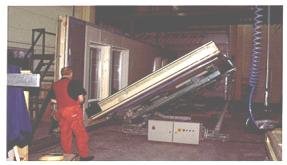

We have allocated over 2 million per annum to developmanagement and supervisory training and have provided heavily subsidisedmanagement and supervisory courses in partnership with HBF and NHBC, qualifyinghundreds of housebuilding site managers to NVQ4. We have supported the Rethinking Construction agenda by offeringcourses in lean construction, supply chain team working and best valueprocurement, in partnership with the Construction Best Practice Programme. And we are involved in developing trainingpackages for the Accelerating Change Integrated Supply Chain toolkit. We are widening access to CITB grants with86million available to employers this year and we are working with the SmallBusiness Service to promote Investors in People to the construction industrysSME companies.
WHAT ADDITIONALSUPPORT IS REQUIRED TO DELIVER THE NECESSARY PEOPLE AND
SKILLS?
Skills and Training as an Investment - Client Influence
Firstly it is key that training is no longer treated as thefirst expense to cut in the pursuit of lowest cost. Clients need to look for best value and stipulate minimum skillrequirements and training on their contracts.And that also applies to main contractors and housebuilders dealingswith their sub-contractors.
Starter Jobs Supply Chain integration
Secondly we are developing proposals to take to the majorcontractors and housebuilders for them to partner with their supply chain subcontractors to provide sufficient starter jobs for the number of apprenticesneeded by the industry. This wouldbuild on the license to operate supply chain arrangements which we havedeveloped with the major contractors.
Training and Assessment Provision - Funding arrangements
Thirdly, we are in discussion with the Learning and SkillsCouncil about how funding arrangements can be improved to make this allhappen. FE Colleges are already at fullcapacity dealing with the current demand and finding it more and more difficultto retain lecturers in competition with the increasingly attractive earningsavailable in the construction industry.
Additional funding to qualify people to NVQ Level 2 shouldbe the key priority for the Skills Strategy that the Government will announcein the Autumn. There should beequivalence in the funding of academic and vocational qualifications. The Skills Strategy is intended to beemployment led: it needs to address current business realities - in particularthe structure of the construction industry and the training Catch 22 describedon page 12. Vocational qualificationscannot be achieved without work-based experience and on-site demonstration ofcompetence. To support the Governmentstargets for growth in Modern Apprenticeships and qualified adult workers theSkills Strategy should include:
- funding for on-site mentorship and assessment, fundingfor employment costs during off-the-job training and;
- funding to cover the period of low productivityemployment whilst learners practice to come up to commercial speed.
Widening and Improving Recruitment Community outreachand removing barriers
Fourthly we are looking to work with other Governmentagencies and departments to improve outreach to non traditional recruitmentareas and remove barriers to entering construction employment.
Developing housing Forum/CITB Partnership Demonstration Projects
Fifthly, we have agreed an initiative with the Housing Forumto develop local collaborative housing demonstration projects in Scotland,Wales and each English region.
Regional Strategy Construction Forums
Finally, we have been instrumental in establishing nationaland regional Construction Forums (including RDA, LLSC, CITB, Business Link andJob Centre plus staff) to develop strategies for construction skills tailoredto their areas specific requirements.And it is important to understand the specifics. For example much is reported about Terminal5s skills requirements, but is it realised that this will require hardly anybricklayers.
HOW TO BUILD THEADDITIONAL HOUSES AND ACHIEVE THE GOVERNMENTS TARGETS
Not just new housing but also refurbishment
By considering housing maintenance opportunities as well asnew build plans these regionalstrategies could not only achieve the Governments housing targets, they couldhelp to achieve other Government targets.
Apprenticeships & Adult Skills
- Best Value : longer term contracts/commitments
- Business case for investment for skills
A measured build up by the Government and its Agencies,avoiding boom and bust and providing confidence in longer term order books,could provide the basis for the business case for investment in training. Longer term contracts could allow maincontractors and sub-contractors to enter into long term commitments to take onapprentices and qualify their existing workforce, helping to meet GovernmentSkills targets.
Social Cohesion
- Inner city & social housing refurbishment
- Proximity to social deprivation and unemployment
Long term inner city and social housing refurbishment workprogrammes could offer ideal opportunities for young people and unemployedadults to become qualified within a realistic travel to work and collegearea. Such local involvement inmaintaining the built environment could reinforce citizenship and socialcohesion.
Diversity in Employment
- 70% of ethnic minorities in 88 political wards
- Adult entrants
These work programmes could also offer a great opportunityto improve the diversity of employment in the construction industry: 70% of theethnic minorities in the UK live in 88 political wards, and they are all innercity areas. There are also manyunemployed single parents who could be interested in entering the constructionindustry provided barriers such as Housing Benefit delays could be avoided.
Building Sustainability Strategy
- A great opportunity
Most of the key stakeholders appearkeen to play their part. However theycan achieve little on their own. Theirefforts need integrating including joined up Government. CITB is sponsored by the DfES and we havegood connections with the DTi but many other Government departments andAgencies need to be involved. TheGovernments strategy is to Build Sustainable Communities. With leadership from the Office of theDeputy Prime Minister it would take a small extension to that strategy to alsoBuild a Sustainable Construction Industry.We would welcome working with all the other stakeholders concerned todevelop such an integrated strategy.The CITB has strong support from the industry and is well placed tocoordinate the necessary employer involvement.Much needs to be done but there does appear to be a real opportunity toact now to construct the future that we all desire.