 |
SENIOR SALARIES REVIEW BODYREPORT 2002
ThisReport is relatively brief given the earlier report of the Review Bodypublished in January this year (though dated 20 October 01) and previouslycirculated to members. The main recommendations are:
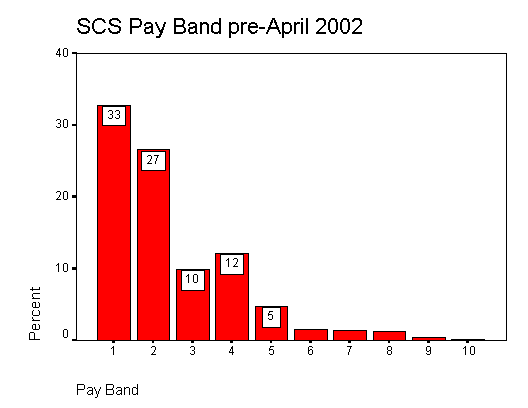
The revised pay bands are set out in paragraph 2.52of the Report. The Cabinet Office have also announced base pay awards,dependent on performance tranche as follows:
|
Performance Tranche |
Position in Pay Range |
||||
|
Lower Zone |
Upper Zone |
Premium Zone |
Upper Premium Zone |
Above RPC (*) |
|
|
Top Tranche (25%): |
10.0% |
8.0% |
7.0% |
6.0% |
6.0% |
|
Middle Tranche (65-70%): |
6.0% |
4.5% |
2.5% |
2.5% |
2.5% |
|
Bottom Tranche (5-10%): SATISFACTORY |
Up to 2.5% |
Up to 2.5% |
Up to 2.5% |
Up to 2.5% |
Up to 2.5% |
|
Bottom Tranche (5-10%): UNSATISFACTORY |
0.0 |
0.0 |
0.0 |
0.0 |
0.0 |
|
(*) Pay awards above the Recruitment and Performance Ceiling will be non-consolidated |
|||||
The level of these increases are calculated,according to the Cabinet Office, to take account of both the announcement ofthe Review Body and the rate of progression as previously promulgated by theCabinet Office in consultation last autumn with the Review Body. The FDA hasargued strongly that the Government is failing to adequately fund the newsystem to deliver progression rates comparable to more junior staff, and as youwill be aware from the circular in January, to match the target rate asrecommended by the Review Body but rejected by the Government. We will continueto press our concern at the underfunding with the Government.
The FDA did not inprincipal oppose the greater use of non-consolidated bonuses, although weargued that their use should be conditional upon delivering adequate rates ofprogression. We will consider in the light of the outcome of decisions by PayCommittees how the use of bonuses is working, and we will return to this issuein our evidence to the Review Body later in the year.
The FDA isparticularly pleased that the Review Body has recommenced an equal pay audit ofthe new system. The FDA had argued strongly that this should have beenundertaken prior to the introduction of the new system but better late thannever; we will press for the results of this audit to be made available to theReview Body in time for their report in 2003. However, it is extremely disappointingthat the Review Body has once again refused to consider the issue of long hoursworking in the senior civil service and the FDA intends to press this matterseparately with the Cabinet Office.
The FDA will be liaising with Departments on theuse of the 0.4% of the total SCS pay bill being set aside to deal withassimilation issues. Again, the FDA argued strongly that a greater sum shouldbe made available and we will consider in due course how these monies have beenallocated and whether anomalies remain.
The FDA welcomes the recommendation to overhaul thepay range for the pay of Permanent Secretaries. These are the most senior jobswithin the civil service and should be rewarded accordingly, as well asallowing headroom to develop for staff in the grades below. Clearly, the payfor the most senior jobs is always a sensitive issue and we have consistentlyargued that all posts in the senior civil service should be paid at a levelreflecting comparable pay in posts outside.
We have raised a wide number of issues about thenew system. It is an improvement on the existing arrangements although theGovernments refusal to fund the system adequately means that the level ofimprovement is not as significant as it should have been. We will be monitoringits implementation.