|
|
|
|
|
|
|
|
|
|
|
|
|
|
THE REALITY OFSCHOOL STAFFING
Alan Smithers and Pamela RobinsonCentre for Education and Employment ResearchUniversity of LiverpoolFinal Report, September 2003
|
|
|
|
|
|

|
|
|
|
|
|
|
|
|
|
|
|
|
|
THE REALITY OFSCHOOL STAFFING
Alan Smithers and Pamela RobinsonCentre for Education and Employment ResearchUniversity of LiverpoolFinal Report, September 2003
|
|
|
|
|
|
Contents
Executive Summary i
1. Introduction 1
2. Affordability 4
3. Impact on Staffing 10
4. Balancing the Budget? 17
5. Impact on the Curriculum 27
6. Workload 35
7. Recruitment 40
8. Prospects and Pointers 50
References 64
Appendix A: Methods 66
Appendix B: Samples Compared to National Distributions 69
|
Executive Summary |
1. Introduction
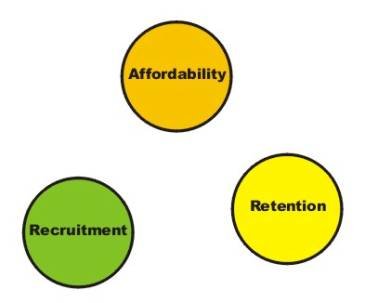
1.1 Two different perspectives can be adopted onschool staffing: the national and the school.At the national level, securing sufficient and appropriately qualifiedstaff is mainly a matter of deciding how many teachers can be afforded,projecting demand from pupil numbers and teacher wastage, and ensuring thatsufficient new teachers are coming through the training routes to replace thosegoing and to fulfil policies. At theschool level, it is more of a juggling exercise. Headteachers and governors, with the support of LEAs, haveessentially to keep three balls in the air: the budget, recruitment andretention. Attention can switch fromone to the other as the schools seek to survive and prosper in the nationalcontext.
Chart 1.1: Staffing Schools |
|
|
1.2 At the national level, the Government has beenoffering bullish reports. It claims tohave raised school funding appreciably.The Spending Review 2002 (HM Treasury, 2002) made provision to increaselocal authority spending on education by 6.3 per cent in 2003-04 and a further5.7 per cent and 6.1 per cent in the two succeeding years. Public expenditure on education had alreadyrisen from 4.5 per cent of GDP in 1997-98 to 5.1 per cent in 2002-03 during aperiod of economic expansion. TheNational Statistics First Release on the School Workforce in England (2003b)reported that the number of full-time regular teachers was up by 4,300 on theprevious year and the Government has pointed to this as the highest figuresince 1982. It also claims to haveturned the corner on the recruitment of secondary teachers (recruitment toprimary has been less of a problem) through its portfolio of financialincentives. Teacher Training Agencyfigures show that the number of initial teacher training places filled, whichhad fallen from 1997/98 to 1999/2000, has since risen by 17 per cent, includingsome significant increases in the shortage subjects. Teacher wastage which had gone up by nearly 50 per cent since1998 fell back in 2002 (Smithers and Robinson, 2003).
1.3 But at the school level things can look verydifferent. We first became acutelyaware of this in one of our first projects on teacher supply. We were commissioned in 1990 by theDepartment for Education and Science, as it was then, to investigate somethingthat was genuinely puzzling it. As faras it could tell from its figures, teacher supply was under control, yet it wasreceiving, as it put it, many cries from the field. It threw open its data to us and funded us to conduct interviewswith LEAs and headteachers. Ourconclusion (Smithers and Robinson, 1991) was different perspectives could leadto different impressions. A one percent undershoot, we suggested, could leave politicians and officials thinkingthey had got it about right, but if that one per cent affected your particularschool it could feel like a crisis.
1.4 As we have conducted further studies, we havecome to realise that there are a number of reasons why the state of teacherprovision might look very different from the different vantage points. In a Leverhulme-funded study of teachersleaving at the turn of the nineties (Robinson and Smithers, 1991) we drewattention to the importance of distinguishing between loss from the system as awhole, or wastage, and loss from particular schools, or turnover. Wastage is important to the policymakerbecause it is an indicator of whether there are enough teachers across thesystem as a whole, but for individual schools it is turnover that is importantbecause as they seek to secure the staffing they require, it matters notwhether a vacancy has been caused by a teacher resigning to go to anotherschool or to quit the profession entirely.Turnover can be more than double wastage (Employers Organisation forLocal Government, 2002).
1.5 The National Union of Teachers has recentlyfound itself as puzzled as the Department was in the early 1990s, but from theother direction. In contrast to the optimisticpicture presented by Government, the experience of its members is that thereare still considerable difficulties in staffing individual schools. It asked us, therefore, to investigate thestate of teacher provision in schools during the school year 2002-3. We began with teacher resignations,appointments and the implications for the matching of teaching toqualifications. Our findings, based on34 interviews with headteachers and a survey of 1,258 teachers, bothrepresentative cross-sections, were reported in an interim report published inNovember 2002 (Smithers, Robinson and Tracey, 2002). We make further reference to those findings in this report, butas the year progressed the main focus of the schools concern shifted tofunding. They had been led to supposefrom the Spending Review that they could expect to receive 6.3 per cent morefrom April 2003, but as the information trickled out many were finding thatthey were apparently going to receive less in real terms.
1.6 In order to quantify this aspect of the schoolsexperience we undertook a further survey in the summer term of 2003. The details of the methods are given inAppendix A. The study was conducted on908 primary schools and 368 secondary schools, respectively five per cent andten per cent structured samples of the populations of maintained schools inEngland and Wales. Appendix B comparesthe samples with national distributions and shows the samples to berepresentative of the populations in terms of region, size, school category,school type and, additionally for the secondary phase, specialism, gender andage range.
1.7 The questionnaire covered changes in pupilnumbers, budget settlements and staffing complement, details of any teaching orsupport staff posts lost or reduced, and the impact on the curriculum and thetimetable. Information was alsogathered on applications for, and appointments to, posts that were becomingavailable for September 2003.
1.8 The shape of this report reflects the simile ofthe three balls. We begin in Chapter 2with what the schools told us about their relative income for 2003-04, what hadaffected this, and how it varied across the LEAs, regions and schooltypes. In Chapter 3 we examine theimpact on staffing. Since six times asmany schools (786 against 127) reported their budget settlements worse thanbetter, the tendency was for schools to be shedding staff, and we quantify thisin terms of both teachers and support staff.But schools were striving to keep up their staffing so we also examinethe consequences for the other areas of expenditure.
1.9 Fewer staff has implications for the curriculumand the teachers themselves, and we consider these in Chapter 4. The Government has acknowledged thatteachers can suffer excessive workload and it has brought forward proposals forreform (DfES, 2002a). These dependessentially on employing more teaching assistants. In Chapter 5 we look at the current state of the proposed reformin the light of the 2003-04 budget settlement.
1.10 Eventhough some schools were reducing their staff complements most were alsoseeking to recruit to at least some posts for the start of the new schoolyear. Some schools were creating newposts and we offset these against staff loses to estimate the net flows. In Chapter 6 we report on how manyapplications the schools were receiving, how they rated the quality of theapplicants and whether they were able to proceed to appointment. We consider differences with phase, regionand subject.
1.11 Inour concluding chapter we report on how the schools saw the prospects for thecoming year. From their descriptionsand prognosis, we attempt to draw out policy pointers.
2. Affordability
2.1 In this chapter we present the schoolsexperience of the budget settlement 2003-04.Chart 2.1 shows that 56.4 per cent of the primary schools and 63.3 percent of the secondary schools reported that it was worse than the previousyear. Only 9.1 per cent and 10.3 percent respectively reported that it was better.The relatively few winners tended to do better in gross amount, onaverage, than the losers. Primarywinners reported themselves to be better off by, on average, 38,999 and thelosers to be worse off by, on average, 32,032. In the case of secondary schools, the respective figures were:winners 146,588 and losers 129,367.
Chart2.1: Budget Settlements by Pupil Numbers
|
Pupils on Roll |
Budget Settlement |
|||||||
|
Better |
Same |
Worse |
Total |
|||||
|
N |
% |
N |
% |
N |
% |
N |
% |
|
|
Primary |
||||||||
|
Higher |
27 |
2.8 |
57 |
5.8 |
88 |
9.0 |
172 |
17.6 |
|
Same |
36 |
3.7 |
199 |
20.3 |
284 |
29.0 |
519 |
53.0 |
|
Lower |
26 |
2.7 |
82 |
8.4 |
181 |
18.5 |
289 |
29.5 |
|
Total |
89 |
9.1 |
338 |
34.5 |
553 |
56.4 |
980 |
100.0 |
|
Secondary |
||||||||
|
Higher |
29 |
7.9 |
45 |
12.2 |
111 |
30.2 |
185 |
50.3 |
|
Same |
6 |
1.6 |
47 |
12.8 |
87 |
23.6 |
140 |
38.0 |
|
Lower |
3 |
0.8 |
5 |
1.4 |
35 |
9.5 |
43 |
11.7 |
|
Total |
38 |
10.3 |
97 |
26.4 |
233 |
63.3 |
368 |
100.0 |
1. Contingencycoefficients: primary = 0.140, P<0.001; secondary = 0.225, P<0.001.
2.2 The funding formula is driven mainly by pupilnumbers. Chart 2.1 cross-tabulatesbudgets with rolls. In line withnational demographics, 29.5 per cent of the primary schools reported fewerpupils as compared with 11.7 per cent of the secondary schools. The analysis reveals that, as to beexpected, there is a correlation between income and pupil numbers, but it isless strong than might have been expected.Combining cells from Chart 2.1, we can see that 38 per cent of theprimary schools and 53.8 per cent of the secondary schools with a higher orsimilar roll reported that their budget settlements were worse than last year.
2.3 The relative weakness of the relationship couldstem from at least three causes:
Unevennessin the allocation of the resources following changes in the Governmentsfunding formula;
Theeffects of the withdrawal or allocation of specific grants;
Schoolsestimates of real terms increases and decreases varying in their reliability.
Variations
2.4 Chart 2.2 shows how the budget settlementsvaried by region. For both primary andsecondary the differences are statistically significant (primary, chi-squared =46.73, df = 20, P<0.001; secondary, chi-squared=43.72, df = 20, P<0.002),but not striking. For both there appearto be more losers in the East of England and London than other parts of thecountry and fewer in Wales. The winnersemerged mainly in the Midlands, with also a relatively high proportion ofprimary winners in the North West and Inner London, and secondary winners inthe North East. Overall, the resultsseem to show something of a shift from the south to the north. In Wales, half the schools reported thebudget settlement had remained the same, though few thought it had improved.
Chart 2.2: Budget Settlements by Region
|
Region |
Primary |
Secondary |
||||||
|
Better |
Worse |
Better |
Worse |
|||||
|
N |
% |
N |
% |
N |
% |
N |
% |
|
|
North East |
4 |
8.3 |
31 |
64.6 |
4 |
18.2 |
10 |
45.5 |
|
North West |
20 |
14.7 |
77 |
56.6 |
3 |
6.3 |
29 |
60.4 |
|
Yorks & Humber |
6 |
6.1 |
55 |
56.1 |
3 |
9.1 |
22 |
66.7 |
|
East Midlands |
10 |
11.6 |
48 |
55.8 |
8 |
25.0 |
18 |
56.3 |
|
West Midlands |
12 |
12.9 |
44 |
47.3 |
6 |
14.3 |
21 |
50.0 |
|
East of England |
4 |
3.7 |
77 |
71.3 |
4 |
9.1 |
35 |
79.5 |
|
Inner London |
5 |
13.9 |
22 |
61.1 |
1 |
8.3 |
9 |
75.0 |
|
Outer London |
2 |
3.4 |
37 |
63.8 |
1 |
3.8 |
24 |
92.3 |
|
South East |
12 |
8.8 |
78 |
56.9 |
5 |
9.4 |
34 |
64.2 |
|
South West |
6 |
6.2 |
56 |
56.6 |
3 |
9.1 |
21 |
63.6 |
|
Wales |
8 |
9.9 |
28 |
34.6 |
0 |
0.0 |
10 |
43.5 |
|
Total |
89 |
9.1 |
553 |
56.4 |
38 |
10.3 |
233 |
63.3 |
2.5 Since allocation is through the LEAs, rather thanregion, we looked to see if there were any patterns across the metropolitandistricts, the counties and the unitary authorities, but none emerged except toconfirm that there tended to be more losers in London. This may appear surprising, but the detailedfigures provided by the DfES (2003d) show how the new government fundingformula played out in 2003-04 compared with the previous arrangements. What is striking is the seeming idiosyncrasyof the gains and loses.
2.6 The first part of Chart 2.3 shows changes in theminimum amounts LEAs were required by the Government to allocate toschools. Authorities like the City ofLondon and Wokingham were expected to increase their allocations by over 10 percent, while for Portsmouth and Southampton it was below 3 per cent. The second part of the chart shows thedifference in millions between the amount of central grant received to coverall services provided by the local authority and the educational spend requiredof the LEAs. In the cases of Barnet andEssex, the expectation laid on the authorities is that they would passport anincrease to schools more than the total increase in the overall formula grant(the difference to be made up from council tax). The third layer in the chart shows, in fact, what proportion hadbeen passported in selected authorities, ranging from 37.2 per cent more inBexley to 26.2 per cent less in Westminster.
Table 2.3: Funding Allocations 2003-04
|
LEA |
Highest |
LEA |
Lowest |
|
%Change in Formula Spending Share 2002-03 |
|||
|
City of London |
12.6 |
Hammersmith & Fulham |
3.3 |
|
Wokingham |
10.3 |
Knowsley |
3.2 |
|
Cambridgeshire |
10.0 |
Plymouth |
2.9 |
|
West Berkshire |
10.0 |
Portsmouth |
2.8 |
|
South Gloucestershire |
9.9 |
Southampton |
2.6 |
|
Difference between FSS and Grant to Cover All Services in Millions |
|||
|
Birmingham |
44.92 |
Dorset |
0.44 |
|
Liverpool |
25.22 |
Rutland |
0.34 |
|
Lancashire |
18.30 |
Isles of Scilly |
0.16 |
|
Tower Hamlets |
15.33 |
Essex |
-0.26 |
|
Bradford |
15.09 |
Barnet |
-1.21 |
|
%Education Spending Passported |
|||
|
Bexley |
137.2 |
Croydon |
90.2 |
|
Southampton |
122.1 |
Trafford |
89.9 |
|
Medway |
120.7 |
Wokingham |
88.3 |
|
Camden |
120.5 |
Isles of Scilly |
83.4 |
|
Solihull |
114.6 |
Westminster |
73.8 |
1. DfES (2003d) LEA budgetspublished, DfES Press Notice 2003/0079.
2.7 From the Revenue Support Grant allocations tolocal authorities we can glimpse why there should be more winners among schoolsin the north than the south, but the variations in the way the money has beenpassported demonstrate, in part, why the relationship between changes inbudget and roll is not clearcut. Winnersand losers are not confined to any region, but are distributed across England,and also Wales which has similar funding arrangements.
Specific Grants
2.8 Another factor creating winners andlosers in the 2003-04 budget settlement has been the decision to switch fromspecific grant funding to general grant funding. Schools that had been particularly successful previously indrawing from the Standards Fund could have been significant losers this yearsince a number of grants paid through the Fund ceased in 2003-04 for example,the School Improvement Grant, School Inclusion, Induction of Newly QualifiedTeachers, Performance Management, Class Size, Qualifications, Pupil SupportAllowances, Pupil Learning Credits, Recruitment and Retention Fund, LearningSupport Units. On the other
Box 2.1: Special Grants - Primary
|
S.R. bid finding and E.A.Z. help end in April 2004 and this will mean a loss of 2.5 aux staff. VA, Primary, North East (0125)Need extra support staff to support SEN pupils. E.g. visually impaired child rejected on Band D, therefore no funding. Junior, North East (0167)The budget has been affected by inadequate funding for Threshold, ESAs and Standards Fund. Standards Fund has reduced by 50% for small schools support. We still have the same problems to deal with as we have always had and yet we are supposed to do the same good job on less finance. Infant, North West (0279)We are paying our ICT Technician salary from NGfL. We cannot meet the workforce reform demands by September. VA, Primary, North West (0455)Our budget balanced but if it were not for the KS1 Class Size Money we would have had to use all our 20,000 contingency. First, Yorks & Humb (1122)We have profited this year from an increase in Funding for Inclusion - a new method in the LEA of funding Special Needs provision - we have used some of this to maintain two classes in each year group even where numbers are low. VC, Primary, Yorks & Humb (1158)We only have 4% free school meals so we lose out in our delegated budget and Standard Funds too. I cannot afford to employ the extra TA as planned. Primary, Inner London (2886)I have only been able to stay out of the classroom because the LEA have given me support as a newly appointed head, in order to raise standards which are very poor. Primary, Wales (4774)The situation in Wales is desperate. We receive no additional IT or high performance grants, my capitation is 4,000 and a supply budget which covers 12 days per year. Primary, Wales (4776)Our budget means that children are taught in wide age bands; one class has years 1, 2 and 3 children. Our budget was saved by a small schools grant given by the LEA. Primary, Wales (4851)The LEA originally hoped to provide schools like ours (area of deprivation) with better budgets but it was shelved due to political pressure. Primary, Wales (4586) |
|
Without Schools in Challenging Circumstances grant for the last two years and LiG funding this year we would have had serious financial problems. Comp 11-16, North West (329)Competition for recruitment from neighbouring schools who enjoy specialist status, SRB, LiG, Excellence Cluster, Excellence in Cities funding. We have none of these. Comp 11-16, North West (330)The Leadership Incentive Grant has been used to support the budget through creative accounting. The Standards Fund has been reduced dramatically. Many innovations have had to be put on hold. Comp 11-16, Yorks and Humb (387)We are very fortunate to be EiC, specialist and LiG eligible otherwise wed be finished. As it is, we are losing 0.5FTE to try to address the workload agreement with no extra funding. Tech 11-19, West Midlands (729)We are lucky being a grammar school in an inner city EiC/LiG group. Even so, it will be difficult to meet the new work time agreement. VA, Sports, Grammar 11-18, West Midlands (738)Gaining LiG will keep us going financially. Comp 11-19, East (987)To support the staffing budget we have put a moratorium on new developments and the whole of our LiG grant has gone into staffing, as has much of our TC funding. Tech 11-19, Outer London (1325)With roll rising by 50 we needed two extra staff, but could only afford one. But achieving specialist status enabled us to appoint another 0.6 science teacher with specialist school money. Science 11-18, South East (1437)Not as bad as feared, but without LiG we would have been in deficit. Comp 11-16, South East (1430)We have received LiG funding which has made a real impact through the employment of two additional teachers. VC, Comp 11-16, South West (1625)It is only because we are anticipating getting specialist school status that we have been able to appoint an ICT teacher well be in a mess if we are unsuccessful! VC, Comp 13-18, South West (1774)In Wales, we have developed a grant culture eg KS3, key skills developments etc. Schools now rely on these extras to underpin the budget. Comp 11-16, Wales (1988) |
hand, theintroduction of the Leadership Incentive Grant (of 125,000 for three years tosecondary schools in Excellence in City areas or with fewer than 30 per cent ofYear 11 attaining at least five A*-C grades at GCSE or where more than 35 percent of pupils are eligible for free schools meals) will have protected anumber against budget reductions. But while1,400 will have benefited, 1,700 will have been left out. We can see the part played by these specificgrants in the headteachers comments of Boxes 2.1 and 2.2.
2.9 Our analyses found no statistically significantdifferences between the different types of school, other than the 11.0 per centof specialist schools reporting themselves better off indicated that, onaverage, they received 188,571 more compared with the 117,000 received by the9.6 per cent of non-specialist schools.This is in line with the headteachers comments in Box 2.2.
Resum
2.10 Thebudget settlement for 2003-04 has meant that schools have had to cope withconsiderable changes in formula funding and specific grants. In addition, they have been faced withincreases in teachers pensions contributions and national insurancecontributions, and a foreshortened salary scale with more rapidprogression. At the national level,there was an extra 6.3 per cent going into schools, plus another 5.3 per centfrom specific grants, but the majority of schools found themselves relativelyworse off, made all the more galling by the expectation of a generousincrease. The information was alsoreceived late by schools and they found themselves having to make rapidadjustments. It is to these we now turn.
3. Impact on Staffing
3.1 Schools with lower than expected income in2003-04 have attempted to balance their books by a combination of measuresincluding cutting back on staff (whose costs make up a very large proportion ofthe budget), use of reserves, and making other savings or earnings. Even so, 19 per cent of the primary schoolsand 29 per cent of the secondary schools said they would be having to setdeficit budgets. In this chapter wefocus on staff savings and, in Chapter 4, on the other adjustments. Schools found themselves downsizing withrespect to both teachers and support staff.
Teachers
3.2 Chart 3.1 shows that 56.4 per cent of primaryschools reported their income to be less, but only 25.3 per cent were reducingstaff. Similarly, for secondary schools62.8 per cent per cent reported a lower real-terms income, but only about athird were sacrificing posts. This isconsistent with schools seeking to retain good staff at all costs, includingallowing the proportion of the budget taken up by staff costs to rise tounsustainable levels. A middle schoolin the East Midlands told us, for example, that the proportion was beingallowed to rise from 83 per cent in 2002-03 to 87 per cent in 2003-04 (Box 4.8,page 25).
Chart3.1: Teaching Staff by Budget Settlement
|
Teaching Staff |
Budget Settlement |
|||||||
|
Better |
Same |
Worse |
Total |
|||||
|
N |
% |
N |
% |
N |
% |
N |
% |
|
|
Primary |
|
|
|
|
|
|
|
|
|
Larger |
22 |
2.2 |
37 |
3.8 |
29 |
3.0 |
88 |
9.0 |
|
Same |
53 |
5.4 |
252 |
25.7 |
339 |
34.6 |
644 |
65.7 |
|
Smaller |
14 |
1.4 |
49 |
5.0 |
185 |
18.9 |
248 |
25.3 |
|
Total |
89 |
9.1 |
338 |
34.5 |
553 |
56.4 |
980 |
100.0 |
|
Secondary |
|
|
|
|
|
|
|
|
|
Larger |
22 |
6.0 |
44 |
12.0 |
60 |
16.3 |
126 |
34.2 |
|
Same |
10 |
2.7 |
39 |
10.6 |
74 |
21.1 |
123 |
33.4 |
|
Smaller |
7 |
1.9 |
15 |
4.1 |
97 |
26.4 |
119 |
32.3 |
|
Total |
39 |
10.6 |
98 |
26.6 |
231 |
62.8 |
368 |
100.0 |
1. Contingencycoefficients: primary = 0.265, P<0.001, secondary = 0.289, P<0.001.
3.3 The 248 primary schools reducing staff reportedcutting a total of 285.1 full-time equivalent posts, and the 119 secondaryschools, 311.5 full-time equivalent posts. Since they are respectively 5 and 10per cent samples of maintained schools in England and Wales they suggest thatprimary schools cut 5,702 primary FTEs and secondary schools 3,115 FTEs, or8,817FTEs in all. This is loss from affected schools not from thesystem, because some schools receiving favourable settlements were able to takeon extra staff. In paragraph 7.5, page41, we estimate that 1,165 FTE new primary and 3.135 FTE new secondary postswere created, leaving a net loss for primary of 4.537, but A net gainfor the secondary phase of about 20.
3.4 The cutback in staffing was partly in responseto falling rolls, but mainly due to budgetary constraints. Chart 3.2 shows that about 85 per cent ofthe schools losing posts gave reduced real-terms income as the reason, againstthe 48 per cent of primary schools and the quarter of secondary schools citingfalling rolls.
Chart 3.2: Reasons for Downsizing
|
Reason |
Primary (N = 248) |
Secondary (N = 119) |
||
|
N |
% |
N |
% |
|
|
Falling Rolls |
119 |
48.0 |
30 |
25.2 |
|
Budgetary Constraints |
215 |
86.7 |
99 |
83.2 |
|
Restructuring |
21 |
8.5 |
17 |
14.3 |
|
Other |
2 |
0.8 |
3 |
2.5 |
3.5 The nature of the posts shed BY schoolsdownsizing are shown in Table 3.3. On aheadcount basis, the 5 per cent sample of primary schools lost 375 posts andthe l0 per cent sample of secondary schools 392 posts. Of these, 139 and 177 respectively were full-timepermanent posts wholly lost. The otherswere a mixture of full-time and part-time, permanent or temporary posts, whollyor partly lost.
Chart 3.3: Posts Lost by Type of Contract
|
Contract |
Posts Lost |
|||||
|
Wholly |
Partly |
Total |
||||
|
N |
% |
N |
% |
N |
% |
|
|
Primary |
|
|
|
|
|
|
|
Full-Time Permanent |
139 |
37.1 |
27 |
7.2 |
166 |
44.3 |
|
Full-Time Fixed-Term |
82 |
21.9 |
15 |
4.0 |
97 |
25.9 |
|
Part-Time Permanent |
35 |
9.3 |
15 |
4.0 |
50 |
13.3 |
|
Part-Time Fixed-Term |
49 |
13.1 |
13 |
3.5 |
62 |
16.5 |
|
Total Primary |
305 |
81.3 |
70 |
18.7 |
375 |
100.0 |
|
Secondary |
|
|
|
|
|
|
|
Full-Time Permanent |
177 |
45.2 |
74 |
18.9 |
251 |
64.0 |
|
Full-Time Fixed-Term |
52 |
13.3 |
5 |
1.3 |
57 |
14.5 |
|
Part-Time Permanent |
35 |
8.9 |
6 |
1.5 |
41 |
10.5 |
|
Part-Time Fixed-Term |
33 |
8.4 |
10 |
2.6 |
43 |
11.0 |
|
Total Secondary |
297 |
75.8 |
95 |
24.2 |
392 |
100.0 |
3.6 The posts not being replaced, either wholly orpartly, became vacant in a variety of ways.Table 3.4 shows that this was mainly through teachers moving to anotherschool or leaving the profession, but 18 per cent had been freed up byredundancy. In addition, a third of theprimary posts and a fifth of the secondary posts had not been re-established onthe completion of a fixed-term contract.
3.7 Scaled up, the samples indicate that 2,000 postshad been declared redundant across the system.Of these redundancies, 1,240 were primary posts, 640 compulsory and 600voluntary, and 760 were secondary, 150 compulsory and 610 voluntary. In addition, 3,320 fixed-term contracts werenot renewed, 2,520 in primary schools and 800 in secondary schools. The hidden element in staff reductions is,of course, the posts that would have been created in expanding schools if theycould have been afforded.
Chart 3.4: Reasons Post Available forAxing
|
Exit Mode |
Primary |
Secondary |
||
|
N |
% |
N |
% |
|
|
Compulsory Redundancy |
32 |
8.5 |
15 |
3.8 |
|
Voluntary Redundancy |
30 |
8.0 |
61 |
15.6 |
|
End of Fixed Term Contract |
126 |
33.6 |
80 |
20.4 |
|
Resignation to Move to another School |
81 |
21.6 |
120 |
30.6 |
|
Resignation/Retirement from Profession |
106 |
28.3 |
116 |
29.6 |
|
Total |
375 |
100.0 |
392 |
100.0 |
3.8 The loss of posts was not confined to particularparts of the country. Chart 3.5 showsthat the axed posts were mainly in proportion to distribution of schools, butthere were variations reflecting the 2003-04 budget settlements. The East of England and London were sheddingproportionately more posts at both primary and secondary levels. Generally the Midlands seems to have beencushioned to some extent. Therelatively poor settlements for primary and good for secondary in the NorthEast show up in the posts lost. Walesseems to have suffered less than England.
Chart3.5: Posts Lost by Region
|
Region |
Primary |
Secondary |
||||
|
N |
% |
%National |
N |
% |
%National |
|
|
North East |
25 |
6.7 |
5.0 |
21 |
5.4 |
6.0 |
|
North West |
64 |
17.1 |
13.8 |
50 |
12.8 |
13.0 |
|
Yorks & Humber |
31 |
8.3 |
9.9 |
30 |
7.7 |
8.9 |
|
East Midlands |
22 |
5.9 |
8.8 |
29 |
7.4 |
8.8 |
|
West Midlands |
31 |
8.3 |
9.8 |
37 |
9.4 |
11.4 |
|
East of England |
53 |
14.1 |
10.7 |
50 |
12.8 |
11.6 |
|
Inner London |
17 |
4.5 |
3.7 |
21 |
5.4 |
3.7 |
|
Outer London |
31 |
8.3 |
5.9 |
38 |
9.7 |
7.5 |
|
South East |
38 |
10.1 |
13.9 |
55 |
14.0 |
14.0 |
|
South West |
33 |
8.8 |
10.1 |
42 |
10.7 |
9.0 |
|
Wales |
30 |
8.0 |
8.3 |
19 |
4.8 |
6.2 |
|
Total |
375 |
100.0 |
100.0 |
392 |
100.0 |
100.0 |
3.9 Loss of secondary posts by subject is shown inChart 3.6. What is striking is thatmost of the savings appear to have been made outside the mainstream. SEN seems to have been particularly badlyhit. Only modern languages of the majorsubjects, where a number of schools seemed to be reducing their provision, waslosing a disproportionately large number of posts.
Table3.6: Resignees from Secondary Schools by Subject
Subject |
Posts Lost |
Staffing1 |
|
|
N |
% |
% |
|
|
Maths |
46 |
11.7 |
11.7 |
|
ICT |
13 |
3.3 |
2.0 |
|
Science2 |
53 |
13.5 |
14.9 |
|
Modern Languages |
47 |
12.0 |
9.3 |
|
English3 |
40 |
10.2 |
13.9 |
|
History |
10 |
2.6 |
4.7 |
|
Geography |
16 |
4.1 |
5.1 |
|
RE |
7 |
1.8 |
3.2 |
|
Design & Tech4 |
43 |
10.9 |
11.7 |
|
Art |
11 |
2.8 |
4.1 |
|
Music |
7 |
1.8 |
2.5 |
|
PE |
11 |
2.8 |
7.1 |
|
Other5 |
88 |
22.4 |
9.7 |
|
Total |
392 |
100.0 |
100.0 |
1. Percentage tuition insubject as percentage of tuition taken from Table 29, page 30, Secondary Schools Curriculum and StaffingSurvey 1996/1997.
2. Includes physics,chemistry, biology, science and other science.
3. Includes drama.
4. Includes business studiesand home economics.
5. Includes SEN, Welsh, andother subjects. 37 SEN posts (9.4 percent) and 20 posts in other subjects (5.1 per cent) were among those lost.
3.10 Thedecisions that lie behind these figures are illustrated in Boxes 3.1 and 3.2compiled from the comments made by the headteachers. They bring out graphically the kind of juggling that has beengoing on. In some cases, posts werelost by making teachers redundant, but more often those leaving were notreplaced. On occasions, this would be adeputy or assistant head with the head opting to carry a greater load. Alternatively, senior staff could bereplaced by teachers on lower salaries.Staffing was also cut by not making appointments in line with risingrolls. Other headteachers have beenrelying on happenstance. One head of aprimary school in the South East commented, three pregnancies have been veryuseful financially. The tensions thatcan arise are illustrated by a comment from Wales where the head remarks thatthe governors think the money has gone on lining the pockets of teachers andnot on resources where it is needed.But, in general, schools preferred to make other savings to maintainstaff, with the proportion of the budget devoted to staff rising in some casesto over 90 per cent.
|
Reduction in budget due to falling numbers is having the biggest impact. Next year we will probably be facing redundancies unless any more teachers leave in the meantime. VA, Primary, North West (0845)Three teachers are retiring in August 2003. They are being replaced by using a less qualified NQT and by a reduction in the number of classes from 10 to 9. This will result in increased class sizes in Key Stage 2. Primary, North West (0563)Budget balanced only because of serious cuts to spending, in addition to not replacing a teacher. VC, Primary, Yorks & Humb (1290)I am making 3 support staff redundant in order to keep a teacher in each class. I am using all additional funds for this e.g. personal development and curriculum resources etc. - everything is being cut back. Infant, East Midlands (1833)Over the past two years voluntary redundancies have had to be sought. This year KS2 classes will be larger, one above 30. Parents concerned about quality of education able to be provided. Pressure on staff likely to increase. This makes it more difficult to attract more pupils to try and increase pupil rolls. VC, Primary, West Midlands (2092)For the same staff as last year it looks as though we will need a further 150,000 to avoid a deficit. We are desperate to avoid redundancies. We simply do not know what to do. Primary, East (2977)The difficulty this year has particularly been NI/Pensions contributions. This took the salaries bill much higher than ever beforevirtually on the same staffing and similar budget. Primary, Outer London (3213)I am reluctant to lose classroom support staff so I have reduced everyones hours a little in order to sustain them in employment. Primary, South East (3538)I am not replacing my Deputy who has just got a headship. Primary, South East (3855)The proportion of our budget spent on staff has risen to over 90% which is really unsustainable; it is only our growing numbers and use of reserves that enable us to maintain staffing levels, but we need more staff for 2 or 3 extra classes. Primary, South West (4103)The Governors blame Threshold payments for the shortage of cash and believe the additional money has been used to line the pockets of teachers and not on resources where it is needed. This attitude is very divisive. Primary, Wales (4661) |
|
We are in debit and have to pay back loans from previous years. The budget is therefore very tight and hence the redundancy and not renewing fixed-term contracts. Tech 11-16, North East (77)One voluntary redundancy, but this is merely the start. I have one full-time teacher leaving at Christmas and one full-time teacher retiring. Another senior HoD will retire at Easter. It is possible that none will be replaced. Lang 11-16, North West (289)Staff reductions due to loss of grants and increased payroll costs. Comp, 11-18, Yorks & Humb (474)Losing three full-time posts. The position is difficult and made worse by the promise of plenty after several years of blight. We have no reserves. We no longer believe next year will be better. Found, Lang 11-18, East Midlands (681)We have a shortfall of around 110,000. We have cut three staff. Senior management will bear the brunt. We hope to balance the budget with two years. Lang 11-16, West Midlands (791)The budget settlement for 2003/04 has had a profound impact on the staffing of our school. Five valued members of support staff have lost their jobs and there have been two compulsory redundancies for long serving teachers. It will take a long time for us to recover from this. Comp 11-16, East (1099)Gained 400,000 on schools budget, but lost 500,000 from Standards Fund. Hence having to reduce staffing by 2.8 FTE as well as making other savings. Comp 11-16, Inner London (1182)Staff costs have escalated sharply accounting for more than any increase in budget. We have lost two posts and are looking at all ways to reduce staff costs without seriously damaging the quality of education. VA, Tech 11-18, Outer London (1219)Significantly the worst year in my six years as head. Despite losing two staff I am unlikely to be able to balance the budget. Comp 11-16, South East (1397)The main issue is not appointing teaching and support staff in line with the rising roll. We are three teachers short, and there are two technicians, two teaching assistants and one caretaker who we are not appointing but should. Found, Arts 11-18, South West (1671)Losing 5.9 FTE due to falling rolls and previous generous funding not continuing. Some savings made on surplus lessons, but teaching also covered from within school staffing and buying lessons from another school. Comp 11-16, Wales (1865) |
3.11 Box3.2 also brings out that it is not only teaching posts that are being cut orreduced, but also support posts - at a time when they might have been expectedto have increased to take a number of tasks off the shoulders of teachers fromSeptember 2003 (see Chapter 6). In somecases, their posts were being to maintain the teaching complement. In others, hours for all assistants werebeing reduced to save losing any completely.
Chart 3.7: Reductions in Support Staff
|
Category |
Primary |
Secondary |
||||
|
SSchools |
Sample FTE |
National F FTE |
Schools |
Sample FTE |
National FTE |
|
|
Teaching Assistants |
280 |
482.7 |
9654 |
47 |
98.4 |
984 |
|
Clerical Assistants |
49 |
37.6 |
752 |
28 |
31.8 |
318 |
|
Technicians |
11 |
10.3 |
206 |
16 |
12.0 |
120 |
|
Others1 |
17 |
3.8 |
76 |
13 |
19.8 |
198 |
|
Total |
310 |
534.4 |
10,688 |
289 |
100.0 |
1620 |
3.12 Thenumbers of support posts being lost are shown in Chart 3.7. In the samples 310 primary schools (31.6 percent) and 289 secondary schools (78.5 per cent) were reducing supportstaff. Scaled up to the population thissuggests that some 12,300 support staff were going. Most were teaching assistants (86.4 per cent), but clericalassistants, technicians, librarians and school meals staff were also beingshed. About ten times as many weregoing from primary schools reflecting their greater role in those schools. Not only were there cutbacks in supportstaff: only 29.3 per cent of the 172 primary schools with rising rolls and 41.9of the 185 expanding secondary schools said they could afford to appoint extrasupport staff.
Resum
3.13 Thebudget settlement for 2003-04 has left large number of schools indifficulty. Scaling up from our samplessuggests that 4,920 primary schools were having to lose a total of 5,702full-time equivalent teachers. In thesecondary phase, 1,190 schools were cutting back 3,115 FTEs posts, giving atotal of some 8,817. This wasaccomplished mainly through natural wastage, but there were 2,000 redundancies,and 3,320 fixed-term contracts were not renewed.
3.14 Supportstaff posts were being cut back as well as those of teachers. Our sample estimates suggest that 6,200primary schools were shedding 10,688 FTEs and 2,890 secondary schools, 1,620FTEs, or 12,308 in all.
3.15 Takingteachers and support staff together, it appears that affected schools werelosing some 21,125 FTEs. These will notall have been lost to the system because, as we have seen, other schoolsreceived favourable settlements and have been able to increase their complements. However, less than half those withincreasing pupil numbers could afford to appoint extra staff.
4. Balancing the Budget?
|
Our out-turn has been used to buy in a 0.5 teacher to support a large year group. As we will this year be using all of our budget this will be a one-off opportunity. Junior, North East (0104)We have a surplus from previous years which is helping us to improve the number of staff on a temporary basis. VA, Primary, North West (0541)We are in a stable position this year by keeping our roll the same (means attracting new pupils due to Infant Class Size initiative) and carrying balance forward. I cannot tell her how long this will pertain. Junior, North West (0557)We have a 'young staff, therefore cheaper - therefore demands on budget are less. Also planned a carry forward from last year to cater for an additional teacher. VA, Primary, Yorks & Humb (1335)We have been able to increase teaching and support staff only because we are replacing very long serving staff with NQTs. VA, Primary, West Midlands (2133)This year we have managed to appoint an additional 0.4 teacher to release the Deputy Head and SENCO each week, but how long we can sustain this is unclear. Primary, East (2436) |
|
As we have very experienced staff with commitment we can cover all curriculum areas with specialists and not enlisted parties. VA, Girls Tech 11-18, North East (39)We havent had to modify the curriculum yet. We have managed by the skin of our teeth. There has been a little bit of internal adjustment. Comp 11-18, Yorks & HumbWe are only in this position because we have been recently reorganised from 13-18 to 11-18 and we are in the process of replacing agency staff with NQTs. Otherwise I would have found balancing the budget difficult without reducing staff. Perf Art 11-18, East Midlands (642)We have used all our accumulated reserves. The additional member of staff was afforded only because the LEA paid upfront for the additional pupils we were asked to take. Maths & Comp 11-16, West Midlands (771)We have expanded and will do so for two more years. Comp 11-19, East (1067)We are in the very fortunate position of having been funded for a rising roll so we have been able to appoint more teachers and support staff. Arts 11-16, Inner London (1182)We are fully staffed in all specialist areas for Sept 2003. Although there were budget reductions we have been able to use LiG and EiC (cluster) money to compensate and fund some internal promotion. VA, Modern 11-18, Outer London (1240)My LEA have been fair. The school has a sophisticated system of financial control and accountability. We manage well. We had a surplus of 97,000 in 2002/03; projected surplus for 2003/04 is 143,000. Found, Grammar Boys 11-18, South East (1454)I have few complaints. The roll is rising and the increase takes me to full classes, so we are running at our most efficient, ie multiples of 30 entry. Comp 11-16, South East (1394)Were lucky. Our budget has benefited significantly from a) our rising numbers, b) our expanding sixth form and c) the LSC funding for our post-16 is much higher than the LEA used to be. Found, Tech 11-18, South West (1736)School growth allows us to maintain staffing levels. Small (2%) reserve. Comp 11-16, Wales (1951) |
|
Added to the trauma of a disastrous budget (if I hadn't saved more than 50,000 unallocated we would have a deficit budget - inclusion of disabled pupils has resulted in a watering down of LSA target groups so that my present LSAs work with those pupils because the amount of support service help is reduced. Primary, North East (0169)We were fortunate to have a reasonable balance last year. This has been halved! We hope that funding is forthcoming next year otherwise we will have to make cuts. VA, Primary, North West (0334)This year we have managed using reserves and because we have a young staff. It will be impossible to meet the reduction in teacher workload requirements without using all reserves which were earmarked for a building project. The huge increase in staffing costs and loss of Standards Funds has had an enormous impact. Infant, North West (0573)We have had to use last years underspend to balance the budget. This money was saved for improvements. Primary, Yorkshire & Humberside (1014)This years budget has been supported by a 20,000 carry forward from last year and having made a redundancy I am running a deficit of 11,500 this year. Infant, East Midlands (1648)Without use of development capital and the fact that we are replacing an experienced teacher with an NQT we would not be able to have a balanced budget 03/04. VA, Primary, West Midlands (1959)We have cut capitation and used reserves to offset our deficit budget. The bottom line budget given was equal to last year, but more money was needed to cover basic costs. VA, Primary, West Midlands (2017)This year we have used all our carry forward. It had been earmarked to improve accommodation. We feel very strongly that teachers and learning support assistants are required to improve the teaching and learning in school but next year, unless the budget is much better, both teachers and support assistants will have to be made redundant. VC, Primary, East (2489)Little more than a standstill budget this year. Budget is balanced by using roll over to absorb staffing costs. Primary, South East (3755)This year there are no redundancies because we have used our contingency which is down from 30,000 to 5,000. Next year who knows? Primary, South West (4479) |
|
Standstill budget through use of surplus. Middle, North East (25)More pupils, one staff reduction, using up nearly all reserve. Far too many staff paid out of temporary funding. Comp 11-16, North West (153)Used all reserves / reduced capitation / vired formula capital monies to balance the books. Bus & Ent 11-19, Yorks & Humb (440)We have had to use the main part of my reserves to balance the budget, because the upper pay spine was not funded in full and the rising roll has not been covered. Cannot implement the teacher workload agreement. Found, Middle, East Midlands (716)We are only managing to maintain staffing by slashing our contingency to zero. We can only carry on like this for one year. If the Government doesnt put in more money next year it will be very painful. Performing Arts 11-16, West Midlands (868)We have only been able to retain our current level of staffing in a falling roll situation by biting deeply into our surplus. Comp 12-16, East (1103)As a new head, I have inherited an underspend following several years of additional funding for the schools challenging circumstances. This cushions the 2003/04 budget where my LEAs settlement is very bad. Comp 11-18, Inner London (1150)We have used our reserves and started a programme of underspend at Christmas. We now have no reserves/contingency and despite a rapidly rising roll we have not been able to appoint additional support staff since the priority has been to recruit sufficient teachers and pay more to existing ones for retention. Lang Girls Modern 11-19, Outer London (1312)By using 236,000 of carry-over monies (reserves) we are able to balance this years budget. We will, of course, not be able to do this a second year. Arts 11-18, South East (1569)We are only able to maintain staffing using a rollover of 190,000 which will not be available next year. Girls Modern 11-18, South East (1485)Only prudent forward planning to carry forward a sum to cover a known falling roll has also helped in this tight financial situation. Middle, South West (1770)Budget worse than last year so have had to use the reserves as well as losing a post. Comp 11-18, Wales (Welsh Medium) (1921) |
|
We have gone from a 68,000 surplus in 2002-3 (earmarked for a major building project) to 80,000 deficit in 2003/4 due to cut in Standards Fund (78,000) and increase of 10% on all staff costs. Primary, North West (0499)The school is increasing in size from September 2003 but we need to set a deficit budget to enable the school to operate. The deficit will be repaid over two years due to the rise in roll. Primary, Yorks & Humb (4923)We are an area of very high social deprivation. It is essential we keep our classes small so we are going to have a deficit of about 40,000. Primary, East Midlands (1586)In a small school we have no flexibility with staffing. Expensive staff make an overspend budget. VA, Primary, West Midlands (2205)Although advised by the Director of Education to consider staff changes to repay the deficit I am not willing to compromise the childrens education and am postponing this until year 3 of the repayment. Who knows, the Government may come to their senses by then! Primary, Inner London (2944) |
|
We had already cut our staffing to the bone. Therefore as our numbers are increasing in September, we had to appoint one extra teacher for the extra class. We cannot afford to, but we cannot afford not to. VA, Comp 11-16, North West (210)Carried over 185,000 deficit in March 2003 and it will increase by 15,000 to March 2004. Situation equates to at least four redundancies. Quality of provision will be reduced. Overall achievement will fall drastically. Not fault of LEA; fault lies at the door of central Government. VA, Grammar 11-18, Yorks & Humb (528)We have an ongoing deficit incurred through building. As a result we are not growing the staff complement in proportion to the growth in student numbers. VC, Tech 14-19, East Midlands (597)Budget situation is very difficult in rural area, but some things we cannot afford to do. Although our funding per pupil increased unavoidable staff costs tipped the balance the other way. Comp 11-18, West Midlands (902)Have only coped by getting LEA to agree to run a deficit budget over five years. We have a rising roll so figures do balance eventually. Comp (Sports from Sept 03) 11-16, East (1091)We have taken out a licensed deficit the first in the history of the school. All because of the funding this year we have anxiety, stress and low morale among the staff and governors. Comp 11-16, Inner London (1208)This years budget is a disaster. We are going to have to run a deficit and to get anywhere near balance we have had to use all our LiG, Beacon and Standards Fund to prop up the salaries budget. We have no funds for curriculum development or building improvement. VA, Comp Girls 11-18, Outer London (1310)We are not running a deficit budget, but I do not expect our proposed budget to work by the end of the financial year. Comp 11-16, South East (1408)This year there is not enough money to meet existing staffing even before other costs are contemplated hence a shortfall of circa 400,000. Found, Tech 11-18, South East (1389)The governors will not compromise the education of the pupils and so seek a licensed deficit budget. Sports 11-18, South West (1717)Deficit budgets have been set for two years. Reserves have been drawn down to well below the minimum required by the Audit Commission. Found, Comp 11-18, Wales (2006) |
|
We can only maintain staff by cutting down on training and resources. We think the teacher is the biggest asset to the children. Primary, North East, (0182)We have managed to keep the same staff by using reserves, deciding on no training unless totally paid for (fees and supply) and no new resources. VA, Primary, North West (0735)From having a healthy 'surplus and looking to expand its staff, the schools current budget has led to cutbacks in two part-time teachers hours and other areas (resources, INSET) in order to preserve all full-time teaching posts at current levels. Junior, Yorks & Humb (1226)In order not to lose any staff I have had to make budget cuts in all other areas e.g. resources, books, staff development etc. Infant, East Midlands (1465)We are just about maintaining our staffing ratio, but at the expense of less money set aside for resources and supply teaching budget. Junior, East Midlands (1702)Due to budget costs staff at this school are donating a day's pay to fund library books. VC, Primary, East Midlands (1541)Staffing is only able to be sustained as a 'one off' for 2003/2004 by using all of carry forward saved to target curriculum developments, plus removal of all non-contact time, removal of all professional development training, and severe limitations to capitation expenditure eg:- no spending on curriculum area. VA, Primary, West Midlands (2299)The extra income I generate in my work outside the school OFSTED, EA etc is essential in affording the high quality staff we are determined to keep employing. Primary, East (2445)We can do no decoration, improvements or purchase of resources this year. Primary, East (2626)We managed to balance our budget only by careful manipulation of the figures and by taking a far greater contribution from the School Associationwithout this we would have been in serious difficulties. Primary, South East (3944)The Governors have had to raise the money to avoid redundancies. Primary, South West (4482)Only able to keep heads above water by using monies earned by the Head, not covering with supply, no extra resources. This created a carry forward which will not be there next year. Infant & Nursery, South West (4525) |
|
We are reducing all non personnel budgets to make ends meet, including, capitation, maintenance, INSET etc. Comp 11-16, North West (223)Reduction in budget has reduced development in extra management posts of responsibility. VA, Comp 11-16, Yorks & Humb (482)Proportion of budget taken up by staffing up from 83 per cent last year to 87 per cent now. Comp 11-14, East Midlands (596)We have cut other budgets massively to safeguard teachers posts this year. Next year this will be an impossibility. The leadership group will have to do mass covers. Arts 11-16, West Midlands (790)There has been an extra injection of cash from central and local Government which has kept us afloat. INSET has been slashed to maintain contact ratio. Found, Tech 11-18, East (1089)Budget this year has meant no trips or visits, cancellation of clubs, study support, enrichment, minimum capitation just to teach, and then not all posts could be replaced/filled. Comp 11-16, Inner London (1208)We are reducing by two staff and cutting choice in Y10. There will be less CPD, fewer school visits, reduced departmental expenditure, reduced ICT spending etc. Comp 12-16, Outer London (1286)Assistant Head (MPS+threshold+3M.Pts) and two teachers (MPS+threshold) leaving and replaced by three teachers (one Australian and two Canadians) paid on unqualified scale. Middle, South East (1533)In order to maintain staffing levels we have taken a risk with our budget and will, in an emergency, use capital funds to cover the shortfall. This school has very old buildings so using capital money is disastrous in the medium to long term. Middle, South East (1471)Our budget is based on robbing capitation, staff development, buildings and reserves. Comp 11-16, South West (1725)Directly running catering with profits fully funding one teacher post which is hardly ideal. Comp 11-16, Wales (1951) |
Resum
5. Impact on the Curriculum
Chart 5.1: Impact on Teaching
|
Proposed Changes |
Primary |
Secondary |
||
|
N |
% |
N |
% |
|
|
Larger Classes |
212 |
21.7 |
180 |
49.2 |
|
Less Non-Contact Time |
307 |
31.4 |
81 |
22.1 |
|
More Teaching Outside Subject |
41 |
4.2 |
155 |
42.3 |
|
Less Expensive Staff |
160 |
16.4 |
83 |
22.7 |
|
Reduce Number of Sets |
0 |
0.0 |
107 |
29.2 |
|
Fewer Lessons |
39 |
4.0 |
84 |
23.0 |
|
More Temporary Staff |
75 |
7.7 |
50 |
13.7 |
|
More Use of Teaching Assistants |
185 |
18.9 |
1 |
0.3 |
|
Total1 |
977 |
100.0 |
366 |
100.0 |
|
We have no training budget for staff this year. Workforce reform on hold - progress we had made in giving staff non-contact time has now been lost. Management team severely depleted. Primary, North East (0013)Head teacher teaching time about 50% of the school week. No non-contact time for staff. Key Stage 2 classes 36, 36, 37. First, North East (0235)As the head of a small school I have a teaching commitment of 0.9 because I can only afford to pay for 0.1 support. This is not sufficient to cover the workload. VC, Primary, North West (0879)My hours as a teaching head have increased from 2 days to 3 due to budget. LSAs if ill have no cover leaving staff without support. Primary, East Midlands (1785)We have no professional development budget this year, no planned supply days and reduced sickness insurance. Next year, as head, I will be back to teaching almost full-time unless budget increases. VC, Primary, West Midlands (2198)We have only managed to maintain staffing by fudging the budget and me doing 0.4 permanent teaching. We are certain to be hugely overspent by the end of the year. VA, Lower, East (2371)All the teaching staff teach full-time so all additional tasks required by the DfES/LEA become the Heads responsibility. The heads job is becoming unmanageable, especially in relation to building matters and raising funds through grant applications. Primary, Inner London (2940)I have no money for supply cover. I have covered the deputys as well as my duties during this term. I have even cleaned the school during half-term as I cannot afford temporary cover when a cleaner is sick. Junior, South East (3529)We cannot afford to give 2 NQTs 10% PPA time in 2003/4. Pensions, NI and incremental drift in all departments (teaching and non-teaching) have taken ALL the notional extra funding we received in April 2003. Primary, South East (3731)After 9 years as a successful head I am resigning due to the added pressures of recent, successive initiatives. There is no deputy or SMT as funds dont allow. My successor is a class teacher with no management experience. Infant, South West (4227)Small schools seem worse off than ever. Despite extra money, heads teaching duties are often 70% per week. Primary, South West (4438) |
|
A sudden fall in budget this year has put great pressure on staffing costs. Re-modelling workforce will be very difficult and class sizes much larger. Primary, North East (0171)There is no cushion for supply cover - staff will be limited to essential core subject courses. Classes will be combined (against my principles). Many areas have been cut to the bone in order to maintain staffing. VC, Primary, North West (0485)Class sizes have increased to bring in funding. Bigger classes definitely have an effect on standards. VA, Primary, North West (0530)Resources budget cut to minimum. If staff are absent little money for supply so classes will be divided up amongst other. Primary, Yorkshire & Humberside (1157)Combining into 3 classes, with one R/Y1/Y2 class of 29 has caused an uproar amongst the parents. We are losing at least five to other schools, with another three possible leavers. VC, Primary, East Midlands (1449)The more able and gifted and talented groups brought to an end. Part-time staff now cover instead of following their job descriptions. Morale lowered. Infant, Outer London (3182)We have always managed to run with small classes (average 25) this is no longer possible. Middle, South East (4044)Legislation for class sizes does not work in small infants schools it is a nightmare to manage and parents blame schools for mishandling numbers. Infant, South East (3933) |
|
We have had to postpone increasing the number of sets for teaching in Y7 and Y8 because of an extremely tight budgetary position. Lang 11-18, North West (320)A French/Spanish teacher is leaving. We are not replacing her because we are disapplying modern languages in KS4. Comp 11-16, North West (200)The combination of falling rolls and tighter budgets mean larger classes, less choice, and greater stress generally and on senior staff in particular. Comp 13-18, Yorks & Humb (540)We are employing more cover supervisors to reduce our supply costs. All class sizes will be significantly larger. We are embarking on a strategic review to look further at planned staffing reductions in order to prevent deficit spiralling out of control. Comp 14-19, East Midlands (605)Every teacher is up to their maximum load so we are having to reduce the number of sets, have larger classes and use more teachers outside their subjects. SEN support will suffer because staff do not have the periods and we are not able to increase our support staff. Comp 11-18, West Midlands (764)We are losing 1.2 FTE so other teachers will teach more and there will be less non-contact time. We are also losing 1.4 support staff from SEN, therefore this department has suffered cuts in service more than any other. Middle, East (1145)We are opening a VI form for which we can only afford part-time teachers. VA, Tech Girls, Inner London (1170) We have lost three posts in spite of a rising roll, because of budget cuts. This means larger classes, fewer sets, fewer lessons in some subjects, and less non-contact time for teachers. VA, Comp (becoming Bus & Ent) 11-18, Outer London (1227)Innovation has a cost and puts strain on scarce resources. Our new pathway curriculum KS4 has cost 10,000 to establish, will reduce exclusion and behaviour incidents, but no funding support. Comp 11-16, South East (1429)Hiring is difficult, firing is more so. In this county staff generally age in post and are reluctant to move on. They are also very reluctant to teach outside their area. Hence when the curriculum changes it is difficult to adjust staffing. Sport 11-18, South West (1704)Difficulty in providing the range of vocational courses we feel we need to offer in KS4/5 because of budget constraints. Comp 11-19, Wales (4722) |
Chart 5.2: Teaching and Qualifications
|
Subject(s) Taught |
Number of Teachers |
Qualification in Subject (s) |
||||
|
QTS1 |
Degree only2 |
Total |
||||
|
N |
% |
N |
% |
% |
||
|
Maths |
183 |
140 |
76.5 |
11 |
6.0 |
82.5 |
|
IT |
112 |
15 |
13.4 |
9 |
8.0 |
21.4 |
|
Chemistry |
22 |
17 |
77.3 |
3 |
13.6 |
90.9 |
|
Physics |
25 |
16 |
64.0 |
3 |
12.0 |
76.0 |
|
Biology |
26 |
21 |
80.8 |
5 |
19.2 |
100.0 |
|
Science |
164 |
85 |
51.8 |
60 |
36.6 |
88.4 |
|
MFL |
137 |
126 |
92.0 |
5 |
3.6 |
95.6 |
|
English |
164 |
149 |
90.8 |
0 |
0.0 |
90.8 |
|
History |
84 |
62 |
73.8 |
7 |
8.3 |
82.1 |
|
Geography |
98 |
76 |
77.6 |
7 |
7.1 |
84.7 |
|
RE |
86 |
39 |
45.3 |
6 |
7.0 |
52.3 |
|
D&T |
84 |
63 |
75.0 |
9 |
10.7 |
85.7 |
|
Art |
45 |
40 |
88.9 |
2 |
4.4 |
93.3 |
|
Music |
30 |
26 |
86.7 |
3 |
10.0 |
96.7 |
|
PE |
133 |
105 |
80.0 |
1 |
0.8 |
80.8 |
|
Total3 |
1393 |
980 |
70.4 |
131 |
9.4 |
79.8 |
1.Where first or second subjectof main teaching qualification PGCE, BEd, certificate etc.
2.Degree in subject althoughnot main teaching qualification.
3.Subject total, teachers could be counted more thanonce.
5.8 The lack of fit revealed in Chart 5.2 can arisein several ways. Since it is difficultto fill the training places in subjects such as maths and physics, mismatchwill stem from there not being enough well-qualified teachers. This is also likely to be the case for ITwhich as a new subject will take time to build up training routes and areservoir of appropriately qualified staff.But, generally, there is little difficulty in appointing to history orPE posts and the use of, on the face of it, inappropriately qualified teachershere must reflect conscious choices on the part of those drawing up thetimetable. Those choices will have beenfurther constrained in many schools by the budget settlement of 2003-04.
5.9 An over-riding concern for schools was that thestaff cuts and other savings would impinge on the quality of education theywere able to provide. Boxes 5.4 and 5.5highlight some of the specific concerns.
|
The reduced budget for 2003/4 was a surprise to all involved in school, with little or no notice. It has made provision of similar standards very difficult. VA, Primary, North West (0897)Very concerned about the impact our loss will have on the support we offer to class teachers and children. We are inner city, multicultural and very inclusive. Behaviour is good because of a cohesive and consistent policy of support. We will not be able to continue to provide as much. Our deficit is so large we will not be able to clear it in one year. Primary, East Midlands (1707)I have been a head for 30 years. Now I have no choice but to undo much of what I have created. Primary, East (2879)We have numerous commitments and expectations to fulfil in our post-OFSTED action plan to raise standards, but on reduced resources. Primary, Outer London (3434)Having been encouraged to employ more staff to support the many Government initiatives to raise standards, this years standstill budget was a kick in the teeth. Primary, South East (3768)We have been well funded but this years reduction/shortfall will set us back no new equipment, redundancies, SD Action plan on hold and OFSTED Action plan delayed. Primary, South West (4370) |
|
We are a school in serious weakness in an area of high deprivation. We are losing 3.4 teachers, and the larger groups are bound to affect standards. Comp 11-16, North East (66)The effects of budgets and the workforce remodelling could undermine standards. Comp 11-16, North West (327)Financial management is taking up a disproportionate amount of time thus distracting from other aspects of headship such as promoting achievement. Comp 11-16, Yorks & Humb (386)The more SMT do to paper over the cracks ie teaching/phone duty/cover/isolation unit the less time there is for strategic planning. Comp 11-16, East Midlands (636)This year we have not replaced management points from teachers who are moving elsewhere which will certainly impact on standards. Arts 11-16, West Midlands (790)Whatever national comments are made about recruitment, schools finance etc, the situation on the ground is the most serious ever at present. Standards are threatened. Comp 13-19, East (940)After years of making progress on all fronts from being in special measures to excellent Ofsted, it is at risk because of the severe cuts imposed by this years funding. Comp 11-16, Inner London (1208)Budget cuts have dramatically affected the ability of the school to address its major priorities for improvement. We have not replaced 7.3 teachers and 5.5 support staff so all aspects of the curriculum will suffer. VA, Comp 11-18, Outer London (1229)The knock-on effect of increasing class sizes will have a devastating effect on the health and welfare of the staff. Lang 12-16, South East (1608)Next year will be problematic due to further drop in population 30 pupils so around 60,000 which has worrying implications for maintaining standards. Comp 11-16, Wales (1865) |
5.10 Bothprimary and secondary schools were concerned about the consequences of thelarger classes and reduction in individual support. An infant and junior school in the East Midlands said, We are aninner city, multicultural and very inclusive.Behaviour is good because of a cohesive and consistent policy ofsupport. We will not be able tocontinue to provide as much. An 11-16comprehensive in the North East lamented, We are a school in seriousweakness in an area of high deprivation.We are losing 3.4 teachers, and the larger groups are bound to affectstandards.
5.11 Lackof time for planning and insufficient funding to implement plans were also seenas a threat to standards. Theheadteacher of an 11-16 comprehensive in Yorkshire and Humberside complainedthat financial management is taking up a disproportionate amount of time thusdistracting from other aspects of headship such as promoting achievement. A school in Yorkshire and Humberside pointedout that the more time senior staff spent papering over the cracks, the lessthere was for strategic planning.Primary schools were having to put their post-Ofsted action plans onhold.
Resum
6.1 The focus of concern when this study began wasteacher retention. In our interimreport (Smithers, Robinson and Tracey, 2002) we described through interviewswith 20 headteachers (drawn from a cross-section of 37) the high levels ofturnover they had experienced at the end of the school year 2001-02. The findings confirmed our earlier study(Smithers and Robinson, 2001) which showed that, while loss from the professionstood at 6.8 per cent, 14.5 per cent of teachers were leaving or moving fromschools. These are averages and in ourinterviews for the current project we found an infant school in the East ofEngland where half the staff, three out of six permanent staff, had left insummer 2002. A 14-19 comprehensiveschool in the East Midlands had had a turnover of 21 teachers. In a further study of teachers leaving inthe calendar year 2002 (Smithers and Robinson, 2003) we found that the recordlevel of teacher resignations in 2001 had abated somewhat, but neverthelessthere was still considerable upheaval.
6.2 The reasons for leaving the profession wereexplored in all three studies. In the2001 study, 74 per cent of the leavers from primary schools and 58 per cent ofthe leavers from secondary schools gave workload as the main reason forgoing. The 2002 study similarly foundworkload to be at the head of the list with again it being even more importantfor leavers from primary schools than secondary. In the present study there have been continual references to thepressures of workload.
6.3 The Government responded to the emergingevidence, in 2001, by commissioning PriceWaterhouseCoopers (PwC) to conduct areview. The demands on teachers werecompared with those of other occupations and it was found that teachers andheadteachers work more intensive weeks than other comparable managers andprofessionals. On an annual comparison,teachers work at similar levels to other managers and professionals. The main issues to emerge in fieldwork inover 100 schools, and discussions with national and local bodies, were theburden of documentation, the pace and manner of change from Government initiatives,the pressure of rising expectations, deteriorating pupil behaviour and lack ofparental support.
6.4 The PwC report was referred to the SchoolTeachers Review Body (2002) which recommended that teacher workload, which itfound to be averaging 52 hours a week in term time, be tackled. The Government brought forward a series ofproposals in Time for Standards:Reforming the School Workforce (DfES, 2002a) which are currently beingimplemented. The first phase, due to beimplemented from 1 September 2003, means that from that date teachers cannot routinelybe required to undertake a list of 21 tasks (originally 25, but there has beensome grouping) ranging from typing and photocopying to classroom displays. As conceived, the workload reforms dependcrucially on schools employing more support staff to alleviate the burden onteachers.
6.5 The number of teaching assistants employed inmaintained schools in England has doubled since 1997, rising from 61,300 to122,300 full-time equivalents (DfES, 2003b).By 2003 total support staff including teaching assistants,administrative staff, technicians and others had reached 222,400 FTEs comparedwith 423,900 FTE regular teachers.However, our survey has found that a common response of schools to adifficult budget has been to shed support staff (in some cases to save teachingposts). From our samples, we estimatedin Chapter 3 (Chart 3.7, page 16) primary schools were planning to lose some10,700 full-time equivalent support posts and secondary schools, 1,620. This must call into question the capabilityof some schools to keep to the timelines for reducing workload.
6.6 As we can see from Boxes 6.1 and 6.2 this wasdeeply worrying to many headteachers.Throughout the country the heads of primary schools have found itimpossible to reconcile plans to reduce teacher workload with their budgetsettlements. A head in the East ofEngland confessed to having no idea how I will be able to fund non-contacttime for teachers or TA time to carry out more admin tasks. A head of a first school in the North Eastencapsulated the situation as, We were hoping to increase support staff, buthave had to reduce the hours of those we have. Elsewhere support hours were being redistributed away fromchildren with statements and from learning support to carry out the tasksexemplified. Some support posts weregoing to enable schools to retain teachers.The head of an infant school in the South West gave voice to awidespread fear, I will NOT use TAs as cheap teachers this must not happento the teachers role. A head of an infantsschool in Outer London was concerned for her existing teaching staff, I askand get total commitment and am unable to give much in return but worseningconditions of service.
6.7 Box 6.2 shows that headteachers of secondaryschools were also concerned about staff morale. The head of an 11-18 comprehensive school in the East Midlandsreported that many staff were looking elsewhere because of the very reallikelihood of compulsory redundancies next year and there was nervousness inteaching assistant/technical support staff.Some schools were shedding support staff and others found that theirrecruitment plans had had to be scrapped.A number of headteachers had no firm ideas as to how the workload reformcould be implemented within their budgets, and some were contenting themselveswith displacing present tasks.Occasionally, schools were able to increase their support staff out ofsavings, including teachers going, but the load on teachers could be increasedto solve other problems. A grammar schoolin Outer London had had two technicians retrained to solve a recruitmentproblem and the staff were going to have to cover the reduced technician hoursthemselves.
6.8 A junior school in Yorkshire and Humbersideforcibly put a view shared by many when he said, We all know the extra fundingfor extra teaching assistants was not there.A big con! If I ran this schoolas Tony Blair runs education, we would be in special measures.
6.9 Consistently, in our studies workload has beenmore of an issue in primary schools.This is understandable in terms of the pupil-teacher ratios shown inChart 6.1. Historically, in Englandthey have always been higher in primary schools and currently the difference isabout 35.5 per cent. In other words,relatively there are a third fewer teachers in primary schools. This affects the amount of non-contact timethat is available, with many teachers in those schools having hardly any.
|
We were hoping to increase support staff, but have had to reduce the hours of those we have. First, North East (0237)Because of the workforce reform, it looks likely that some LSA contact time will have to be reduced in order to carry out certain admin and clerical tasks. Primary, North East (0074)Reduction of ESA for children with statements. No development of our minimal teaching assistant cover. VA, Primary, North West (0274)Have had to reduce hours for support staff and lose some special needs provision that was much needed. Junior, Yorks & Humb (0969)We have had to reduce secretarial hours, TA hours, supply budget and training budget. Needed to make a teacher redundant but governors refused to accept issue of 188 notice. Primary, East Midlands (1485)Reducing teacher workload plans have been shelved this year due to inadequate funding. First, West Midlands (2206)I have no idea how I will be able to fund non-contact time for teachers or TA time to carry out more admin tasks. VA, Primary, East (2464)We will be moving towards using less expensive teachers, and teaching assistants taking more responsibilities. Primary, Inner London (2965)It is going to be impossible to implement the new agreement on teacher workload with the current budget. Primary, Inner London (3059)My staff work hard every day. I ask and get total commitment and am unable to give much in return but worsening conditions of service. Infant, Outer London (3240)There is no way I could meet the needs of non-contact preparation time given my present funding level. The PTR is being increased. Junior, South East (3961)The statutory 30 at KS1 makes management very difficult. I will NOT use TAs as cheap teachers this must NOT happen to the teachers role. Infant, South West (4248)We are using reserves this year to employ as many staff as possible for inspection year. TAs will be funded mostly from reserves. It cannot be sustained beyond August 2004 and cuts are expected. Primary, Wales (4750) |
|
We were planning on building a network of teaching assistants. I had a carry over of 102,000 which has been wiped out. All our plans are scrap. Middle, North East (103)Losing a technician and five teaching assistants, but have protected some non-teaching posts which I now regard as essential (attendance; alternative provision) rather than letting the temporary contracts lapse. Comp 11-16, North West (182)We cannot meet the demands of the workload agreement and the prospect for the budget next year is dire. Teaching staff reduced by two. Morale is not good, and now there is the prospect of working to 65. Comp 11-18, Yorks & Humb (505)Low morale caused by very real likelihood of compulsory redundancies next year. Many staff looking at posts elsewhere. Impossibility of implementing remodelled workforce; nervousness in teaching assistant/technical support staff. Comp 11-18, East Midlands (567)We have been unable to employ additional support staff to implement workload requirements. In addition, we have lost an assistant head whose work will have to be picked up by other members of the leadership group. Comp 11-18, West Midlands (845)It will be impossible to resolve the conflict between the demands for teacher workload reduction and balancing a budget. Comp 11-16, East (1100)We are unable to implement teacher workload reforms which would entail employing more support staff and classroom assistants. VA, Tech Girls 11-16, Inner London (1170)We have re-trained two technicians as teachers, and reduced technician hours which will be covered by teachers supporting themselves. Found, Grammar, Outer London (1338)We are gaining 60 pupils in September, but face 100,000 cut in budget. We have no money to reallocate the 24 tasks so support staff will simply have current work displaced. Found, Comp 11-16, South East (1418)I am extremely worried about implementing the national workload agreement. I am increasing class sizes at a time when I should be reducing workload. I am teaching more so is my deputy. Found, Comp 11-18, South East (1576)We are making one extra part-time technician appointment funded by savings in teaching staff. Comp 11-18, South West (1702) |
Chart 6.1: Pupil-Teacher Ratios |
|
||
|
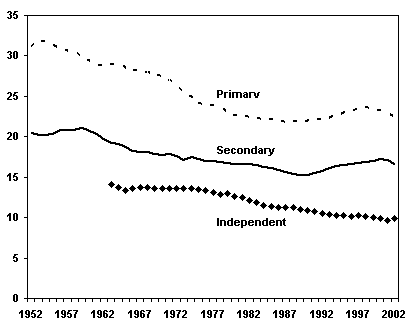
|
|||
|
|
|
||
|
|
|
||
|
Source: Annual publications of Statistics of Education, Schools in England, Table 7. |
|
||
6.10 TheGovernments plans for reducing teacher workload include guaranteeing primaryteachers ten per cent planning, preparation and assessment time from September2005, but this does not appear to involve funding the schools to employ moreteachers. Indeed, the 2003-04settlement threatens to increase workload by obliging some schools to shedteaching and support staff.
Resum
6.11 Inthe light of their 2003-04 budget settlements many headteachers were at a lossto see how they could begin to implement workload reduction when they werehaving to cutback on teaching and support staff, or unable to make the newappointments that would be needed.
7. Recruitment
Teacherrecruitment is the most serious issue we have to face. The conspiracy of silence (heads cannotspeak openly about this matter in order to protect their staff) means that thedramatic decline in the quantity and quality of candidates for teaching postsis obscured.
Chart 7.1: Teaching Posts Available forSeptember 2003
|
Details |
Primary |
Secondary |
||
|
N |
%1 |
N |
%1 |
|
|
Schools Seeking to Make Appointments |
491 |
50.1 |
348 |
94.6 |
|
Teaching Posts Available |
812 |
|
1960 |
|
|
Advertised Posts |
623 |
79.6 |
1788 |
93.6 |
|
Advertised Full-Time Permanent Posts |
397 |
64.1 |
1487 |
83.7 |
|
Advertised FTP for Classroom Teachers |
341 |
54.7 |
1192 |
66.6 |
|
FTP Classroom Appointment Made |
317 |
96.6 |
1096 |
93.8 |
Chart 7.2: New Posts by Type of Contract
|
Type of Contract |
Primary |
Secondary |
||||||
|
Total |
New |
Total |
New |
|||||
|
N |
% |
N |
% |
N |
% |
N |
% |
|
|
Full-Time Permanent |
480 |
60.0 |
24 |
5.0 |
1,571 |
82.6 |
255 |
16.2 |
|
Full-Time Fixed-Term |
207 |
25.9 |
22 |
10.6 |
229 |
12.0 |
40 |
17.5 |
|
Part-Time Permanent |
43 |
5.4 |
7 |
16.3 |
48 |
2.5 |
15 |
31.3 |
|
Part-Time Fixed-Term |
70 |
8.8 |
29 |
41.4 |
53 |
2.8 |
13 |
24.5 |
|
Total1 |
812 |
100.0 |
82 |
10.1 |
1960 |
100.0 |
323 |
16.5 |
Chart 7.3: Advertised Posts by Type ofContract
|
Type of Contract |
Primary |
Secondary |
||||
|
N |
% Posts |
%Advert |
N |
% Posts |
%Advert |
|
|
Full-Time Permanent |
397 |
64.1 |
84.7 |
1487 |
83.7 |
95.3 |
|
Full-Time Fixed-Term |
146 |
23.6 |
73.2 |
213 |
11.9 |
89.4 |
|
Part-Time Permanent |
32 |
5.2 |
74.4 |
40 |
2.3 |
85.1 |
|
Part-Time Fixed-Term |
44 |
7.1 |
65.7 |
37 |
2.1 |
69.8 |
|
Total1 |
623 |
100.0 |
79.6 |
1788 |
100.0 |
93.6 |
Chart 7.4: Applications to Full-TimePermanent Posts
|
Type of Post |
Primary |
Secondary |
||||
|
N |
% Posts |
Average Applicants |
N |
% Posts |
Average Applicants |
|
|
Headteacher |
14 |
3.5 |
9.2 |
10 |
0.7 |
16.2 |
|
Deputy/Assist Head |
39 |
9.9 |
6.9 |
63 |
4.2 |
22.3 |
|
Head of Dept/Faculty |
|
|
|
222 |
14.9 |
4.3 |
|
Classroom Teachers |
341 |
86.3 |
16.4 |
1,192 |
80.2 |
5.3 |
|
Total1 |
397 |
100.0 |
15.2 |
1,487 |
100.0 |
6.0 |
Chart 7.5: Applications to Full timePermanent Classroom Posts by Region
|
Region |
Primary |
Secondary |
||
|
N |
Applications |
N |
Applications |
|
|
North East |
13 |
33.9 |
50 |
3.9 |
|
North West |
31 |
26.2 |
141 |
7.9 |
|
Yorks & Humber |
19 |
31.4 |
105 |
6.6 |
|
East Midlands |
30 |
16.1 |
125 |
6.1 |
|
West Midlands |
34 |
14.3 |
128 |
5.3 |
|
East of England |
36 |
9.1 |
118 |
3.2 |
|
Inner London |
35 |
10.3 |
52 |
3.0 |
|
Outer London |
36 |
3.8 |
126 |
3.4 |
|
South East |
56 |
12.3 |
190 |
3.9 |
|
South West |
38 |
28.1 |
103 |
7.0 |
|
Wales |
1 |
7.0 |
42 |
9.4 |
|
Total1 |
329 |
16.4 |
1,180 |
5.3 |
1. Primary does not include 4 posts whoseclosing date had not been reached or 8 where the appointment was made from theLEA pool; secondary does not include 12 posts where the closing date had notbeen reached.
Chart 7.6: Applications by Subject
|
Subject |
N |
Applications |
% Good |
|
History |
41 |
11.8 |
76.9 |
|
Art |
35 |
10.0 |
81.3 |
|
Geography |
60 |
8.0 |
55.6 |
|
Science1 |
193 |
5.7 |
44.9 |
|
PE |
116 |
5.6 |
68.9 |
|
Modern Languages |
71 |
5.5 |
55.4 |
|
ICT |
65 |
4.6 |
50.0 |
|
Design & Technology3 |
118 |
4.5 |
50.9 |
|
English2 |
201 |
4.3 |
55.5 |
|
Maths |
131 |
4.0 |
35.0 |
|
Music |
33 |
3.8 |
40.0 |
|
RE |
44 |
3.5 |
39.0 |
|
Welsh |
5 |
3.2 |
20.0 |
|
Other4 |
53 |
4.8 |
62.0 |
|
Total5 |
1,180 |
5.3 |
52.6 |
1. Includes physics,chemistry, biology, science and other science.
2. Includes drama.
3. Includes business studiesand home economics.
4. Includes SEN and subjectsother than those listed.
5. Applicants for 75 of the posts not rated.
Chart 7.7: Applications to SelectedSubjects by Region
|
Region |
English |
Maths |
Science |
D & T |
PE |
|||||
|
N |
App |
N |
App |
N |
App |
N |
App |
N |
App |
|
|
North East |
7 |
3.6 |
2 |
1.0 |
6 |
6.3 |
8 |
3.1 |
4 |
2.3 |
|
North West |
17 |
9.0 |
17 |
5.4 |
21 |
10.5 |
16 |
6.1 |
19 |
9.7 |
|
Yorks & Humber |
18 |
4.8 |
11 |
7.6 |
18 |
6.8 |
10 |
7.0 |
12 |
4.7 |
|
East Midlands |
22 |
4.8 |
16 |
4.6 |
24 |
6.9 |
11 |
5.5 |
8 |
8.0 |
|
West Midlands |
24 |
3.1 |
10 |
3.2 |
22 |
5.2 |
12 |
6.1 |
14 |
3.4 |
|
East of England |
24 |
2.3 |
5 |
1.6 |
27 |
3.2 |
8 |
3.1 |
14 |
4.1 |
|
Inner London |
11 |
3.1 |
7 |
3.7 |
7 |
2.9 |
8 |
3.9 |
2 |
2.5 |
|
Outer London |
18 |
3.2 |
20 |
3.8 |
20 |
2.7 |
15 |
2.2 |
8 |
4.8 |
|
South East |
33 |
3.3 |
29 |
2.3 |
27 |
2.9 |
18 |
2.1 |
24 |
5.8 |
|
South West |
23 |
5.1 |
7 |
1.3 |
16 |
8.6 |
8 |
6.3 |
10 |
4.8 |
|
Wales |
4 |
10.5 |
7 |
7.3 |
5 |
12.0 |
4 |
5.5 |
1 |
1.0 |
|
Total |
210 |
4.3 |
131 |
4.0 |
193 |
5.7 |
118 |
4.5 |
116 |
5.6 |
|
Recruitment of senior staff is very difficult. Even teaching staff applications are erratic this time was good. Junior, East (2720)Advertising in TES, Jobscene and on the internet are costly. Response is very poor from UK trained teachers lots of interest from OTT but many have limited English skills. Junior, East (2615)We exist on Australian supply staff which cost a great deal of money thus budgets are reduced further. VA, Primary, Outer London (3285)Overseas staff on fixed-term contracts mask issues of vacancies. Primary, Outer London (3287)Adverts are a waste of time and money. Many teachers want to be non-class based or part-time to avoid paper work. School development is seriously hampered. Primary, Outer London (3348)We have no Deputy Head and have been unable to appoint one (no real interest) for 3 years. I am also losing my SENCO to early retirement and will have to do that job myself also! Infant, South East (3566)In the last 2 years I have lost 2 outstanding teachers because I was unable to offer them permanent posts. Primary, Wales (4689) |
|
Applicants for middle management posts very thin. Where are tomorrows leaders? Does anyone teach technology? Comp 11-18, North East (58)Serious shortage of applicants for maths/English/ science not experienced in this area before. Tech 11-16, North East (79)Very few applicants for some posts. We have carried a vacancy for a whole year in music. We are having to pay management 3 to attract any maths applicants at all. Bus & Ent 11-16, North West (296)Very hard to recruit teaching staff in this borough in shortage subjects. Comp 11-16, Yorks & Humb (380)It is becoming increasingly difficult to obtain a field of teaching staff for interview. The number of applicants has dropped significantly in the past two years. Comp 11-18, East Midlands (641)
There seems to be a very limited pool of good quality staff. Subjects such as music, English and physical sciences impossible. Comp 11-18, West Midlands (731)Management, recruitment and retention allowances do not attract applicants. But heads offer more money when they know a teacher has an interview. It happened with the posts we advertised in maths, D&T and MFL. Comp 11-16, West Midlands (916)Recruitment is a major problem. Lack of quality applicants. We rely more and more on GTP where we do get good quality but it takes a lot of staff time in support, mentoring etc. Tech 11-18, West Midlands (789)We can afford staff but getting high calibre committed people is the problem. Comp 11-18, East (987)We have 3.5 vacancies we have not been able to fill. Comp 11-18, Inner London (1150)Recruitment a nightmare 17 OTTs, 4 RGTPS, 8 NQTs.. Sports Boys Modern 11-18, Outer London (1333)To cover a long standing graphics vacancy I have had to appoint and ex deputy head on CPS=3 plus UP2. An NQT would have done none available. Bus & Ent 11-16, Outer London (1295)Recruitment is a serious issue in this area, due to housing costs etc. Employing GTPs is one way to overcome the problem, but training then becomes the issue. Boys Modern 11-18, Outer London (1313)The recruitment position is worrying. In this LEA the underlying trend is for fewer applications of, with the exception of NQTs, poorer quality and demanding higher salaries. Found, Comp 11-19, Outer London (1300)Extremely difficult to recruit in all areas of the curriculum they are all shortage subjects but some more than others technology, physics, ICT, English, maths. Tech 11-19, South East (1438)We have invested in GTPs who teach considerably less, but ultimately have saved us from failing to find a teacher. VA, Boys Grammar, South East (1509)Very small field for any post. Often need to re-advertise. Sports 11-18, South East (1439)We have had great trouble in recruiting in maths, losing three people who had virtually agreed contracts. Comp 11-16, South West (1684)Welsh teachers are in very short supply in Wales: almost all appointments are made on the basis of personal recommendation/knowledge. Comp 11-18, Wales (1996) |
Chart 7.8: Ratings of Quality ofApplicants to Full-Time Permanent Classroom Posts
|
Rating |
Primary |
Secondary |
||||||
|
NQTs |
Other |
NQTs |
Other |
|||||
|
N |
% |
N |
% |
N |
% |
N |
% |
|
|
Good |
104 |
66.2 |
101 |
63.5 |
368 |
57.0 |
215 |
46.6 |
|
Average |
42 |
26.8 |
49 |
30.1 |
230 |
35.6 |
172 |
37.5 |
|
Poor |
11 |
7.0 |
9 |
5.7 |
48 |
7.4 |
72 |
15.7 |
|
Totals1 |
157 |
100.0 |
159 |
100.0 |
646 |
100.0 |
459 |
100.0 |
Resum
8. Prospects and Pointers
Whatevernational comments are made about recruitment, schools finance etc, thesituation on the ground is the most serious ever at present. Standards are threatened.
The key pointis that although the Government has increased overall funding it is simply nota big enough increase to cover all the additional costs that they have alsoplaced upon schools both knowingly and unwittingly.
Causes of ShortfallIncrease in employers contribution to teachers pensions and National Insurance has increased on-costs from 15 per cent to 22 per cent.Funding of certain activities via the Standards Fund ceased - loss of 62,000.Teachers pay award of 2.9 per cent (or so we are told).Greater incremental drift due to shortened pay spine.45 per cent of staff have gone through the threshold with 33 per cent on U2 in Sept 2003. (Latter only 60 per cent funded).Actions Already Taken Cancelled 0.5 appointment in PE.Withdrew offer of a contract in history.Cancelled visit from Russia.Temporary freeze on ordering.Reduced number of form groups in 2003-04 Y8 cohort from 9 to 7.Actions Proposed Suspending activities which involve a cost such as KS3 and KS4 Mentoring, Staff Development, KS3 Strategy.A 50 per cent cut in planned expenditure on careers. Gifted & Talented, Helpline, K3 Literacy, SEN, Alternative Curriculum, Director of Sport, PDM for SSco Prog.50 per cent cut in Departmental Allowances.Reduction of teaching complement by four.SNA reductions.Hidden downsides - asking colleagues to teach in areas which are not their main specialism and less flexibility. |
Causes of ShortfallCost pressures on staffing are 11 per cent deriving from a 5.2 per cent increase in superannuation, a 1 per cent increase in National Insurance and a teachers pay rise of 2.9 per cent.The teachers workload agreement and threshold payments put another 1 per cent on the budgetThere are reductions in Standards Funds of 1 percent.Because of these changes the staff budget has risen from 80 per cent to 90 per cent.The 11 per cent increase in the staff budget equates to 10 per cent on the whole school budget.The school received 5 per cent from the LEA which was above the Government calculated recommendation for the area.The school thus faces a shortfall of 5 per cent.The total budget, including all funds for the school, is 3 million.A shortfall of 5 per cent is thus 150,000.Reduced number of form groups in 2003-04 Y8 cohort from 9 to 7.Options Cut staff I have already cut one FTE teacher through redundancy and am looking at others; I shall need to cut five.Cut all costs no books, maintenance, savings on heating and lighting etc. before making staff redundant.Raise funds from parents and sponsors.ConsequenceThe damage it has done and will do the 15 years of work that I have invested in this school, and the many years of my predecessors before me, to make it an outstanding organisation |
month for 12months. If all agreed, this wouldenable us to solve the problem for the next academic year (to Sept 2004). Because the school is a charity suchdonations would qualify as gift aid for tax purposes and the school would gainadditional funding. What do you think?Please respond to the enclosed questionnaire.
|
Just managed to balance budget with carry forward and not replacing staff. Worried that if this trend continues together with falling roll more staff reductions would be inevitable. Primary, North East (0053)Pupil rolls are falling. Next year it will be necessary to 'lose' a teacher. A smaller number of children in each class would be a much better option. Primary, North East (0154)In September we will have 16 fewer children in year 1 due to general falling rolls. We are therefore employing temporary staff in case we have to make cutbacks in staffing if the trend continues next year. This is why we are not replacing a much needed teaching assistant in Reception. Infant, North West (0513)With a drop in numbers and cheaper staff employed we are able to manage this year but are unsure about next year if budget does not improve. Infant, Yorks & Humb (1378)Falling rolls account for most discomfort - a pupil 'bulge' leaving in July. Problems will be far more acute in Sept. 04 when a one year maternity 'expires'. At current levels we shall probably lose 2.0 FTE teachers. CSA support for workforce remodelling not viable. VC Junior, Yorks & Humb (1129)We had a large carry forward - 75,000 but have wiped this out. Have also lost 68 hours TA support to keep afloat and have a small reserve for next year. Expect to go into deficit budget in 2004/05 if funding does not improve. Primary, East Midlands (1595)We have a carry forward which will support budget for 2003/4 but we will need to reduce classes from 7 to 6 in September 2005 and therefore reduce staffing by one teacher. Junior, East Midlands (1754)We can cover the additional costs of new pay levels for teaching assistants this year, but will struggle to do so in future. VA, Primary, West Midlands (2328)The additional post is temporary due to financial concerns for next year. Primary, West Midlands (2044)We have been able to set a budget this year only by reducing staffing, LSA hours reductions, reductions in admin hours, the head taking on more teaching and using up our entire carry forward. This cannot be sustained for 2004-05. The workload agreement cannot be implemented at present. Primary, East (2534)This year has been the worst budget settlement I can remember and next year looks like being worse. Primary, South West (4414) |
|
If the current funding crisis is not resolved, large numbers of teachers will be made redundant next year. At a strategic level problems are financial, at teacher level it is workload and stress. Tech 11-16, North West (299)Using accumulated reserves 2003/04. Real concerns for subsequent years, especially as Standards Funds are transferred to formula grants, where we will lose out. Perf Arts 11-18, Yorks & Humb (544)I had a very large carry forward which is allowing me to maintain staffing levels for one more year. If funding does not improve I will be making two teachers redundant next year. VC, Middle, West Midlands (866)We have received extra funding for an increasing roll, but April 2004 looks to be more difficult. Comp 13-18, East (1079)We are losing five posts this year and we will have to go further down the staff reductions procedures route (we are 220,000 in red) if more money is not promised (and it is real money) for next year. Comp 11-19, Inner London (1186)The funding crisis is appalling. I am only able to balance the budget because of Technology College status and even so we are losing one post. We cant sustain another year at this level of funding without making further cuts. Found, Girls Tech 11-18, Outer London (1248)Governors have agreed to set deficit budget in line with Secretary of States comments. We fear next year for the LEA has predicted further cuts. Boys Grammar, South East (1470)We have been able to keep existing staffing levels this year by tightening belts in maintenance and equipment, but this will not be possible next year when without a significant increase redundancies will happen. Girls Grammar 11-18, South East (1472)We have been able to sort out a budget to get us through 2003/4 by using up all our carry forward. We now have no margin for covering any shortfall in 2004/05. Middle, South West (1639)If next year does not see a real increase in funding, we shall need to cut teaching staff, raise class sizes and/or contact ratios. Not a happy situation with the workload agreement due to kick in and derisory sums on offer in Wales. Found, Comp 11-18, Wales (2006) |
|
We are employing a T.A. for extra hours on a basic contract to cover workload national agreement responsibilities from September. This money has suddenly been allocated by the LEA till April 2004 as a temporary measure. VA, Primary, North East (0143)Infant class size limit (30) has resulted in moving from 2 to 3 infant classes with 3 teachers. Our delegated budget is based on 2.75 teachers. Healthy reserves are being used to meet this cost. VA, Primary, North West (0748)Although GS8 improved there are many more items to be paid for out of it, professional development being one. This is a mistake as schools will simply allocate this money to staffing etc. and not to staff development. I doubt that I will be able to run a balanced budget this year if staffing levels are to be maintained. Found, Primary, North West, (0880)Our budget would have needed redundancies if we had not gone into protection. Equipment and buildings budget is at a minimum. Primary, East (2466)Support staff are essential to run Government programmes ELS, ALS, Springboardgive primary schools the same funding per pupil as High Schools. VC, Primary, East (2825)Pots of money suddenly appear and disappear so planning for staffing is very difficult. Primary, Inner London (2917)The staffing budget rose by 100,000+ this year (50,000 was on-costs)the Government have made a MAJOR FUNDING MISTAKE. Watch out next year! Primary, South East (3669)Too much change too much giving money one year then too much taking away the next. If I ran my school this way Id be sacked. Primary, South East (3977)Actual budget gave an increase of 3.7%. However teaching staff costs have risen by 17.4% and non teaching by 5.1. New SSA formula is as unfair as the last. Primary, South West (4168)There is nothing in the formula which counteracts having 35 children less on roll but only 1 less class, nor helps schools whose numbers fluctuate year on year. Primary, South West (4215)Funding formula is such a fog in Wales; we have no idea what the settlement is for education and LEAs and the Assembly are blaming each other for the shortfall. Primary, Wales (4552) |
|
Who in their right mind provides a budget which changes year on year and the information is only given four weeks prior to the new financial year. Three to five year budgets please. Sports 11-16, North East (33)If we were across the LEA boundary we would have been 500,000 better off last year. VA, Comp 11-16, North West (222)Budget difficulties caused by additional superannuation and national insurance costs, reduction of Standards Fund, smaller teacher pay spine so staff reach top much quicker, UPS 2 not fully funded. Comp 11-16, Yorks & Humb (493)Too much funding is allocated on an ad hoc basis (eg LiG) and other sometimes poorly conceived projects (excellence clusters, pathfinder schemes and even the specialist schools scheme). This makes future planning of staff requirements very difficult. Comp 11-18, East Midlands (678)Chronic disparities in funding between schools and LEAs. Lang 11-18, East Midlands (675)Major budget problem triggered by stopping Standards Fund for learning support unit and LEA reducing SEN funding. VC, Comp 11-16, West Midlands (899)Ask the Government to stop top slicing the schools budget to introduce initiatives which are targeted at a small percentage of schools. This is, in effect, a tax on other schools who are not eligible. Comp 12-18, East (1093)With staff costs increasing by almost ten per cent plus fully delegated SEN for the first time, it is outrageous that funding per pupil is decreasing in cash terms. Found, Tech 11-16, Outer London (1258)We suffer from being just outside the London allowance area. We also do not get LSC area uplift enjoyed by sixth forms just across the border. Our living costs are needless to say identical. Arts 11-18, South East (1423)Apart from everything else a new needs-led formula locally is transferring funding to primary sector, but does not take into account aspects of the secondary curriculum like 14-19 courses, work-related learning etc. Arts 11-18, South West (1653)Change in LEA support for NQT will hit in Sept 03. Comp 11-18, South West (1732) |
Chart 8.1: Pupil Numbers |
||
|
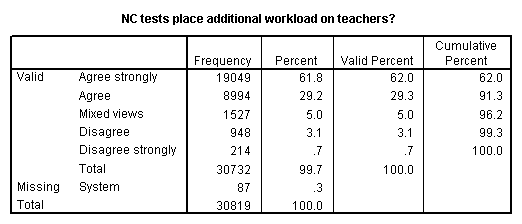 
|
||
|
|
||
|
|
||
|
Source: STRB (2003), Twelfth Report, Table 26. |
Chart 8.2: Teacher Numbers |
|
|
|
1. PTR of 22.5 for primary and 16.9 for secondary applied to pupil numbers of Chart 8.1 |
References
DfEE(1997). 1996/97 Secondary SchoolsCurriculum and Staffing Survey. Statistical Bulletin 11/97. London: TheStationery Office.
DfES(2002a). Time for Standards: Reformingthe School Workforce. London: DfES.
DfES(2002b). Summary of Written Evidence tothe School Teachers Review Body. Statistical Tables as an Annex. London:DfES.
DfES(2003a). Secondary Schools Curriculum andStaffing Survey. DfES National Statistics First Release SFR 08/2003, 16April.
DfES(2003b). School Workforce in England,January 2003. DfES National Statistics First Release SFR 10/2003, 29 April.
DfES(2003c). Speech by the Secretary of Education and Skills to NASUWT Conference-24 April 2003, DfES Press Notice2003/0073, 24 April.
DfES(2003d). LEA budgets published Clarke, DfESPress Notice 2003/0079, 2 May.
DfES(2003e). Agreement on contractual and legal changes for school staff meansradical new working conditions in schools, DfESPress Notice 2003/0116, 17 June.
DfES(2003f). School funding framework for next two years Clarke, DfES Press Notice 2003/0151, 17 July.
DfES(2003g). More graduates want to become teachers Miliband, DfES Press Notice 2003/0172, 3September.
EmployersOrganisation for Local Government (2002). Surveyof Teacher Resignations and Recruitment 1885/6 2001. London: EmployersOrganisation for Local Government.
Garner,R. (2003). Clarke goes online to apologise for schools funding crisis, The Independent, 2 September 2003.
HMTreasury (2002). Spending Review 2002 NewPublic Spending Plans 2003-2006. Cmnd 5570. London: The Stationery Office.
OECD(2002). Education at a Glance, OECDIndicators 2002. Paris: OECD.
PriceWaterhouseCoopers(2001). Teacher Workload Study.Available at www.teachernet.gov.uk/management/remodelling/workload.
Robinson,P. and Smithers, A. (1991). TeacherTurnover. Report to the Leverhulme Trust. Manchester: School of Education.
SchoolTeachers Review Body (2002). SpecialReview of Approaches to Reducing Teacher Workload. London: The StationeryOffice.
School Teachers Review Body (2003). Twelfth Report. Cmnd 5715. London: TheStationery Office.
Smithers, A. and Robinson, P. (1991). Teacher Provision: Trends and Perceptions.School of Education, Manchester for the DES.
Smithers, A. and Robinson, P. (2000). Attracting Teachers: Past Patterns, PresentPolicies, Future Prospects.Liverpool: Carmichael Press.
Smithers, A. and Robinson, P. (2001a). Teachers Leaving. London: NUT.
Smithers, A. and Robinson, P. (2001b).The teacher labour market, DfESResearch Conference, 11 December 2001.
Smithers, A. and Robinson, P. (2003). Factors Affecting Teachers Decisions toLeave the Profession. London: DfES.
Smithers, A., Robinson, P. and Tracey,L. (2002). The Reality of SchoolStaffing: Interim Report. Liverpool: CEER.
Appendix A: Methods
A.1 Thepopulation studied was primary and secondary schools in England and Walesduring the school year 2002-2003. Themain part of the study was a postal questionnaire survey of schools, but therewere also interviews with headteachers and a survey of teachers as reported inSmithers, Robinson and Tracey (2002).
Survey of Schools
Sampling
A.2 Initialsamples of schools, stratified by local education authority, were drawnrandomly from our database of schools developed from the DfES Register ofEducational Establishments for England and the Primary Education Directory 2002 and the Education Authorities Directory and Annual 2002 produced by theSchool Government Publishing Company Ltd.
A.3 Theinitial samples comprised 4,902 (1 in 4) primary schools and 1,842 (1 in 2)secondary schools. The questionnaireswere sent to schools in the week beginning 25 June 2003. Of the letters sent out, 35 primary and 20secondary were returned by the Post Office as not being deliverable. Fourteen schools (4 primary and 10 secondary)got in touch to say that because of local circumstances, for example the schoolclosing, they did not think it helpful to respond. The effective initial samples were, therefore, 4,863 primary and1,812 secondary schools
A.4 Ofthe effective samples, 2,048 primary schools (42.1 percent) and 668 secondaryschools (36.9 per cent) responded. Ofthese, 27 primary and 14 secondary questionnaires were returned too late to beincluded in the analysis. The 2,675questionnaires available for analysis were coded and tagged by an experiencedteam of four according to printed coding frames. The coded information was inputted into the computer as an Excelfile, verified and then transferred into SPSS (Version 10) for analysis.
Structured Samples
A.5 Fromthe responses structured samples of 5 per cent of primary and 10 per cent ofsecondary schools were derived from cross-tabulations of the nationaldistributions by region and number of pupils on roll. The schools included in any cell were randomly selected bycomputer programme. Where occasionallythere were too few for any cell, compensation was from a neighbouringcell. Middle deemed secondary schoolswere included in the secondary sample, but since they differ on size andregional distribution from other secondary schools they were drawn separately.
A.6 Themake-up of the primary and secondary samples is shown and comparisons with thenational distribution by region and country are given in Table A.1. Distributions by school size are shown inTable A.2. Comparisons with nationaldistributions for primary schools by status and type, and for secondary schoolsby status, type, gender of pupils, age range, and specialism are provided inAppendix B confirming that, in so far, as the initial response wasrepresentative, the structured samples of 980 primary schools and 368 secondaryschools fully reflect the populations of schools in England and Wales.
Table A.1: Samples by Region and Country1
|
Region and Country |
Primary |
Secondary |
||||
|
N |
%Sample |
%National |
N |
%Sample |
%National |
|
|
North East |
48 |
4.9 |
5.0 |
22 |
6.0 |
6.0 |
|
North West |
136 |
13.9 |
13.8 |
48 |
13.0 |
13.0 |
|
Yorks & Humber |
98 |
10.0 |
9.9 |
33 |
9.0 |
8.9 |
|
East Midlands |
86 |
8.8 |
8.8 |
32 |
8.7 |
8.8 |
|
West Midlands |
93 |
9.5 |
9.8 |
42 |
11.4 |
11.4 |
|
East of England |
108 |
11.0 |
10.7 |
44 |
11.9 |
11.6 |
|
Inner London |
36 |
3.7 |
3.7 |
12 |
3.3 |
3.7 |
|
Outer London |
58 |
5.9 |
5.9 |
26 |
7.1 |
7.5 |
|
South East |
137 |
14.0 |
13.9 |
53 |
14.4 |
14.0 |
|
South West |
99 |
10.1 |
10.1 |
33 |
9.0 |
9.0 |
|
Wales |
81 |
8.3 |
8.3 |
23 |
6.3 |
6.2 |
|
Total |
980 |
100.0 |
100.0 |
368 |
100.0 |
100.0 |
1. National distribution taken from Statistics of Education, Schools in England,2002, Table 2, pp 18-19 and Schoolsin Wales: General Statistics 2002,Tables 3.1 and 4.1, p24 and p34.
Table A.2: Samples by School Size1
|
Number on Roll |
Primary |
Number of Roll |
Secondary |
||||
|
N |
%Samp |
%Nat |
N |
%Samp |
%Nat |
||
|
Up to 100 |
161 |
16.4 |
16.4 |
Up to 400 |
18 |
4.9 |
5.8 |
|
101 to 200 |
292 |
29.8 |
30.0 |
401 to 700 |
77 |
20.9 |
21.4 |
|
201 to 300 |
300 |
30.6 |
30.6 |
701 to 1000 |
119 |
32.3 |
30.9 |
|
301 to 400 |
141 |
14.4 |
14.4 |
1001 to 1300 |
91 |
24.7 |
24.6 |
|
401 to 500 |
64 |
6.5 |
6.6 |
1301 to 1600 |
47 |
12.8 |
12.8 |
|
501 or more |
22 |
2.2 |
2.1 |
1601 or more |
16 |
4.3 |
4.5 |
|
Total |
980 |
100.0 |
100.0 |
Total |
368 |
100.0 |
100.0 |
1. National distribution taken from Statistics of Education, Schools in England,2002, Table 20, p43 and Schools inWales: General Statistics 2002,Tables 3.7 and 4.7, p27 and p36.
Questionnaire
A.7 Thequestionnaire was simple and attractively designed as a four-sided booklet. It first asked for some establishinginformation followed by questions on changes in the roll and teaching staffcomplement. If teachers were not beingreplaced, schools were asked to give the reasons and the total in FTEs. Schools were also asked whether they wereable to afford extra support staff or whether they were having to makereductions, and to specify. There werequestions on the budget settlement for 2003-04 and how it compared with theprevious years. Headteachers wereasked whether there would have to be any changes to the teaching.
A.8 Spreadacross the centre pages were detailed questions on staff not being replaced andrecruitment. For each teacher not beingreplaced schools were asked to indicate the post, type of contract, whether thepost was lost wholly or partly, how the post was vacated, and how the lostteaching input would be covered. Foreach post being filled for September 2003, the school was asked to say whattype of post, whether it was newly created, whether it had been advertised, thenumber of applicants, to rate the quality of the applicants, whether anappointment had been made, whether it was filled by an NQT and the type ofcontact offered.
Interim Report
A.9 Interviewswere conducted with headteachers at the start of the 2002-03 school year and asurvey of teachers was undertaken in the autumn term. the data were analysed as an interim report (Smithers, Robinsonand Tracey, 2002)
A.10 Interviewswith 34 headteachers (17 in each of primary and secondary) were carried out bytwo experienced researchers. They werechosen from the sampling frame to be representative of the regions, with twobeing held in each of the larger regions.The interviews were by telephone each lasting between 40 minutes and anhour. With the headteachers permissionthe interviews were recorded. The tapeswere transcribed and subjected to content and theme analysis.
A.11 Thesurvey of teachers was designed to explore the match between qualifications andsubject(s) taught. About a third ofmaintained schools publish staff lists either in prospectuses or on theirwebsites. From among those, an initialsample of 1 in 2 was drawn. Of the 514schools approached to participate, 465 agreed to do so. They were sent letters and questionnaires tobe handed on to members of staff who had been drawn in a 1 in 10 randomsample. In total 2,959 letters weresent out and 1,258 completed questionnaires were received (42.5 per cent).
Appendix B: Comparison with National Distributions
Primary
B.1 TablesB.1 and B.2 show that, in addition to region and school size, a close match wasachieved for both type of school and whether the school was community,voluntary aided or controlled, or foundation.
Table B.1: Primary Sample by Type ofSchool
Type |
Sample |
National1 |
||
|
N |
% |
N |
% |
|
|
Infant |
108 |
11.0 |
2,115 |
10.8 |
|
First |
78 |
8.0 |
1,540 |
7.9 |
|
Infant and Junior |
678 |
69.2 |
13,575 |
69.2 |
|
First and Middle |
9 |
0.9 |
190 |
1.0 |
|
Junior |
100 |
10.2 |
2,057 |
10.5 |
|
Middle - Primary |
7 |
0.7 |
132 |
0.7 |
|
Total |
980 |
100.0 |
19,609 |
100.0 |
1. Statisticsof Education, Schools in England, 2002, Table 9a, p28 and Schools in Wales: General Statistics 2002,Table 3.2, p25.
Table B.2: Primary Sample by Status
Status |
Sample |
National1 |
||
|
N |
% |
N |
% |
|
|
Community |
629 |
64.2 |
12,627 |
64.4 |
|
Voluntary Aided |
193 |
19.7 |
3,863 |
19.7 |
|
Voluntary Controlled |
136 |
13.9 |
2,753 |
14.0 |
|
Foundation |
22 |
2.2 |
366 |
1.9 |
|
Total |
980 |
100.0 |
19,609 |
100.0 |
1. Statisticsof Education, Schools in England, 2002, Table 9a, p44 and Schools in Wales:General Statistics 2002, Table 3.5, p26.
Secondary
B.2 TablesB.3-B.6 show that the secondary sample corresponded closely with the nationaldistribution in terms of type of school, gender of pupils, whether it tookchildren to age 16 or 18, and by type of specialism.
Table B.3: Secondary Sample by Gender of Pupils
Gender of Pupils |
Sample |
National1 |
||
|
N |
% |
N |
% |
|
|
Coeducational |
326 |
88.6 |
3,263 |
88.5 |
|
Girls |
23 |
6.3 |
232 |
6.3 |
|
Boys |
19 |
5.2 |
189 |
5.1 |
|
Total |
368 |
100.0 |
3,684 |
100.0 |
1. Statisticsof Education, Schools in England, 2002, Table 10, p31 and Schools in Wales: General Statistics 2002,Table 4.4, p35.
Table B.4: Secondary Sample by Status
Status |
Sample |
National1 |
||
|
N |
% |
N |
% |
|
|
Community |
248 |
67.4 |
2,476 |
67.2 |
|
Voluntary Aided |
52 |
14.1 |
568 |
15.4 |
|
Voluntary Controlled |
17 |
4.6 |
131 |
3.6 |
|
Foundation |
51 |
13.9 |
509 |
13.8 |
|
Total |
368 |
100.0 |
3,684 |
100.0 |
1. Statisticsof Education, Schools in England, 2002, Table 21, p 44 and Schools in Wales: General Statistics 2002,Table 4.6, p36.
Table B.5: Secondary Sample by Type of School
Type |
Sample |
National1 |
||
|
N |
% |
N |
% |
|
|
Comprehensive |
306 |
83.2 |
3,063 |
83.1 |
|
Grammar |
16 |
4.3 |
161 |
4.4 |
|
Modern2 |
16 |
4.3 |
160 |
4.3 |
|
Middle Secondary |
30 |
8.2 |
300 |
8.1 |
|
Total |
368 |
100.0 |
3,684 |
100.0 |
1. Statistics of Education, Schools in England, 2002, Table 9b, pp28-29 and Schools in Wales: GeneralStatistics 2002, Table 4.3, p35.
2. Includes technical and other.
Table B.6: Secondary Sample by Age Range
Age Range |
Sample |
National1 |
||
|
N |
% |
N |
% |
|
|
Up to 13 years |
30 |
8.2 |
300 |
8.1 |
|
Up to 16 years |
144 |
39.1 |
1,464 |
39.7 |
|
Up to 18 years |
194 |
52.7 |
1,920 |
52.1 |
|
Total |
368 |
100.0 |
3,684 |
100.0 |
1. Statisticsof Education, Schools in England, 2002, Table 20, p 43 and Schools in Wales: General Statistics 2002,Table 4.4, p35.
Table B.7: Secondary Sampleby Specialism
Specialism |
Sample |
National1 |
||
|
N |
% |
N |
% |
|
|
General |
250 |
67.9 |
2,461 |
66.8 |
|
Technology |
46 |
12.5 |
473 |
12.8 |
|
Arts |
16 |
4.3 |
202 |
5.5 |
|
Sports |
23 |
6.3 |
195 |
5.3 |
|
Languages |
20 |
5.4 |
173 |
4.7 |
|
Other |
13 |
3.7 |
180 |
4.9 |
|
Total |
368 |
100.0 |
3,684 |
100.0 |
1. Taken as the mid points between numbersdesignated September 2002 and September 2003 since in describing themselvessome, but not all schools anticipated their new status.