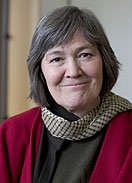
Review by Clare Short
The Independent
8 April 2005
I like this book very much. It is a very powerful, hard-headed account of how our generation has come to be the first in human history that could remove extreme poverty from the human condition. Jeffrey Sachs is a good economist and Bono - who writes the Preface - a good campaigner, but the book is more heavyweight and compelling than I expected. I recommend it strongly to those who are interested in how we could shape the potential of globalisation in order to give the 1.1 billion people living in abject poverty the chance of a better future.
We are living in a disappointing era. When the Berlin Wall came down and Nelson Mandela was released from prison, a shiver of hope spread across the world. The Cold War and apartheid were soon to end. Perhaps we could use the resources saved from armaments and the reality of an open, undivided world to build a better era? There were some good omens: cuts in defence spending; velvet revolutions in Eastern Europe; a peaceful end of apartheid. But the big powers failed to adjust to the realities. Their peacekeeping missions in Somalia failed, and they did not even try to prevent the genocide in Rwanda or act to halt ethnic cleansing in the Balkans. The hopes were dashed and the Cold War world was replaced by growing disorder, poverty and inequality.
There was a glimmer of hope from 1998 to 2002, when under public pressure the G8 nations agreed to deeper debt relief for the poorest countries. This was accompanied by a new model of development, where larger inputs of debt relief and budgetary support helped reforming governments build effective state institutions and expand education and health care for the poor. In 2002, a UN meeting attended by a record number of heads of states and prime ministers agreed that a massive assault on poverty, ill health and lack of education would be the priority for the new millennium.
Then, even after 11 September 2001, the world agreed at Doha that there should be a trade round focused on making trade rules fair for developing countries. At a UN meeting on financing development, the rich countries agreed to increase aid in order to provide the investment needed to deliver the conditions for systematic poverty reduction. But then came the "war on terror", and the focus has been largely lost.
Jeffrey Sachs, having been invited as a young Harvard economist to advise on hyperinflation in Bolivia, the transition from communism in Poland and Russia, and reform in India and China, became more and more engaged with the challenge of development. He was asked by Gro Bruntland, then director general of the World Health Organisation, to chair a high-powered commission on the links between the failure to treat the diseases of poverty - HIV/Aids, TB and malaria - and the growth of poverty. He was then asked by Kofi Annan to lead the UN's work on what it would take to deliver the promise of halving world poverty by 2015.
The book summarises his life's work. Importantly, it reminds us that, until 200 years ago, the whole of human history was a tale of poverty, squalor and disease. It was the Industrial Revolution that made possible the transformation of Western Europe and North America. The present era of global integration provides a similar possibility worldwide.
Sachs summarises the enormous progress made in East Asia, and now South Asia, and the particular challenge of Africa. The conclusion is that extreme poverty can be eliminated by 2025. It would need a bigger investment fund than the current $60bn of worldwide aid, but would cost less than $200bn per annum through to 2025.
This is easily affordable by the OECD countries. And, of course, we are all going to be in serious trouble if we don't do it. I did hope at one time that this understanding might become the centrepiece of UK foreign policy. But Blair chose Bush instead. This is the book of what we could and should do.
Clare Short was Secretary of State for international development, 1997-2003