|
Brown silent on snap election prospects
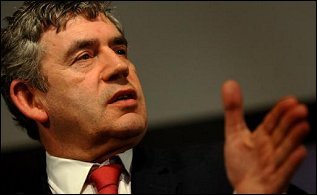
Gordon Brown has declined to comment on whether he will call a snap general election.
The prime minister, speaking on BBC1's Andrew Marr Show, said he was "getting on with the job".
His comments come amid continuing speculation over whether an election could be held this autumn.
"My focus is on the work ahead, the return of parliament, Iraq, the health service," said Brown.
"Whenever the time comes for an election these will be the issues and the most important thing is I get on with the job."
Asked if he would rule out an early poll, he added: "There's been speculation all the time but I think people know that over these summer months I just got on with the job."
But schools minister Ed Balls appeared to suggest that an early election could be viewed sceptically by the public.
"If the public simply thought that this was a political calculation about when to call an election, I think they would rightly stand back and say 'Hang on a sec, what we want to know is what is the nature of the choice'," he told BBC Radio 4's World this Weekend programme.
"That is why the really important thing for us to do is to set out very clearly this week and then in the coming months, on the health service, on crime, on my area - education and children's policy, how we will change and take forward policy to change Britain.
"It is important that the public are allowed to see the political choice before you make decisions about these things."
Labour's autumn conference in Bournemouth would focus on the party's plans for improving public services, said the prime minister.
"I will keep getting on with the job and whenever the time comes for a decision, the issues are clear - how we have a strong economy, how we have a new era in the public services, how we respond to the aspirations of the British people," he said. "That's what I will be showing people this week."
Brown defended Labour's economic record in the wake of the Northern Rock banking crisis.
"I think the choice is pretty clear between a government that is determined at all times to maintain the stability and growth of the British economy - and I think we have proved over these last 10 years we can do it and will continue to do so - as against an opposition which, I detect, wants to cut taxes, raise spending, cut borrowing, put the stability of the economy at risk," said the prime minister.
"That reminds me of the policies of 1992 which led us to the very disaster that David Cameron had to stand alongside Norman Lamont at the time of the humiliation of the ERM."
|