|
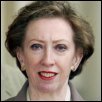
Profile: Margaret Beckett
New foreign secretary Margaret Beckett is known as one of Westminster's safest pair of hands.
Moving into her fourth, and most prestigious cabinet post to date, Beckett becomes the first woman to head the Foreign Office and the first female other than Margaret Thatcher to hold one of the four great offices of state.
She is one of the few survivors of "Old" Labour, having been a whip and then a junior education and science minister under Harold Wilson and then James Callaghan in the 1970s.
She has served in the cabinet continuously since 1997, first as trade and industry secretary, then leader of the House and most recently as environment secretary, establishing the Defra department following the fiasco over foot and mouth disease in 2001.
Standing to the left of the party and certainly not a Blairite, Beckett has nevertheless been a faithful foot soldier under Blair's watch.
Her hard work and competent handling of all departments under her stewardship have earned her the respect of politicians at home and abroad.
A recent career high saw Beckett take the lead on UN climate change talks in Montreal 2005.
She hailed the outcome of all-night talks saying it was "only the beginning" and was particularly proud of her achievement in helping to get Russia on board for the Kyoto agreement.
However her reputation had since been hit by her department's handling of single farm payments, although the prime minister clearly retained faith in her competence.
Beckett first entered parliament in 1974, defeating rebel MP Dick Taverne in Lincoln at her second attempt.
After losing along with her government in 1979, she became a researcher for Granada Television and a political adviser before returning for Derby South in 1983.
She then went on to hold a number of middle-ranking shadow ministerial positions, including social security spokesman and shadow chief secretary to the Treasury, before becoming deputy Labour leader in 1992.
After the death of John Smith in 1994 she was the first woman leader of the Labour Party - albeit for only two months.
Her performance was widely praised, and in this period Labour made sweeping gains in the European parliament elections. But in the ensuing elections she lost out to both Tony Blair and John Prescott for the leadership and number two positions.
However her steady course through cabinet over the past nine years has now been rewarded with arguably the most coveted role in the top team.
Given the role of working alongside the new Europe minister, Geoff Hoon, Beckett is potentially proving that a long parliamentary career does not always end in failure.
However her challenges will now include managing UK withdrawal from Iraq and forging relations with Republicans in the US, with whom she has clashed over climate change.
|