|
Clarke 'flexible' on 90 day detention
The home secretary has mounted a robust defence of his anti-terror laws, but has indicated he could give ground on plans for detaining suspects without charge.
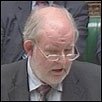
Appearing in front of the Commons home affairs select committee, Charles Clarke said the anti-terror bill to be published this week was in line with human rights laws and would not mean Nelson Mandela or Cherie Blair could be prosecuted, as critics have claimed.
But on the controversial measure of giving the police power to detain terror suspects for up to three months without charge, he said he was not ruling out a compromise.
Clarke said he was not certain agreement could be reached with opposition parties, but said he was not ruling a change to his current proposals.
"I am genuinely interested in getting to an agreed position on this," he said, promising to look at any suggestions "flexibly".
He added that the proposal for three months detention "is not a God-given amount".
The Cabinet minister said the government's response to the July 7 London bombings had been proportionate and measured, and denied any rift with the prime minister.
However speaking later at his monthly news conference, Tony Blair struck a stronger tone in his own defence of the plan.
He said the police had made a "compelling case" for the three month maximum.
"I'm not saying that whatever the police say, we have got to do it," Blair said.
"That's not my case. If the police, charged with fighting terrorism in this country, say to me and to the members of parliament 'This is why we need it', and that case is a good and compelling case - as I find it is - then my duty is to do it, unless someone can come forward with a very good argument why their case is unsound."
Blair also dismissed the claim that the power would be abused.
"I don't agree that the police would simply bang up anybody they wanted to bang up."
Consensus
He insisted he had deliberately not rushed into legislating and is trying to build a wide consensus for change.
Clarke told the cross-party committee: "Combined with the Terrorism Act of 2004, we are trying to get a permanent legislative regime for dealing with terrorism, rather than dealing with it in a series of emergency pieces of legislation.
"The three main things I would identify with this bill are: One, the fact that we are sending a very, very clear message backed by criminal sanctions, that people who engage and incite, glorify and promote terrorism are not acceptable in any form whatsoever.
"That raises of course the kind of free speech provisions that we will debate in the House and are considering.
"Secondly, there are a number of specific issues about prevention, the impact of terrorism and strengthening our resilience...
"And thirdly we are talking about changing the criminal procedures in a way that will make it easier to prosecute terrorists."
No rift
Committee chairman John Denham asked why Clarke had not used the same language in his immediate response to the bombings as Tony Blair had a month later, when he declared that "the rules of the game have changed".
The home secretary said reports of a rift with the prime minister over the August 5 Downing Street announcement were wide of the mark.
"While I did not use the phrase 'the rules have changed'... I agree with him entirely," he said.
"I discussed in detail with the prime minister what he was going to say on August 5 and my officials were involved in drawing that up."
Clarke also claimed he had not had doubts about the three months limit, as a letter to his Conservative and Liberal Democrat counterparts appeared to indicate, but about how to address the issue before he had had a chance to discuss it with them.
Mandela
Under questioning from Labour MPs, he denied that they could have been prosecuted for defending the actions of Nelson Mandela's ANC in apartheid South Africa under the new law against inciting terrorism.
He argued that the world has changed since that age in ways which no longer made terrorism justifiable in any circumstance, pointing to the end of apartheid, communism and Fascist rule in Spain.
"The change which has happened in the world since you and I were involved in those activities is absolutely immense," he told MP David Winnick.
"I believe that precisely the context of the conversation you and I were having at the time was in the context of the cold war. We are now in a new political era."
"I cannot think of a situation in the world today where violence can be justified as a means of bringing about change," he added.
Clarke also denied that the prime minister's wife Cherie could be prosecuted under the new law for expressing sympathy with the causes of Palestinian suicide bombings, as she has done in the past.
Human rights
Pressed by Burnley MP Shahid Malik, he claimed the bill was not sending a signal to British Muslims that some forms of terrorism - such as state sponsored actions - were acceptable, while others were not.
And he denied that the bill would be challenged by lawyers under the European Convention on Human Rights.
"I am confident that this bill as a whole is compatible with the convention on human rights," he said.
"I think any challenge would be very unlikely to be successful."
But this stance was contradicted by the Council of Europe.
"The prohibition of torture and inhuman or degrading treatment... is absolute and non-negotiable," said chairman and former Labour MP Terry Davis.
"It is wrong to suggest that this... has changed as a result of the recent terrorist threats. There cannot be any question of 'striking the right balance' when absolute rights are at stake."
|