|
PM and chancellor target Tory spending plans
Labour and the Conservatives have continued a war of words over tax and spending plans.
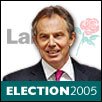
At a press conference on Tuesday morning, Tony Blair and Gordon Brown stepped up their criticism of Tory proposals.
But Conservative co-chairman Liam Fox hit back, saying Labour had "nothing to say" about their own record.
The row deepened following a television interview in which shadow Treasury chief George Osborne appeared to say that any tax cuts put forward by his party would not take effect until the 2006/07 financial year.
His comments prompted the chancellor to say the Opposition's plans were "unravelling".
Contradiction
At the morning press briefing, the prime minister said there was an "unresolved contradiction" between Tory spending commitments and pledges to reduce government spending overall.
"These proposals are a complete and utter mess. It simply does not stack up and an economic plan which doesn't stack up is a threat to the country," said Blair.
"It is their contradiction. They are saying these two things at the self same time.
"Their manifesto, on police, on immigration, on health, on education rests on spending increases. They can't have it both ways."
The chancellor added that Conservative figures were "bogus" and "do not stand up to scrutiny".
"The Conservatives published a manifesto of few words and fewer figures - a shopping list of promises based on sums that cannot and do not add up," said Brown.
The party would face an £18.9bn black hole in its first year, he said.
Questions
Brown went on to question the James review of public spending.
"For months the Tories' only defence is that the £35bn need not mean cuts in services because the James report has found cuts in bureaucracy beyond that of the 85,000 job losses in the Gershon report," he said.
"But today we are exposing that, of the £35bn James review savings on which Letwin is relying, the first £21bn are already included in the Gershon review - savings already used up and allocated to the front line."
The chancellor also claimed that the Tories' plans exposed the debate between the party's moderate and right-wings.
"One faction in the Tory party has opted for opportunism, the strategy of promising spending rises, tax cuts and borrowing reductions - exactly the same John Major strategy of 1992 which led to economic disaster," he said.
"The other faction wants a commitment to full-blooded spending cuts more extreme than in the 2001 election manifesto.
"Unable to reconcile these differences, the Tories claim headline spending can be lower and tax cuts are possible while still able to increase spending on all the vital services from policing and transport to hospitals and schools."
Nothing to say
The Conservatives rejected the criticisms, saying Labour was "rattled".
The Tory chairman said Labour had made "not a single mention of a programme for the future of our country".
"While it is flattering for Labour to spend so much time trying to find a chink in the Conservative economic case it is astonishing that, after eight years in power, they can think of no better reason for being re-elected than that they are not us," added Fox.
"Yet again today Tony Blair seemed clearly rattled.
"Labour are understandably terrified of the focus being on their own record in government - with their broken promises, failure to deliver and serial dishonesty.
"While the Conservatives have produced a programme to deal with the issues that really matter to hard working Britons, Tony Blair continues his obsession with spin, deception and tactics.
"He is giving us a real-time demonstration of how he is all talk and reminding voters of why he has let them down so badly."
Tax cuts
As the tax and spending row continued, Conservative plans came in for yet more scrutiny.
The party's manifesto says that a first Conservative Budget would, within one month of the election, "cut wasteful government spending, stop Labour's third term tax rises and lower taxes".
However, the status of the commitment to lower taxation was under the spotlight on Tuesday.
In an interview with Sky News, a senior frontbencher indicated the tax cuts would not take effect within one month, but would instead be introduced for the next financial year.
"On day one Conservative ministers in different departments start to implement that James plan and that plan is a two year plan, so by the end of two years it will be fully implemented," said Osborne.
Asked how taxes would be cut in the first budget if the savings would take two years, he added: "They come into effect in the financial year following. It's like all tax cuts, there's no great secret there.
"That's what happens. By which stage we are making significant savings in waste and inefficiency."
Unravelling
Seizing on the comments, the chancellor said that Conservative tax and spending plans are "unravelling".
"For months they have told us their first Budget would cut taxes and that pensioners would have a tax refund this year," Brown said.
"So having spent months suggesting they will cut taxes immediately, the Tories are now forced to admit they cannot find the money to do so.
"The Tories have been trying to mislead the electorate on tax cuts and even with this admission, their sums don't add up.
"Oliver Letwin must now address the incoherence in the Tory plans.
"He must explain how he can fill the black hole in his plans, which results from his combination of spending promises, tax cuts and reductions in borrowing and where he will find his cuts in frontline public services."
|