|
Peers defeat Clarke's anti-terror plans
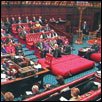 |
| Lords: Clarke's plans snubbed |
An overwhelming majority of peers have voted to amend the government’s proposed anti-terror legislation.
In what will be a severe political blow to the prime minister, the rebels include former lord chancellor Lord Irvine of Lairg.
By a majority of 130, the House of Lords voted to amend the bill so that all control orders can only be imposed on a terror suspect by a judge.
Charles Clarke had proposed that he, rather than the courts, should be responsible for control orders that fall short of imposing house arrest.
Under the amendment the home secretary would have to apply to a high court judge who would then decide whether to impose the order.
In a further amendment, peers raised the burden of proof to the "balance of probabilities" before an order could be imposed.
In a third amendment the director of public prosecutions would also have to agree, having examined the suspect's file, that a normal prosecution could not take place.
The lords will continue to debate the bill before voting on a "sunset clause" today, which would demand a review of the legislation after nine months.
Decision
Ministers will have to decide whether to accept the amendments when the legislation returns to the Commons later this week.
Shadow home secretary David Davis welcomed the Lords' moves.
"This is a clear demonstration of the need for control orders to be made by judges, not politicians," he said.
"This overwhelming vote from a House of Lords which includes past home secretaries, attorney generals, Northern Ireland secretaries, law lords and even the last Labour lord chancellor, all of whom have serious expertise on the terrorist threat, makes it clear that this proposal is both practical and just. I urge the government to accept this amendment.
"We welcome the government's concessions on the balance of probabilities and the involvement of the director of public prosecutions. It is now essential that they include the sunset clause."
Concessions
Earlier, Clarke effectively ruled out any major concessions to secure support for controversial new anti-terror laws.
While some are hoping for a total climbdown, senior government sources suggest any moves this week will be minor.
Downing Street spoke of the prime minister's "determination to get the legislation through".
Controls orders strike the "right balance" between security and liberty, the Number 10 spokesman said.
"At the moment if the police and security services have information which it believes indicates that an individual is involved in terrorism for some time but does not have concrete evidence there is no choice between, on the one hand, leaving that person at liberty or detaining them," he said.
"What the new control orders introduce is a range of measures and therefore that is an improvement on the current situation."
|


