|
Commons backs Clarke after terror law concessions
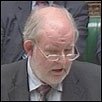 |
| Charles Clarke |
MPs have given their backing to the latest anti-terror law concessions outlined by Charles Clarke.
The home secretary won the first vote on judicial involvement in all control orders by 348 to 240, a majority of 108.
MPs then backed a lower burden of proof before control orders can be issued by 340 votes to 251.
And the move by peers to introduce a sunset clause into the legislation was rejected with a government majority of 100.
Also rejected was one Lords amendment seeking to ensure a 12 month time limit on control orders other than house arrest, and another mandating a review of the law by senior politicians.
A Lords bid to ensure terror suspects have access to welfare benefits was rejected by the Commons without a vote.
The MPs' decision to back the government on all its amendments to the law paves the way for another major clash between the two houses of parliament.
Peers will begin considering the legislation again on Thursday, and can either back down and accept the government's amendments or stick to their proposals and risk seeing the collapse of the legislation.
Vital law
During the preceding debate, Clarke told MPs that while the government was prepared to make some concessions, its anti-terrorism laws must be passed.
The home secretary detailed two key concessions to the Prevention of Terrorism Bill, but also rejected calls for a sunset clause to limit the duration of the new powers.
Having previously insisted that he should be able to issue control orders short of house arrest, the home secretary has now accepted that judges should have a role in the imposition of all restrictions.
But in the most serious situations Clarke insisted he should have the power to detain suspects who might flee, subject to a judge's approval within seven days.
The home secretary also proposed that the legislation should be renewed annually by parliament.
That concession, however, stopped short of accepting the nine month sunset clause that the Lords voted for.
Proof
Clarke also rejected calls for the burden of proof needed for the orders to be raised from "reasonable grounds" for suspicion to satisfaction on the "balance of probabilities".
He told the Commons on Wednesday that the government still believed the home secretary should make the control orders.
National security was a matter for the government, he insisted.
But having "listened very carefully" to the arguments of his critics, Clarke said he was prepared to give way.
"I wholly understand the concerns of those who want greater judicial involvement in the order making process," he told MPs.
Justified
Earlier, Clarke set out the reasons why he felt the concessions were justified.
"We have been able to find a way whereby in an emergency situation the home secretary would be able to deal with a particular problem and then have it applied directly to a judge to deal with the situation across the board," he told BBC1's Breakfast programme.
"My concern had always been that there were emergency circumstances where the time taken to sort that out would mean that you couldn't deal with particular people in particularly dangerous situations.
"We have been able to find a way of dealing with that which I think will assure both the Commons and the Lords that we have met the concerns that have been raised."
He also told the BBC that a higher burden of proof "could mean that certain people who are a threat to us could not be put under a control order".
"That is not a risk I am prepared to take," the home secretary said.
Conservative shadow home secretary David Davis told Sky News the government should accept that the legislation "needs to be rewritten and got right".
But Clarke insisted that in the event of a failure to pass the legislation, the government would hold the Conservatives and Liberal Democrats responsible.
"If the opposition parties decide that they want to defeat us in the Lords then they can do so, as they have done," he said.
"I am keen even at this late stage to legislate together with the opposition parties rather than in spite of them but in the conversations we have had there has not been any readiness on the part of the other parties to discuss these questions."
|


