|
Peers defy Blair on terror law
Defying warnings from the prime minister, peers have backed a range of amendments to the government's anti-terror legislation before sending it back to the Commons.
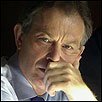
Ahead of the House of Lords debate on the Prevention of Terrorism Bill, Tony Blair challenged Conservative leader Michael Howard to rein in his peers and allow the government to get its law through after it secured the backing of MPs.
"It's time to get serious," Blair said. "We're talking about an issue where the advice is clear.
"We need these powers and the idea that after the House of Commons has been so clear that we should put some clause into it that puts the whole thing into doubt then the answer is no. It is time to be strong."
But votes on the legislation went against the government.
Peers voted by 250 votes to 100 for a sunset clause which would take effect after a year.
A Liberal Democrat move giving the courts more powers over the issuing of control orders passed by 214 to 125.
Other amendments backed by the Lords would demand a higher level of proof before control orders can be issued, and spell out that human rights law applies to the legislation.
And a Conservative amendment to establish a committee of senior politicians to review the working of the law was backed by 225 votes to 126.
Giving ground
Opening the debate, Lord Falconer said the government had given ground on judicial involvement and the annual renewal of the legislation.
But the constitutional affairs secretary spoke out against any push to raise the level of evidence required to issue a control order.
"In the light of the views expressed in the Commons I would ask the house to respect the fact that we have moved in accordance with two out of three but on the third the view of the Commons should prevail," he said.
On Wednesday night large majorities backed the government's proposals, rejecting a series of amendments supported by the House of Lords in votes earlier this week.
In order to secure the backing of the Commons, home secretary Charles Clarke made some concessions.
Ministers had hoped this would secure the backing of peers.
But the legislation could now "ping pong" back and fore between the Commons and the Lords until either one side gives way or the the Bill is lost.
Politicisation
The prime minister had rejected accusations that he has been using the issue to score political points.
"I am not trying to politicise this I am simply saying that now this is the moment of decision," Blair said.
"Michael Howard can stop this happening in the Lords now.
"They are going to have to make up their minds but in my view it would be absolutely unprecedented for the House of Lords to go against a pretty strong vote in the Commons on an issue of this kind.
"I am the person, who if something, God forbid, something terrible happens, will have to justify not taking this action and I'm simply not going to do it."
Asked what he thought was motivating the Conservative objections, Blair said they were "messing around".
"You ask me what the Tories are doing, I don't know what they are doing. I think they're messing around.
"They think because they've got sections of the media on their side they can exploit difficulties for the government.
"I think it's poor judgement on Mr Howard's part, I really do. He knows perfectly well that national security should come first in a situation like this."
Sunset clause
Asked whether the government might be prepared to compromise over a sunset clause Blair said: "I am completely opposed to the so-called sunset clause.
"What it would mean is that we would pass legislation which would then collapse in a few months time.
"That casts a pall of uncertainty over the range of anti-terror legislation, it sends out a signal of weakness when we should be sending out a signal of strength and the plain fact of the matter is that we have debated these matters now.
"It is important that people realise that the reason why I am bringing this forward now is not for any political reason or because there is an impending election it is because I am being advised by the police and the security services that these powers are necessary.
"They are going to be subject to annual review in any event and it really is time to stop diluting them and messing about with them."
Lords rebuffed
In a series of votes on Wednesday evening, MPs gave their backing to the concessions outlined by Clarke.
The home secretary won the first vote accepting judicial involvement in all control orders by 348 to 240, a majority of 108.
MPs then backed a lower burden of proof before control orders can be issued by 340 votes to 251.
And the move by peers to introduce a sunset clause into the legislation was rejected with a government majority of 100.
Also rejected was one Lords amendment seeking to ensure a 12 month time limit on control orders other than house arrest, and another mandating a review of the law by senior politicians.
A Lords bid to ensure terror suspects have access to welfare benefits was rejected by the Commons without a vote.
|