|
Back our anti-terror law, Blair tells peers
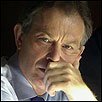
Peers must not water down the government's anti-terrorism legislation when they consider it later today, Tony Blair said.
The prime minister's call followed last night's endorsement of the Prevention of Terrorism Bill by MPs.
Large majorities backed the government's proposals, rejecting a series of amendments supported by the House of Lords in votes earlier this week.
But in order to secure the backing of the Commons, home secretary Charles Clarke made two key concessions.
Ministers will now be hoping that these are enough to ensure that the Lords now allows the legislation to reach the statute book.
Terror threat
Speaking to the BBC on Wednesday evening, the prime minister upped the pressure on peers.
"The directly elected House of Commons has now made its views very, very clear indeed," Blair said
"The security services and the police are advising us that this legislation is necessary to combat terrorism effectively.
"The Conservative Party, people on my own side, should stop trying to water this legislation down, dilute its effect, and understand it is necessary [and] it is right to protect the civil liberties of the vast majority of the people in this country who want to be protected against terrorism."
"This isn't a question of me being arrogant," he also insisted.
Blair said it was "irresponsible and wrong" for the Conservatives to insist on further amendments to the legislation.
"If I thought it could be watered down without harming the substance of the Bill it wouldn't be a problem," he explained.
Lords showdown
Ahead of the Lords debate, both the Conservatives and Lib Dems indicated they were prepared to call the government's bluff by voting for further amendments.
Lord Strathclyde, the Tory leader in the upper house, told BBC2's Newsnight his party would vote against the current Bill.
He predicted peers would "stick firmly" to the amendments they had previously passed.
"The reason why is because at the heart of this Bill is the ability for a politician to decide on whether or not certain liberties can be removed from an individual," Lord Strathclyde added.
"We believe that should be done by a court, rather than on the say-so of a politician."
For the Lib Dems, home affairs spokesman Mark Oaten said his party would also "stick with this right through".
Lords rebuffed
In a series of votes on Wednesday evening, MPs gave their backing to the concessions outlined by Clarke.
The home secretary won the first vote accepting judicial involvement in all control orders by 348 to 240, a majority of 108.
MPs then backed a lower burden of proof before control orders can be issued by 340 votes to 251.
And the move by peers to introduce a sunset clause into the legislation was rejected with a government majority of 100.
Also rejected was one Lords amendment seeking to ensure a 12 month time limit on control orders other than house arrest, and another mandating a review of the law by senior politicians.
A Lords bid to ensure terror suspects have access to welfare benefits was rejected by the Commons without a vote.
The MPs' decision to back the government on all its amendments to the law paves the way for another major clash between the two houses of parliament.
Peers will begin considering the legislation again today, and can either back down and accept the government's amendments or stick to their proposals and risk seeing the collapse of the legislation.
Tensions rise
During exchanges in the Commons on Wednesday, the prime minister and Michael Howard both moved to dodge responsibility should the controversial law fail to secure passage through parliament.
The Conservative leader accused Blair of wanting the Bill to fail so he could charge the Opposition with being soft on terrorism.
"He wants to pretend that he is the only one who is tough on terrorism," the Conservative leader said.
"Isn't it a dreadful measure from a desperate prime minister, and shouldn't he be thoroughly ashamed of himself?"
But Blair said the debate on the plans would be had in the country.
"If they want to vote against it, let them. We will be content, ultimately, to have the verdict of the country on it," he told MPs.
Liberal Democrat leader Charles Kennedy said for his party there are "two outstanding issues of principle", the burden of proof and the issue of suspects knowing the charges against them.
He called on the prime minister to "rediscover his reverse gear" and accept further amendments.
"If they want to vote against it, let them. We will be content, ultimately, to have the verdict of the country on it," he told MPs.
Liberal Democrat leader Charles Kennedy said for his party there are "two outstanding issues of principle", the burden of proof and the issue of suspects knowing the charges against them.
He called on the prime minister to "rediscover his reverse gear" and accept further amendments.
|