|
Brown mixes prudence with populism
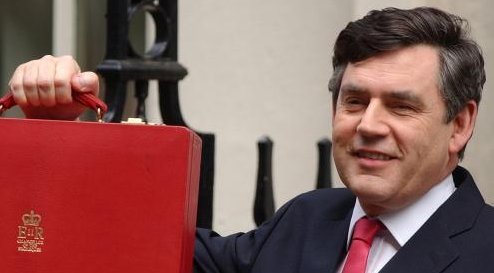
Gordon Brown has unveiled a Budget targeted at pensioners, low-income families and young workers seeking a place on the housing ladder.
In a 48-minute Budget speech the chancellor put his party on a pre-election footing by unveiling a populist but prudent blueprint for the economy and public services.
Despite claims of post-election tax rises to come, the chancellor said he would develop a "British way to long-term stability".
Brown said that inheritance tax thresholds would rise from £260,000 this year to £300,000 by 2007, and announced a £200 council tax rebate to all pensioners.
The chancellor also boosted the take-home pay of low- and middle-income families and pledged to help more young people enter the housing market - with a doubling of stamp duty tax exemption.
He told MPs that Britain has experienced "the longest period of sustained economic growth in history" - meeting the forecast figure of 3.1 per cent in 2004.
Britain has today the "best combination" of low inflation, low mortgages and high employment "for a generation" he said.
Brown said these achievements came at a time when the UK was recording "the lowest debt burden of all our competitors".
But the Conservatives said the chancellor had unveiled a "vote now, pay later" Budget. "This government who brought us the dodgy dossier, is now giving us a dodgy Budget based on dodgy numbers," Michael Howard told MPs.
Poverty drive
The chancellor told Parliament that he had lifted two million children and two million pensioners out of "absolute poverty".
And he pledged to extend the New Deal employment scheme to become a "new deal for jobs and skills".
As he eyed the election, Brown said he would put "hard working families" first at all times - combining affordable tax cuts with essential investment in public services.
"With the economy strong I can afford tax cuts for hardworking families," he said.
And he pledged more money for parents, to ensure their children "can grow and learn".
As he sought to turn up the heat on the Conservatives, Brown reminded MPs that he was making "investments that would not be possible if we were to accept £35 billion of spending cuts".
Modest giveaway
Analysts predicted the chancellor had a modest £1.5bn to £2bn to give away.
Central to the Budget plans are measures to increase the incomes of the poorest pensioners.
The pension credit will rise by 13 per cent by 2008, in line with earnings, the chancellor told MPs - benefiting 3.2 million pensioner households.
All pensioners are set to receive a one-off £200 refund in council tax, Brown confirmed as he sought to shoot the Tories' fox on the issue.
The chancellor also scrapped unpopular charges for pensioners who remain in hospital for long periods.
Brown went on to announce real-terms increases in child tax credits - meaning a family with two children will not start paying income tax until the household income reaches £430 a week.
A family with an income of £30,000 would pay a tax rate of just 10 per cent, the chancellor told MPs.
In a move which could prove popular with cash-strapped first-time buyers, Brown confirmed he will increase the tax exemption on stamp duty from £60,000 to over £120,000.
"We want to help young people buy their own homes," said the chancellor as he also unveiled a shared equity scheme for 100,000 new homebuyers.
Brown also announced that the tax relief on ISA savings accounts will be extended until 2010.
Prudent
Despite his upbeat assessment, Brown sought to avoid accusations that he was playing fast and loose with the economy.
"Some people have suggested that this year is the right year for a fiscal loosening," he said.
"But to repeat the pattern of past governments at this stage of the Parliament would risk a return to the high-inflation, high-interest-rate, stop-go and short-termism of the past and put long-term stability at risk.
"It is right to choose the prudent course for Britain."
Areas set for spending growth include policing, transport, defence, education and health, said the chancellor. "Education is the 21st century road to prosperity," Brown told the Commons.
Sin taxes
Mindful of the looming election, the chancellor went easy on the "sin taxes". Taxes on spirits are have been frozen following a similar announcement in last year's statement.
Cigarettes will rise in line with inflation by seven pence a packet - with a pint of beer rising by a penny and a bottle of wine set for a four pence increase.
The chancellor insisted he is setting his tax and spending plans for the long term challenge of competitiveness – dismissing claims that he is seeking to woo core Labour voters just seven weeks from the likely date of the general election.
Science focus
To achieve this, Brown announced a renewed focus on scientific research and development and commissioned new research into how the creative industries can aid Britain's flagging manufacturing sector.
Brown pledged a 10-year plan to make the UK a world leader in "research based, science-based and knowledge-based industries".
The chancellor also used the publication of the Hampton review to insist he is tackling the burden of red tape.
The government would reduce the number of inspections companies face and pledged a "year on year" reduction in red tape.
The Inland Revenue and Customs and Excise will also consider a single tax account for small businesses, the chancellor added.
To avoid "gold-plating", the foreign secretary has today issued new guidelines for the implementation of EU laws into domestic legislation, the Commons was told.
Siren voices
Despite siren voices from groups such as the IMF, the chancellor said his debt projections and spending plans meant he would be well within his fiscal rules.
Brown said his calculations have proven to be more accurate than external assessments and insisted he will meet his "golden rule" of balancing the books over the course of the economic cycle.
"We are meeting both our fiscal rules, both in this economic cycle and next," the chancellor told MPs.
He said those who forecast recession and who questioned his spending plans had been "consistently wrong".
Taxes to come
Despite the announcement, the Tories say that Brown is using clever tricks to paper over a growing black hole which will have to be addressed after the next election.
Michael Howard said the chancellor had confirmed a deficit £6bn higher than he predicted less than a year ago.
"So much for prudence. The chancellor's forecasts of surpluses are no better than the prime minister's forecasts of weapons of mass destruction," the Tory leader said.
The Lib Dems, meanwhile, demanded a renewed focus on the lowest-earners.
"Labour may boast about their record on the economy but Brown's inheritance is not all favourable by any means," said Treasury spokesman Vincent Cable.
"Eight years of tinkering with tax and tax credit have not produced a fairer society. Indeed, the richest 20 per cent of the population pay a smaller percentage of their income in tax than the poorest 20 per cent.
"The complexities he has created have resulted in a situation where vast numbers of pensioners and those on low incomes face marginal tax rates far higher than 50 per cent."
|