|
Brown sets date for pre-Budget report
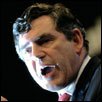
Gordon Brown has revealed he will deliver his pre-Budget report on Thursday December 2.
The chancellor announced the date as he gave an upbeat assessment of the government's economic record in a series of Commons exchanges.
Brown also remained cautious on possible British membership of the euro, indicating the UK and continental economies remained out of sync.
Critics have suggested Labour will have to raise taxes after the next election in order to meet targets on borrowing.
But Brown insisted the economy was heading in the right direction.
"We have got the lowest inflation for 40 years," he told MPs.
"We have the average lowest interest rates for 13 years. We have the lowest unemployment for 25 years and we have more people in work than ever before."
Conservative MP George Osborne said the chancellor should "heed the advice of his good friend Peter Mandelson" and avoid "gloating" about the state of the economy.
And Liberal Democrat Treasury spokesman Vincent Cable highlighted warnings that house prices could fall.
However, Brown rejected fears over the state of the housing market.
"For months he has been standing up at Treasury question time telling us that house prices are rising too fast and now he is coming to complain that house prices are moderating," said the chancellor.
Euro caution
Brown also insisted that the five tests on euro membership had to be met before Britain could join.
He said the government had already set out "concrete and practical steps" to address the reforms needed before Britain could enter the euro.
But he added that there was "no reason to change his judgement" that the five tests had to be met before the UK could join the single currency.
Labour left-winger Dennis Skinner urged the chancellor to accept that the economy was performing well outside the eurozone.
Brown responded by saying there were advantages to membership.
"There are reasons why it is important to look at the euro," he told MPs.
"One is the cut in transaction costs which could be in the order of a billion.
"The second is the increased amount of trade that would take place within Europe and between Britain and the member states as a result of that.
"And third is the increase in growth. But we have got to get it right and that is why the five tests are important."
He said that both Britain and the EU needed to become more flexible, while sustainable convergence was also needed.
"It is clear that with a large differential in interest rates we don't have [that] at the moment."
Brown will report at the time of next year's Budget whether the government believes it is worth re-running the assessment of the five tests.
|