|
Swinney bows out with independence call
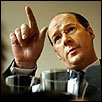
John Swinney has bowed out as leader of the opposition in the Scottish parliament with a call to overhaul the promotion of the country's image abroad.
The SNP leader had previously announced his resignation from the post and will have been replaced by the time the parliament reconvenes after its summer recess.
And Thursday's session of first minister's questions was also the last in the general assembly chamber, located on Edinburgh's historic Mound, before the parliament moves to its controversial new £431 million building.
The clash of party leaders came on the day that the Scottish executive announced an overhaul of the way the country promotes itself abroad.
First minister Jack McConnell said he wanted to get away from promoting Scotland as a land of myth and legend, instead focusing on its potential as a modern, forward-looking location.
Research has shown that Scotland is not seen as a place to do business, live and work.
The first phase of a new promotional campaign will include a summer offensive to target international media and foreign visitors
"The world’s perception of us is too often based on an image of the past. An image that puts us on the map, but not an image that demonstrates either progress or the quality of life we enjoy today," said McConnell at the campaign's launch.
"We can wallow in our past glories, a nation of great inventors and Bravehearts. Or we can speak to the world about our future.
"We are one of the best small countries in the world, and we have the people, the authentic culture, the education and the enterprise to compete with the best.
"This is the time to tell the world about Scotland, and say, this is the time, this is the place."
Independence call
But making his 83rd and last appearance as leader of the opposition, Swinney said Scotland should be promoted "as a full member of the international community".
The SNP chief said the UK was promoting the "entrenched" historical image of Scotland as a land of castles, haggis and the Loch Ness monster.
"Isn't that the image we are trying to get away from?" he asked.
"We shouldn't leave it to others to speak for us, we should speak for ourselves."
Influence
Responding, McConnell insisted that devolution gave Scotland "the best of both worlds", benefiting from both the international influence of the UK while maintaining the ability to promote itself as a nation.
For the Scottish Conservatives, Annabel Goldie pressed the first minister on improving efficiency in the public sector.
She questioned the value of spending £300,000 to establish that the Saltire is Scotland's best promotional symbol.
The first minister rejected that suggestion, but said it was important to carry out research on how Scotland is seen in order to take informed decisions.
Goldie responded that "every Scot in the land" could have told the executive what the research had uncovered.
Swinney's farewell
The session saw McConnell pay warm tribute to his SNP counterpart.
The first minister wished Swinney well "free from the constraints of being leader of the opposition".
In response, the SNP leader said he looked forward to "a restful summer", adding that he would remain "committed to working for Scotland".
When the parliament resumes business in the autumn, the SNP will have a new leader.
Tipped to secure the post is deputy leader Roseanna Cunningham - who is facing a twin challenge from Nicola Sturgeon and Mike Russell.
New home
The parliament's summer break will also see MSPs transferred from their current location to the new parliament building.
Ever increasing costs have caused huge controversy, and prompted further questions to the first minister.
Scottish Socialist leader Tommy Sheridan attacked plans to charge for tours of the building.
He said the move would be "socially exclusive", not in keeping with the spirit of devolution.
Sheridan said the building, which the public had already paid for, should "open its arms to all our citizens".
That question prompted presiding officer George Reid to intervene, saying charges were a matter for the Scottish parliament's corporate body, not the executive.
Reid said there would be no charge for visitors wishing to see the parliament conduct its business, but that charges were planned for "long architectural tours" of the building.
|