|
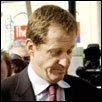
Campbell defends his Downing Street days
Alastair Campbell has appeared before a Commons select committee to discuss government communications.
Campbell talked in depth with members of the public administration select committee about his time as communications chief at Downing Street.
He said he "partially accepted" the view that his reign at Number 10 contributed to the deterioration in the political debate in Britain, and agreed that relations between the government and the media were "very unhealthy".
Chairman Tony Wright reminded Campbell that the BBC's Nicholas Jones had accused the Downing Street machine of operating systematic selective briefings and of destroying trust between the government and the lobby.
Campbell said that if he had lied to any journalist his career would have been over.
He consistently reminded the committee that elements of the media should take most of the blame, although he thought it unlikely they would.
He argued that in many newspapers "news and comment have become fused".
Campbell conceded that, during the first couple of years after 1997, there had been mistakes such as reannouncements, but argued that this was because news management had been thought as important as political decisions. That was no longer the case.
Terrible mistake
Campbell rejected the accusation that the government had "played crooked". He called the Jo Moore email a "terrible mistake that she had paid for and was still paying for", but said that such incidents were rare.
Asked about his pet hate, the Daily Mail, Campbell was blunt.
"My worry about the Daily Mail is its influence on other papers," he said.
"Some journalists say 'say what you like, but it's a professional product'. It's not, it's vile. It's the worst of British values saying it's the best. It systematically runs down the country and people in public life", he said.
Asked about the judge who had remarked during a court case that he could not have "100 per cent confidence" in Campbell as a witness, Campbell said "he was entitled to his opinion".
On the question of the breadth of his power, he said that being given executive authority at Downing Street had helped him, especially during crises such as the foot and mouth disaster.
Asked if his successor, David Hill, was at a disadvantage as he did not have the same authority, Campbell said he didn't know, but suggested that "some people respond to people, some respond only to systems".
|