|
Remarks By Denis Macshane At Katyń Memorial Wreath Laying Ceremony
Event: Katyń Memorial Wreath Laying Ceremony
Location: Gunnersbury Park, London
Speech Date: 04/04/05
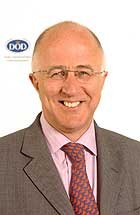
Speaker: Dr Denis MacShane, Minister for Europe
This event was long planned. It takes place two days after Poland has lost its greatest ever son, Europe has lost the greatest European for many a generation and the world has lost a voice for the voiceless and for leadership to do what is right and denounce what is wrong. The Pope has left to us great challenges. To speak for truth, to speak for those without freedom, to speak for families, and to speak for honour, democracy and patriotism in the conduct of human affairs.
Today, we honour the memory of his fellow Poles who were killed at Katyń. Last week I was in Ukraine and I saw the monuments to the second world war. The dates said the war began in 1941 and finished in 1945. The Pope knew and every British and Polish person knows differently. For Britain, the war started in September 1939. Poland faced invasion from the West and the East. If the Munich Agreement showed the folly of the isolationist appeasers of the British Government, the Ribbentrop-Molotov pact was an alliance of terror and tyranny that opened the door to the great European war.
While Poland lived under occupation by Nazi Germany and Soviet Russia, Britain was alone in defending Europe's freedom. Not quite alone. In the air, on the sea and on the land, Poles joined ranks with the British people in resisting tyranny. There was no Polish Quisling, no Polish Laval, no Polish Lord Haw-Haw. Many more Polish officers might have come to Britain to fight against the common enemy but they had been murdered in cold blood on Stalin's orders.
The Katyń massacre was no 'wartime tragedy'. It was a dreadful atrocity. Stalin intended to do irreparable harm to Poland's national leadership. No wonder that the memory of this massacre still evokes such strong emotions. In April 1943, 4,400 graves were discovered in the forest of Katyń. The Soviet Union tried to pin the blame on the Nazis. Successive British Governments had no illusions about the likelihood of Soviet guilt but refused to charge Moscow with responsibility. This ambivalent position justifiably angered many in Poland and beyond.
In 2002 the British Government published a comprehensive report into the massacre. Numerous official British documents were included. And, of course, by this time, there was no equivocation on the guilt of the Soviet Union. The spirit of friendship between the UK and Poland extends further. The Anglo Polish Historical Committee is bringing to public attention the unique contribution which General Sikorski and the Polish Intelligence Services made to Allied victory in the Second World War.
The Committee has had unprecedented access to British intelligence archives. Its research has illustrated the collective sacrifice of the Polish people and their determination – then, as so many times before and since – to fight oppression. The Anglo Polish Historical Committee hopes to launch their Report before the 60th anniversary commemorations in the UK on 10 July to mark the end of World War Two.
One other bad UK/Polish memory is worth mentioning in this context - the absence of Polish democratic forces in the London Victory Parade after World War Two ended. This year, we want to ensure that Polish veterans have a full and honourable role. President Richard Kaczorowski has been invited to attend. As have members of Polish Veterans' organisations in the UK. We expect a number of Polish veterans to travel from Poland to join them at a service in Westminster Abbey, lunch at Buckingham Palace and a parade of standards.
The first half of the twentieth century was the worst in European history. The second half brought freedom to some Europeans but not others. We defeated Hitlerism. We did not defeat Stalinism. As we remember the victims of the Katyń massacre we must also pay respect to the memory of millions of other victims of communist oppression across Central and Eastern Europe and, as president Kwasniewski has pointed out, in Russia as well.
Poland has always fought as Poles say 'for our freedom and yours.' This week the world's greatest champion of freedom will be laid to rest. There is no better tribute we in Britain can pay to the memory of the men whose bodies were found in Katyń nor to the man whose body lies in St Peters than to build a strong Poland-UK partnership for the 21st century and ensure Poland and Britain shape a Europe of peace, justice and democracy and a Europe working to combat poverty, repression and the denial of family, faith and democracy in every corner of the globe.
Thank you.
|