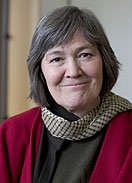
Clare Short’s contribution to the September 2005 Conference of the Helsinki Process
7-9 September 2005
It is my view that the world is in very serious trouble and it is likely we are heading for increasing turbulence and catastrophe that will cause much suffering and dislocation in all parts of the world. The OECD countries will suffer as well as the poorer countries, but as always the poor will suffer most. I believe that while it is possible for us to organise to prevent the worst of the catastrophes that threaten, the current world leadership is of very poor quality, and therefore things are likely to deteriorate until the world reaches such a precarious state that people are motivated to act.
The major challenges facing the world as I see them are:
(1) The instability in the Middle East and the deep and justified sense of anger at the suffering inflicted on the Palestinian people and now the people of Iraq, as the west – led by the US and strongly supported by the UK – manipulates the politics of the region in order to control oil resources and protect and support an Israeli regime committed to the expansion of its borders and to the possession of WMD.
(2) I believe growing instability in the Middle East, coupled with the shortage of oil resources and the continuing economic growth in China and India will mean ever higher oil prices. This will affect the performance of the world economy and create a serious problem for the poorest countries as did the oil price hike of the 1970s. In the longer term, high oil prices will help encourage the development of alternative energy technologies – particularly solar power – which could be highly beneficial to humanity, but I fear recession and instability in the meantime.
(3) Despite all the promises and rhetoric, it is likely that Africa will continue to see considerable population growth and growing poverty, instability and environmental degradation. The poverty and instability will cause great suffering in Africa and the instability will have grave consequences more widely.
(4) The world’s population was 1.2 billion in 1900, 3 billion in 1960, 6 billion now and will rise to 8-9 billion by 2050. Most of the new people will be born into the poorest countries. This will place a great strain on their social, economic and environmental resources.
(5) Global warming is now an established reality and its likely consequences over the coming 30 years and onwards is very serious indeed.
(6) Many of the worlds’ environmental resources are under great strain – fish stocks are being depleted, forests destroyed, land is being degraded and desertification is spreading. The water resources of the world will face growing strain and there is a serious risk of growing conflict over water resources.
These challenges add up to a considerable threat to the future; however I do not believe that the situation is hopeless. We have more knowledge, technology and capital available than any previous generation. There has been enormous progress in reducing poverty in the world over the last 50 years. The paradox of this is that progress in reducing poverty has led to more children surviving and more people living longer and thus an enormous challenge. The good news is that knowledge, capital and technology are more transferable than ever before so it is possible to organise an enormous advance in the reduction of global poverty. The world is on track to halve the proportion of people living in extreme poverty by 2015, which means a billion people lifting themselves out of poverty between 1995 and 2015.
If I am right about this, the question is what is to be done? I do not believe we need new commissions and committees to describe the problem and come up with new answers that no one has previously thought of. In addition to the many wise reports and suggestions already available, the agreements reached at the Millennium Assembly of the UN on the Millennium Development Goals and previous agreements on the right of all people to respect for their social, economic, civil and political rights provide a clear agenda for action. In addition, the current era of growing economic integration contains the potential to spread access to knowledge, technology and development very rapidly across the world. I do not believe that globalisation is necessarily destructive; it depends on how we manage it. The question is whether we have the will and leadership capable of ending conflict, crushing corruption and creating fair rules on trade, investment and environmental protection. This will enable us to share the potential of our knowledge and technology so all people benefit and to work together to manage our mounting environmental crisis.
However, instead of making the progress that is possible, we are currently going backwards as a result of poor quality international leadership and lack of respect for international law and the human rights of all people. My conclusion is that we need to unleash the energy of the people of the world – north and south – to agree what to demand of their governments and then to support each other to ensure that progress is made. What is needed is not representatives of northern NGOs travelling to international meetings to lobby, but modern communications technology being used to thrash out an agenda for forward movement and then people in each of our countries holding their governments to account.
This may seem like an enormous challenge, but when we reflect on what generations before us have achieved, it is possible. My view of the Helsinki Process is that neither the Declaration nor the reports of the tracks are important – although much of the work has been very useful. I agree with some but not all of it. But the coming together of governments, private sector and civil society from north and south has the potential to create great change. The test is whether after the reports have been published, the follow up to the reports creates a new space that enables people across the world to agree an agenda for progress and then whether people will organise to hold their governments to account. The first Helsinki Process helped to open up contact between people in Western Europe and behind the Iron Curtain and opened a space that generated great change. The question is whether the Second Helsinki Process can open up links which that create enough energy to demand urgent progress to avoid the string of catastrophes which that will otherwise be the much more painful drivers of change.
Clare Short, MP for Birmingham Ladywood
23 May 2005