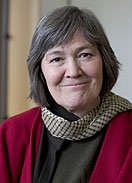
Clare Short’s think piece for the Clore/NESTA Conference on Leadership in the Cultural Sector
London, 15 June 2005
We are living at a time of enormous historical change. From the end of the Second World War until 1989, the Cold War divided the world into two economic blocks and shaped all international institutions and every conflict and tension in the world. Wars took place in Korea, Vietnam, Angola, Mozambique etc and the two sides lined up on either side of these conflicts. Both sides also searched for allies in the developing world and frequently provided arms which propped up dictatorships and fed low level conflict. But these tensions were prevented from escalating into another world war by the threat of Mutually Assured Destruction. Thus the privileged baby boomers of the OECD countries born after the Second World War enjoyed unprecedented opportunity and prosperity inside a divided and oppressed world order with the threat of nuclear annihilation hanging over its head.
Then in 1989 as the communist system crumbled economically, the Berlin wall came down and Nelson Mandela was released from prison, a mood of optimism spread across the world. There was a widespread hope for a new world order when there would be less division and less defence spending and prospects of peace and progress across the world. There was initial progress with the velvet revolutions in Eastern Europe and the election of Nelson Mandela as the President of a democratic post-apartheid South Africa and there were also considerable cuts in defence spending. Fukuyama declared the era "the end of history" and suggested that the western capitalist model had won.
But there soon developed a growing new world disorder. In 1992, a UN peacekeeping mission charged with facilitating the provision of humanitarian aid to people starving in Somalia was launched which was led by the US. Following attacks on Pakistani and US troops, the mission was withdrawn leaving Somalia in chaos with millions of its people displaced and hungry. Somalia remains in chaos 10 years later. In the Balkans, former Communist leaders stirred up ethnic nationalism to keep themselves in power and we saw ethnic cleansing and mass rape and camps unleashed on the European continent. The initial response of NATO and the UN was weak and state boundaries were altered and people displaced through force.
In Rwanda in 1994, a genocide was unleashed with a million people systematically slaughtered in 100 days and the Security Council failed to provide back up to the small and weak UN peacekeeping mission which had been sent to Rwanda to support a peace agreement that was designed to end the civil war. Many other countries in Africa descended into conflict as the great powers withdrew from the continent leaving weak states and bloated armies behind them. The break up of the Soviet Union led to disorder and poverty in many of the peripheral states. In addition, the support of the US and Saudi Arabia for Islamist fighters in Afghanistan which overturned the Soviet backed regime in Afghanistan and led to heavy Soviet losses, created a new tradition of Islamist violent resistance that turned against its previous backers and outraged by the suffering of the Moslems in Palestine, Kashmir,
Chechnya, Bosnia, Algeria and elsewhere led to the birth of Al Qaeda. Thus the early 21st century was a world of great disorder with war taking place largely within countries rather than between them, its victims being women and children and very large numbers of people - about 20 million in all - becoming displaced people or refugees.
This new world disorder has been accompanied by a period of intensification of global economic integration known as globalisation which has been generated by the creation of one global economy and the new information technologies which have massively speeded up the movement of information, knowledge, capital, technology and people across the world. These changes have led to very rapid economic development and poverty reduction in East Asia and more recently in China and India, but disorder, HIV/Aids and weak government have created a growth of poverty in Africa.
This then is an era of great challenge and enormous opportunity. There is enough capital, technology and knowledge available to spread economic opportunity across the world, but the challenge of population growth, environmental degradation and global warming threaten the future worldwide.
There have been great advances in people's attitudes that have resulted from the improvement in global communication. As people see others suffering in Kosovo, or the the floods in Mozambique, the more recent tsunami etc, the human response worldwide has been to reach out to support those in trouble. And thus improved communications have led to the globalisation of human solidarity and the Universal Declaration of Human Rights taking on an emotional reality.
But the rapidity of change; accompanied by poor international leadership and the scarcity of oil resources is generating increased conflict and a growth of fanaticism in all the world's main religions. This development is not confined to Islam but can be seen in the growth of fundamentalist Christianity in the US, fundamentalist Judaism in the West Bank of Gaza and fundamentalist Hinduism in India leading to the massacres in Gujerat. The reason for the growth of these divisions to replace the divisions of the Cold War has been too little discussed but would appear to be linked to the rapidity of change and a sense of insecurity and loss of identity.
What is urgently needed in order to prevent the growth of further conflict and suffering and to address the environmental challenges is the creation of strong multilateral institutions committed to equitable rules and intemational law. The principles of the Universal Declaration of Human Rights should be applied worldwide to create order and equity and the conditions in which economic and social development can be spread more equitably across the world. Within such a framework it may be possible to reach international agreement to tackle the mounting environmental threats. However, this way forward is not being embraced; the world remaining hegemonic power, supported by the government of the UK is weakening international institutions and international law and generating a growing sense of anger and hostility across the world and the Middle East and Moslem world in particular.
The question for discussion is how this situation impacts on cultural activities and how leaders working in this sector can contribute to progress and the resolution of the present divisions. It is worthy of note that Article 27(1) of the Universal Declaration of Human Rights lays down that "Everyone has the right to freely participate in the cultural life of the community, to enjoy the arts and to share in scientific advancement and its benefits". One obvious issue that requires careful thought is the dominant nature of the US cultural industries and the divide this is reinforcing with countries and people that feel alienated by US power rejecting US culture and searching for their own traditions and forms of expression. Wise cultural leaders should consider how they can break through these growing divides. There is a richness and variety of cultural expression in all societies including the poorest. Respect for and interest in the cultural and artistic activities of peoples in other societies can create meeting points of people on a basis of mutual respect that can be both enjoyable and stimulating and help to create the sense of values needed to create a new international consensus capable of facing the challenges of the present era. Similarly, the OECD economies have a growing need for migrant labour which will strengthen as the baby boomers move into retirement and live very long lives with a shrinking working population to support them. And yet there is a growing racists and right wing movement in most European countries reacting to the growth of asylum seeking populations escaping the poverty and disorder in their home countries. Cultural activities that draw on the enormous range of peoples living within the OECD countries can help to enlarge understanding and foster mutual respect.
In addition the current social model in most OECD countries of growing materialism, pornography and hedonism appears to be creating a lack of meaning which is creating widespread unhappiness despite growing material plenty. Electronic communications make vastly more information available but possibly also distance individuals from their humanity and creativity. Cultural activities that reach out beyond the elite to engage individuals' humanity and creativity could help to foster a greater generosity and human fulfillment and may help move people on from obsessive materialism and may help people to be prepared to embrace the change needed to deal with the growing environmental crisis.
Rt Hon Clare Short MP
Birmingham Ladywood