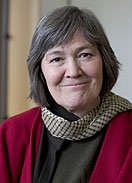
Former International Development Secretary Clare Short explains why she is proud to represent Birmingham Ladywood in Westminster
The Regional Monitor
April 2005
I was elected to the House of Commons for the first time in 1983 to represent Birmingham Ladywood, which is the place where I was born and grew up. The 80s were very difficult times in Birmingham: unemployment had grown suddenly and massively, and we had riots in the inner city in 1981 and 1985. The city was very angry and hurt. Feelings against the Thatcher Government ran very high.
Birmingham had never experienced such unemployment before. From its very beginnings, it had been a place where people came to work and build a better life. It started with a market at a crossing point on the river Rea. It was not a guild town so there were no rigid rules. People came from elsewhere and settled and worked hard to improve their lives. The industrial revolution then brought masses of poor people into the slums of the city because, bad as it was, it was better than desperate poverty in the countryside. This led on to political struggles to establish trade unions and the vote. And such struggles led on to Chamberlain’s municipal Socialism, which led to the provision of clean water and sanitation, council housing and improvements in education.
Even in the 1930s, Birmingham was prosperous as the car industry began to develop and the available jobs brought people from areas of high unemployment – particularly Wales, Ireland and Scotland – to find work. In the 50s and 60s, we had employment conditions in the car industry that meant working class people could buy their own houses and take holidays abroad. Amidst this prosperity Birmingham faced labour shortages, so workers from commonwealth countries were targeted because they were entitled to live and work in Britain. And thus people from India, the Caribbean, Pakistan and Bangladesh were recruited to take on some of the toughest jobs in manufacturing, on the buses, in the health service and so on.
Thus the unemployment of the 80s hit us very hard indeed. Birmingham people had always worked hard and built a better future for their children. We were almost all descended from people who had come from elsewhere to find work. We were a disparate people united by our life journey, funny accent and hard work. In the late 80s, the city council worked with local businesses to renew the city centre. The development around the canals at Brindley Place, the building of the International Convention Centre and other improvements in the city centre restored Birmingham’s pride. After that, we focussed on improvements in our schools: more money from the city council and the inspired leadership of Tim Brighouse led to children across the city improving their achievements.
The Labour Government of 1997 brought us a big drop in unemployment, better benefits for poor pensioners and tax credits, making work worthwhile again for low-income families. We saw improved investment in public services. But we also saw a major threat to the future of the car industry and drug gangs starting to arm themselves and shoot each other on our streets. We are hopeful that a new company owned in both Birmingham and China will preserve our car industry. And the police are beginning to get the better of the drug gangs.
But the most wonderful thing about Birmingham is that it is probably the most ethnically diverse city in the world. All the world’s great religions are honoured in our city. And people of all religions and ethnicities rub shoulders, respect each other and learn from each other. In our increasingly bitter and divided world, Birmingham is a jewel.
Clare Short MP