This article was first published in The Sunday Times Magazine.
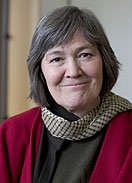
Clare Short, MP, 57, was appalled at how Britain and the UN turned their backs on the 1994 Rwanda genocide. She recalls how one survivor's story inspired her to help rebuild the country.
All my life I've been passionately interested in Africa. I think it's partly because my Irish father's interest in politics infused our house and our family. I remember Ghana becoming independent - when I was about 10 - and the Suez crisis, when the kids in my school sang: "We'll throw Nasser in the Suez canal." I rounded them all up, explaining that it was Egypt's own canal, which they were entitled to.
The point of being in politics is to get more justice in the world. In 1997, not long after I became secretary of state for international development, one of my main ambitions was to give a chance to the generation who'd suffered the Rwandan genocide.
Few people in the UK knew what had happened in Rwanda in 1994, when 1 m people were slaughtered by machete in 100 days. I knew something of this horror, and of the terrible failure of the international community: we'd all signed the genocide convention after the Holocaust, committing ourselves to intervene if ever there was such a threat anywhere in the world again. But the UN pulled out of Rwanda, despite the fact that the Hate Radio, as it was called, was inciting Hutus to kill Tutsis and moderate Hutus.
But why did the UN pull out? It wouldn't have cost much, compared to recent wars and peacekeeping operations. The Belgian colonial legacy had exploited the divisions between Hutus and Tutsis. Most people hadn't even heard of Rwanda. The truth was, nobody cared enough. And the UN justified pulling out by denying that the killing of 1 m people amounted to a genocide. Even now I feel angry: what happened in Rwanda is shameful. It shames our country.
So in 1998 I went to see what I could do for Rwanda. Somehow I expected a gloomy and sad place. But no - Rwanda was green and fertile and utterly beautiful. I went to a village to meet some women genocide survivors. Many had been raped, and some had children as a consequence. Several had Aids. They told me how when the Interahamwe, the Hutu killers, started those terrible killings - in broad daylight - the people ran to churches, thinking they'd be safe. But the killers came and hacked them to death right there.
All over the floor of the church I saw, still lying there, rags and bits of bone. Outside on a ramshackle shelf were lots of skulls and a remembrance book. I was appalled, and I started to write in the book: "I'm sorry my country did nothing to help you while these terrible things were happening."
While I was writing, a woman with a baby on her back came up to me, anxious to tell me her story. She showed me a big scar on her back, underneath her baby, and told me how in 1994 she had been hiding in the church where she and other villagers were found by the killers. But although this woman's killer's machete had hacked through the baby she was carrying and into her shoulders, the baby shielded her. All the bodies were thrown on top of her into a big pit. After the killers had gone, she crawled out, her dead baby skill on her back.
I was incredibly moved by this story. The world had let down this mother and baby. Yet somehow her story also offered hope: she was living on, and she had a new baby. I felt that if my role in the government could be used to give the people of Rwanda a chance, that was a very fine thing for me to do. That's what politics is for, and why one is in government. But it couldn't just be my dream: I had to make it real, which was a big responsibility. But I decided I'd try.
At that time, Rwanda was a complete wreck, with no structure. They hadn't even any typewriters. It was very poor and very scared. And, unsurprisingly, its government was very distrustful of the world.
I went back to the UK and began talking to the Foreign Office and the UN security council. But I was quite isolated. Everyone thought: "Clare is being peculiar. Why does she want to be in with Rwanda?" Nobody wanted to know. I talked to the International Monetary Fund and the World Bank. I organised a meeting in Geneva with leading players from the international community and some Rwandan government representatives. The IMF and the World Bank eventually agreed to more ambitious aid in the UK committed to a 10-year programme. Our work began and we made great progress. A few years later, when there was peace in Rwanda, they qualified for debt relief. People are back in their houses, and hospitals and schools have reopened. And today's schoolchildren don't call themselves Hutus or Tutsis: they call themselves Rwandans. What an honour to be given a chance to play such a role, even if it came to an end as it did in May, when I resigned.
In the period leading up to my resignation - when I knew I had to leave because there were too many things I couldn't defend - I had sleepless nights thinking about things I'd leave behind. But about Rwanda, I thought: "Well, it's doing well enough now and it's got enough allies. I'm sure it will be all right without me."
The worst of times were thinking about the Rwandan genocide and meeting that woman. But the best had been to be able to give a chance to those people, to the brothers and sisters of that dead baby, and to that new baby on the woman's back. If I've done something to help another generation grow up in Rwanda without a bout of genocide, it makes my years in politics - and all the unpleasant things that come with it - well worth it.