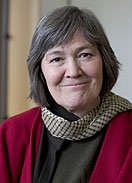
Interview with Alison Roberts, The Evening Standard
Clare Short is looking exceptionally well, at 57 fitter than she's looked for ages. Dressed head-totoe in svelte black silk, slim and firm of figure, clear-eyed and fine-skinned, she could easily win one of those glamorous granny contests should her three young granddaughters choose to enter her. In the absence of her old ministerial car and driver she is, of course, forced to walk about London rather more than she once did, and arrives at her office in Westminster flushed from the healthy exertion of a four-mile plod from her home in Clapham.
"Oh, but I love walking!" she pants.
"I decided last summer that at the age and stage I'm at, I ought to get myself into good shape for the rest of my life. They say that if you change how you exercise and what you eat gradually, you have a better chance of sustaining it, so that's what I'm doing … If you have a car waiting for you all the time, you don't ever get to walk and so you don't notice things.
You don't notice what's in the shop windows, or what fashions people are wearing. It's nice to have that level of normality."
Since her messy resignation from the Cabinet last May and the job as Secretary of State for International Development that she had held for six years, Clare Short now has a normal MP's office tucked away behind Whitehall, far from the real corridors of power: a large but rather dingy room like a very neat student's den.
She is instantly welcoming, hanging up coats and making the coffee herself - then discovering she only has powdered milk and, despite the health kick, stirring a large heaped teaspoon of sugar into it. On the shelf above her desk leans a photograph of baby John Brown, Gordon Brown's new son, at seven days old. We both coo over the picture. Short points to the dimpled forehead: "Look, he's thinking. He must be Gordon's!"
How many people, I wonder aloud, have been given their own photograph? Close friends and allies only? "Presumably everyone who wrote to congratulate them on such a wonderful thing," she replies. And are we looking at the son of the next Prime Minister? "Ooh, there are a number of people who would fancy themselves for that job," she says.
"The media are obsessed with the Brown-Blair thing. You have to be a Brownite or a Blairy. Well, I'm neither. I do think Blair should step down immediately for his mishandling of the aftermath of war in Iraq, and I've said that. It's the only way to correct and renew not only my party, but the country and the institution of government. But I'm not urging a specific candidate to replace him. I'm not plotting with anyone."
Clare Short out of power is no less energetic than she was six months ago, when, a famous hard-worker, she was up at midnight ploughing through red boxes in the bath. In between the accusations and counteraccusations regarding the manner of her departure from government (of which more later), she has been filmed by the BBC for the reality TV series that recently featured Michael Portillo in the shoes of a single mum.
Short agreed to become a geography teacher for a week in a south London comprehensive, Southfields Community College in Wandsworth, though she now rather regrets her decision to take part. She is not, she says, in the market for Portillo-style media fame, and though she has not yet seen his programme, she does not much like what she has heard of it. It turns out, perhaps unsurprisingly since Short does not give the impression of understanding spin very well, that there was more than a touch of naivety in her initial approach to the project.
"Michael Portillo isn't even a parent, so to ask him to look after four children was actually madness.
But, of course, as friends of mine have said, the point of the thing wasn't to learn about single mums but to gawp at him and see if he could manage. I agreed to do the teacher swap because I come from a family of teachers and I think that teachers have been knocked and demoralised for too long in this country. I thought that if I could show how tough a job it really was, and not be a disaster doing it, people might respect it more."
While she learned a great deal about state education, she fears that the programme-makers were only really interested in her personal ability to cope with the kids and the work. Her specialised subjects were shantytowns and volcanoes (wince! it was Short who notoriously accused the victims of the Montserrat volcano of demanding "golden elephants" from her department in 1998), but she thinks she did okay - even with the more badly-behaved children. "They quite wanted to learn, but all the time they played up a bit because that's the game. I was always a bit noisy and talkative at school," she says.
"They're just a bit worse than we used to be."
Potential BBC stitch-ups dim into insignificance beside Short's real and continuing fury over the Government's handling of war in Iraq. This was why she resigned, of course - though, to the disappointment of her old Labour allies, her leaving of office came after the conflict's official end and after her failure to carry through the threat to resign in March, alongside Robin Cook. At the time she was heavily criticised for her vacillation in ways that carried more than a whiff of sexism: she was overemotional and headstrong, she spoke before she thought, she did not have Cook's forensic intellect.
But Short claims now that she was simply duped by the Prime Minister. She stayed in government because Tony Blair promised her that Britain would use its influence with the Americans to make sure that the reconstruction of Iraq was internationalised and "done right" the moment war was over, but then - she claims - he backtracked from those promises and left her no choice but to go.
"But I sat in the War Cabinet and I tried, but [Blair] wouldn't listen to me. It was like they were all so happy that the war had been successful. Had I not tried [to lead the reconstruction effort] and had I then seen all this chaos and suffering in Iraq, I wouldn't have known whether I could have made any difference. So for my conscience I'm glad I tried, even though I failed completely."
And of course she was hurt by the personal attacks when she pulled back from that threat to resign, the strength of criticism, all the flak. Movingly, it was the disappointment of her son Toby, whom she gave up for adoption and then "found again" 31 years later, that hurt most of all. She had Toby as a 18-year-old at Leeds University with a fellow student whom she later married and stayed with for seven years.
"Toby felt very strongly about the war. He, his wife and the children all went on the antiwar demo, and he was convinced that I was going to resign before the war started.
We get on extremely well and we talked about it, and, yes, he was really angry with me."
I ask her whether she's tempted to march against George Bush next week. Long pause. "If I wasn't an MP, I probably would - but that's a bit ridiculous to say since I've been an MP for 20 years. I hope it's not violent, but I think people should express themselves. George Bush has made very serious mistakes, and made the world more dangerous. I think it's really important that people say: 'We feel very strongly that you're making mistakes, mate.'" Now that she has more time on her hands, Short's family - her six brothers and sisters, her 83-year-old mum who lives with her in her Birmingham constituency house - has become an even more important part of her life. Her second husband, Labour MP Alex Lyon, whom she nursed through Alzheimer's, died in 1993 and Toby, now a City solicitor, was her only child.
Her three granddaughters, aged nine, seven and five, are "beautiful, lovely children," she says, beaming.
She sees them often.
"Not everyone who gives up children for adoption gets as close as I am with my son. But I think for everyone it is a big healing thing - for the child as well as the parent."
I mention Tory MP Tim Yeo's confession this week that he would like to find the daughter he and a former girlfriend gave up for adoption 36 years ago. Should he do it?
"Definitely, definitely, definitely," she squeals. "I think there's a kind of hole in you when a child is out there and you don't know where. Finding them is the most joyous thing you can imagine…Do it.
Find each other. It's good for everyone."
And what else fills Clare Short's newly empty diary? "I take Mum to Mass every Sunday," she says. "Do you know, I'm even reading the Old Testament."
How depressing for you: all that blood and thunder and torment. "Oh, I don't get depressed for long. I'm basically an optimist and an enthusiast. You'd have to be insane to be a politician if you weren't."
And Clare Short is undoubtedly still in the business of big politics. "I've got lots of energy left and I have more to do in the world," she says with characteristic bravado bordering on vanity. "I'm not queuing up for anything right now, but if Labour moves on and the leadership changes hands …" And for just a moment - or perhaps it's my imagination - her eyes flick back to that sweet little photograph of wee John Brown.