|
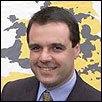
Matthew Taylor MP - Liberal Democrat parliamentary chairman
Question: Where is the money for your cut in stamp duty coming from in your alternative Budget?
Matthew Taylor: That's coming from an end to the special stamp duty discount being offered in an small number of postcode areas across the country with the highest poverty levels and that's being offered to business not domestic buildings.
We believe that should be putting up prices in these areas rather than helping those putting their first foot on the ladder, so we think its better to help all first time buyers across the country.
Question: Is it a pre-election bribe?
Matthew Taylor: We've been working some time on reform of stamp duty and looking at various options and that process literally concluded a couple of weeks ago, so the obvious time to announce it was the alternative Budget.
Question: Is it premature to announce your plans before you have seen the chancellor's figures?
Matthew Taylor: We've set out an alternative Budget every year for the last 12 years and our view is that as the effective opposition to government we should be setting out what we believe the alternatives are for government. These are all costed proposals about changes in government priorities and how they will be paid for.
We do that in detail, explaining all of it. We don't of course set out alternative economic forecasts - that's something we're not in a position to do - this is an alternative spending programme.
Question: Has the early publication of your "freedom, fairness and trust" pre-manifesto document managed to get the message across?
Matthew Taylor: The Conservative Party is just starting to make its announcements now about what it will do, we set that out in the pre-manifesto back in September.
Our campaigners have been able put that as a result through millions of doors across the country on leaflets setting out our top ten priorities, people know we are going to axe the council tax, have free care for the elderly, abolish tuition fees.
These are key policies are far better known than either Labour or the Tories are going to offer.
Question: Will there be any major revisions in the full manifesto?
Matthew Taylor: We have set out some more detail on our spending policies in the alternative Budget, they have confirmed them in place and obviously in the main manifesto that will go further.
The major change has taken place because Labour have put in place the early years centres that we were arguing for. We've now been able to make a major cut in class sizes with the money that is handed out to 18 year olds and that the government is using the child trust fund for.
Question: Will the economy and the public services be the major issues of the campaign? Or will issues such as Iraq and immigration play a bigger role?
Matthew Taylor: I suspect that most places will still make their decision on the quality of public services and what they believe is right for Britain and what they can afford.
That's why our policies are directly aimed at helping ordinary families across the country getting rid of student tuition fees, getting rid of care charges on the elderly, a much fairer system for paying for local government which would mean most households giving costs averaging £450 in their local government bills.
So what we uniquely offer is fairer taxes and improved investment in key public services.
Question: Is the combination of a local income tax and a higher top rate of tax the Lib Dems' most progressive position yet?
Matthew Taylor: What we will do is to help most households with a cut in the tax bill but the richest in the country will pay a little more.
The present system under Labour because of the increase in indirect taxes is that the richest 20 per cent are currently paying 37/38 per cent of their income in tax on average whereas the poorest 20 per cent are paying 41/42 per cent and we don't think its right that poorer households should be paying more tax as a proportion of their income than richer ones.
Our changes will level that but it won't penalise richer households, we are only asking for slightly more.
Question: How can a higher tax not be a penalty?
Matthew Taylor: I don't agree with you. What Labour and the Tories have done is both of them have cut direct taxes and put up indirect ones.
That has increased the tax burden on poorer households and cut it on richer ones. What we will do is reduce that unfairness with the result that most people be paying less but yes - the richest people earning £100,000 a year will pay a little bit more.
Question: So you can't say it penalises no-one?
Matthew Taylor: What I am saying is that we are addressing the unfairness of the current system which penalises poorer families at the advantage of richer ones.
The simple fact is the bottom 20 per cent of households are paying five per cent more than their income in tax than the richest 20 per cent and I don't think anyone thinks that's fair once it’s pointed out to them.
Question: Is there a danger the Lib Dems are standing aside from some of the big debates on choice in the public services and immigration?
Matthew Taylor: I think we are going to the heart of these debates.
On immigration we proposed a quota system for economic migration long before the Conservatives but we will stand true to the principles established after the second world war to stop a repetition of what happened to the Jewish people fleeing the Nazis - which is that they were all returned when they were seeking asylum and many of them died as a result. And we're not going to go back on our international obligations on asylum.
I don't think that's standing aside on the debate. We are not going to try to appeal to a far right agenda which we think is wrong.
On the issue of choice: when somebody has a heart attack or caught seriously ill and are rushed to hospital they want to know the hospital they are rushed to has the best possible equipment. They do not want a system where if they were 50 miles up the road they might have a better chance of surviving.
Question: But if taxpayers are putting more money into public services should they get more say in how they are run?
Matthew Taylor: We will give them more say. We will democratise the decisions on health.
For example hospitals and decisions about health services locally would be through elected members, not government appointees or bureaucrats in regional government offices.
So people would have a direct say in the health services but what won't happen is that one hospital will give more money because it meets government criteria and another hospital will get less money because it doesn't, because the patient in most cases doesn't get the choice of which hospital they go to.
Question: Do you foresee any surprise doorstep issues in this election?
Matthew Taylor: We think the big issue here is the council tax rises and the re-evaluation which is coming down the track has already hit a lot of households in Wales.
Neither of the other parties are offering anything fundamental to reform the council tax system and I think our policy of scrapping it and replacing it with a system based on ability to pay will prove to be keying into an issue which will rise up the political agenda very fast over the next couple of months.
Question: As you will be fighting local campaigns is there a danger they will become too diverse?
Matthew Taylor: Our manifesto will be a national one and everyone will be fighting on that. But obviously we will be looking to address at a local level the main issues that people have and there won't be any conflict on that.
But our view is that the most fundamental thing for a MP is to represent their constituents. I think people are very fed up with MPs who pay too little attention to the local community and just tow the party line.
Question: You have accused the prime minister of lying about your spending plans. But what can you do about that?
Matthew Taylor: We will fight the general election campaign with about £2.5 million compared with the £20 million the other two plan to spend so we can't do it through advertising but we can do it through the fact that unlike the other two we have a young active membership who get a deliver leaflets through doors and get the message out to people.
Question: Do you expect to get your usual bounce in the opinion polls in the campaign itself?
Matthew Taylor: We get time on the airwaves and we get more leaflets through doors and when people hear what we have to say they like it and obviously we get the chance to get it across more. So in 13 out of the last 15 general elections we've gone up an average of six per cent and we see no reason why that shouldn't happen again as we get our message out. But we are going into this general election much higher in the polls that any election in living memory.
Question: Do you think you will overtake the Tories this time?
Matthew Taylor: I think there's a possibility that we will, during the course of the campaign, be catching up with the Conservatives.
But we are not going to take anything for granted and all we would say to people is watch the Liberal Democrats.
We've got huge potential in this general election with an electorate that we know there are around four out of ten people that want to vote Liberal Democrats and if they do, then seat on seat we will win.
|