|
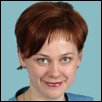
Paula Lehtomaki - Finnish foreign trade and development minister
Question: What’s been the main focus of your visit?
Paula Lehtomaki: I've met my counterparts here: Hilary Benn, Denis MacShane and Mike O’Brien.
One purpose was to discuss the things that we have in common: bilateral things and European Union affairs. The other purpose was a kind of fact-finding trip. I was extremely interested in finding out the attitudes and thinking behind the British position to things like the European Union. On central European reform we discussed quite openly the current situation. I have net NGOs and civil servants from the different ministries. It’s been extremely useful.
Question: The EU constitution talks have stalled because of the differences between several countries. How do you see the way forward, given Finland started the process?
Paula Lehtomaki: We are going to hear the Irish presidency’s assessment at the summit in March and we really strongly support the idea that we should get back to work as soon as possible. So on the basis of the Irish assessment we can see what kind of position we really have. But it is extremely important to begin working as soon as possible for the reason that the longer it takes from last autumn the more we forget about what we’ve agreed already with a strong consensus.
Of course we are capable of living without the constitutional treaty at least for a while but there is a strong emphasis that we should get to the finalising point on the work that we began on the convention more than a year ago. So it’s extremely important that we get back to work.
Question: In Britain there’s been a big debate about whether there should be a referendum on the constitution. What are Finland’s plans?
Paula Lehtomaki: In the autumn we have a public debate about the constitution. We don’t have any rule on the constitution that we should organise a referendum. It is possible to organise an advisory referendum but at least so far the government has taken the position that this is a normal parliamentary thing.
When we reach the place where we are finalising the constitution we can then reassess the situation. And, of course, parliament has its say on this issue. We haven’t made any decisions.
Question: Your position is quite unique because you cover both trade and international development issues. Are you worried about a conflict of interests?
Paula Lehtomaki: I’m not so worried about it but, of course, there is some internal conflict. But in most cases these are really positively linked. For example trade. We are now having the WTO negotiation round on the Doha development agenda. It’s mostly about development issues and how trade can serve development.
Concerning development co-operation we recognise the crucial importance of access to world trade that creates development. Mostly these issues are quite positively linked and this broader approach is needed to achieve the Millennium Development Goals that the global community has community has committed itself to.
I have noticed during my visit to Britain that although these issues are in different ministerial portfolios, co-operation inside the administration is well organised and is really active. The policy making is actually very coherent.
This is the first time in the Finish government that we have combined these roles together. We have some hard work to do at home to get the organisations to work well together.
Trade is going one way and development is going the other. To bring these things together is not going to happen immediately.
Question: With things like the WTO round, everybody talks about helping development countries but when it comes to make concessions or reforms, self-interest takes over. Isn’t it going to be impossible to meet those goals?
Paula Lehtomaki: The thing with the Millennium Development Goals is that we have been able to agree on the global level what those goals are. That’s a beginning. You must be able to know where you are going to be able to really achieve something. It’s a totally different thing about how we get there. There will be a mid-term review next year and we are going to see we are actually quite far away from achieving these goals. The thing is that in today’s world we are so inter-related with other countries it is more difficult to say ‘what is my self-interest’. To look at things in a really constrained way is not bringing the best result.
In a globalised world everything affects everything. If we do not get better development we are going to suffer ourselves too. If we do not solve these global problems it will affect everybody not just somebody.
These concrete issues, like agriculture, are quite difficult. And they are difficult for Finland too - we have natural circumstances that are not so good for agriculture.
But the EU has taken some substantial steps forward. The CAP reform last summer was a really big step forward in the right direction. Of course in time we need to take further steps to make trade work more fairly.
Question: Tony Blair has announced a commission to look at the problems of Africa. Lots of people look at the problems of Africa, isn’t it time people actually did something about problems like the spread of Aids?
Paula Lehtomaki: Mr Blair has been active on the issue of Aids and HIV. The problem with Africa is that it is really complicated. There are lots of wars and other crisis situations. If we cannot create peace and stability, we cannot create development either. That’s a precondition.
It’s not true that we haven’t done anything. Definitely, the industrialised world has put in lots of money over the years but the results are not good enough. So we need to work even harder. Here, of course, the responsibility lies with the Africans themselves because we are trying to support the strategies that the countries are doing for themselves. If they do not do the real work then we cannot help them from outside. We are partners who assist them to make real the strategies that they are setting for themselves.
The problem in the international donor community is the fact that we have a tendency to run in the direction of the spotlights. If the amount of development money that we are putting in does not increase then it means somebody gets more and somebody else gets less.
We should increase our resources but it’s not a question of money alone. It’s a question of measures, harmonising the response to countries and political will.
Question: You’re a young politician that’s achieved success very quickly. Most young people here don’t even bother to vote. What was it that got you into politics and how do we get young people interested in politics?
Paula Lehtomaki: It’s also a problem in Finland. We tend to think that youngsters are not so interested in politics but they are more engaged than we realise. They have lots of knowledge about what’s going on.
My background is that my father was involved in municipal politics at a regional level. So I learned from home the atmosphere and the attitude that participating in politics is okay and it’s a good and important thing.
Some people learn from home that politicians are bad boys and girls and that they do no good for anybody. I think it’s a big thing to learn from home that it’s important work.
It’s important that youngsters can see that politicians in reality are normal - or at least quite normal - human beings. Flesh and blood.
I try to make visits to schools as much as possible because from the media you can get quite a black and white picture of politics because only some issues get big coverage. It’s different to what parliamentarians actually do and discuss. Interaction is really important.
In 1990 there were elections at the municipal level and it was suggested to me that I should participate. I thought it was interesting and then one thing led to another. In 1999 there were the parliamentary elections, I and my team mate were elected and then again in summer 2002 I was elected vice-chairman of our party. And then came the appointment. So actually, as in life, one thing leads to another. In politics you should not have strict plans because plans are at stake every election. I’m only planning my life to the next election.
Question: We’ve had a report here on obesity and it highlights the achievements of Finland. Are there lessons that Britain can learn?
Paula Lehtomaki: I’m afraid it’s still a problem. We have had quite big information campaigns particularly in the eastern parts of the country where we had the highest levels of heart disease.
We have tried to inform and get the right information to the people but I think we still have some challenges. But it’s a common problem in all the western countries.
Question: Relations with Russia are a key issue at the moment. Could Tony Blair play a useful role given his good relations with President Putin?
Paula Lehtomaki: We need every effort to build good relations. We are facing some challenges right now. Right now we have an agreement that needs to be ratified. For Britain, Finland and all the other EU countries it’s extremely important that this situation is resolved in a good way. So all the good relations, political and personal, that exist are needed.
|