|
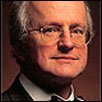
Professor David Gordon - chairman of the Council of Heads of Medical Schools
Professor David Gordon
Question: What is the Council of Heads of Medical Schools?
Professor David Gordon:The Council of Heads of Medical Schools is comprised of the deans of every medical school or medical faculty in the United Kingdom.
It is the authoritative voice of medical schools, not only in their dealings with the funding agencies, the Government, in particular the Department for Education and Skills, and the Department of Health, but also in their collective interaction with other national bodies and the media.
It works with its all its partners, with the expectation of continuing improvement in medical education and research, for the benefit of everyone.
Question:What will be the effect of the government's higher education funding proposals on CHMS?
Professor David Gordon:I think we need to break that down into a number of areas. Funding comes primarily from the Department for Education and Skills but we are also affected by policy decisions in the Department of Health.
As far as the white paper (and the annual funding proposals, issued at about the same time) are concerned, the main problem for us is that they have taken a top slice from teaching funds and applied this to promote widening participation but have done so in such a way that medical schools, notwithstanding their very vigorous efforts in widening participation, may actually receive little or none of the widening participation fund that has been distributed.
So we are, all of us, facing a reduction in resources in real terms in the money that we get for the teaching of our students, at a time when medical education and numbers of medical students are expanding rapidly - and it is not getting cheaper to educate medical students.
I have to say that we have had very helpful discussions on this point both with officials from the DfES and with officials from the Higher Education Funding Council.
We feel that they understand the points that we have made and they have adopted a very positive tone.
Question: Have you found that the issue of student debt is deterring students from applying to medical school?
Professor David Gordon:Well, we haven't seen any evidence that intending medical students are actually being inhibited from applying.
You have to remember that a few years ago, Britain was way behind other countries in the number of students admitted to medical school. The norm in most of western and indeed eastern Europe was to admit, very broadly, a hundred medical students each year for each million of the population.
So in Finland, where there is a population of 5 and a half million, there would be about 550 new medical students in Finnish medical schools every year.
Now up to a very few years ago in England, rather than admitting a hundred new students, it was more like between 60 or 70. (The situation in Scotland was better.) So we were producing about two thirds of the number of new doctors that we needed and it is hardly therefore a surprise that the health system is very short of medical manpower.
The government's 60 per cent expansion of medical student numbers has actually now brought us up to the European norm in England. But this increase in places for medical students has been exceeded by the increase in numbers of school leavers and others applying to do medicine.
Therefore, the demand for places is actually going up, despite the increased number of places.
We monitor the situation in terms of numbers very closely but at the moment we are not pessimistic. And of course the quality and motivation of new entrants to medical school is as high as ever: our new students each year are truly first-rate.
Question: How have resources, such as buildings and the physical infrastructure, coped with this rise in students?
Professor David Gordon:Well it has been a pretty frenetic few years. Medical schools generally have had to work quite hard to maintain and develop their resources, especially in terms of staff and buildings.
We've also had to work very hard to keep up to date with the placements for students within the NHS.
In the process of allocating additional medical student places, the joint implementation group at the Department for Education and Skills and the Department of Health looked not only at the academic element but they also look at the implications for the NHS and the nature of the clinical placements that the new students would have.
This I think has been very good for the supply of doctors nationally. For example, we have new medical schools in Devon and Cornwall, and in East Anglia, which were two of the areas in the country less well provided with newly trained doctors.
We are continuing to look nation-wide at those areas which are relatively under-supplied for doctors to make sure the output of medical schools is appropriate.
Question: How important is medical research to the standards of teaching?
Professor David Gordon:Research in relation to teaching is extremely important. The General Medical Council requires that medical students are educated in an ethos where research is important.
I think it is very important for every single medical student to be exposed to research. He or she will still be practising maybe 40 or 50 years later and will still be reading about the latest research reports in the journals and therefore needs to understand from the outset why new knowledge is important and how to evaluate new knowledge.
We are strongly with the GMC on the need to educate students in a research based atmosphere.
There is a debate about the extent to which good teaching is related to a place that does good research.
In the white paper the government did suggest that the linkage was not an important one. The best way to deal with this argument is to look at The Royal Society's response to the white paper which produced evidence to the contrary. They suggest that good quality education is helped by being conducted in an atmosphere of good quality research. We also believe very strongly that high quality research has an impact on the quality of patient care which in turn has an impact on the quality of teaching.
Question: Do doctors, particularly junior doctors, have enough time in the day to stay abreast of new research?
Professor David Gordon:It is one of the duties of a doctor to keep his or her professional knowledge and skills up to date and therefore to it is essential, not an option, to stay up to date.
It is very important we put junior doctors in hospitals where they have an opportunity to study and learn new things. Indeed, our post-graduate deans would not send graduates into an environment where the opportunities for learning and continuing education were inadequate.
Question: Turning to the NHS consultant contract, what are the implications for the academic workforce?
Professor David Gordon:The consultant contract is very important. You can't have medical research without clinical researchers, or new doctors without having the people to teach them. And in order to teach you have to have academic staff.
It is not generally recognised that about 10 per cent of the NHS consultant workforce are actually university staff, who not only provide clinical care but also do the teaching and the research.
So it is very important that those people have comparable terms, conditions and remuneration to their NHS colleagues. You can appreciate the instability that would enter the system if NHS staff were automatically paid more or less than their academic counterparts.
The government has recognised this for many years and the education secretary has re-emphasised the commitment that there must be from the funding council for clinical academic medical and dental staff to be paid rates that are comparable to those available in the health service.
The difficulty over the proposed consultant contracts has led to a great deal of uncertainty and to the risk of local arrangements.
I think however, that matters are beginning to improve. In Scotland there has been a very effective consultation with proposals to link together university and health staff. This has worked very well between the Scottish Executive Health Department, the profession, and universities in Scotland.
We were concerned about matters in England. The latest news from the Department of Health is however encouraging. It appears that there is a clear understanding of the need to move ahead on the issue of consultant contracts and also to make sure that this very important group - the clinical academics - is treated equitably.
Question: So what would be your message to John Reid on the issue of consultant contracts?
Professor David Gordon:Our message would be to be sure to consult widely in the academic community and to ensure that the outcome treats academics fairly with their NHS colleagues, recognising the clinical commitments that they have in addition to their teaching and research jobs. It is important that the universities as the employers of clinical academics are involved formally in the negotiations.
Question:There was a survey recently which indicated that a lot of NHS doctors were retiring early. What conclusions have you drawn from this?
Professor David Gordon:These are stories which reappear frequently. I think its very important for the Department of Health to look closely at these studies and think through what they really mean.
On the whole, doctors enjoy what they do. It is one of the world's most interesting jobs, and in those areas where disillusion occurs, not infrequently it comes in because of matters extraneous to the actual business of providing clinical care.
I think it is quite possible that the negative result when they first balloted about the consultant contract may have emerged more because of a general feeling of protest - more about the way the NHS is being run - rather than about the specifics of the draft contract itself. It's very easy in those circumstances for people to make a protest.
If there is one area which creates disillusion it's the sensation of micro-management from above in some parts of the health service, together with the torrent of white papers, green papers, directives, ministerial statements and changes in policy coming from the Department of Health.
I think, as in many walks of life, it may be better when considering how to develop the health service, to move a little more cautiously, with a little bit less legislation and fewer rapid changes, and for the proposals to be better thought through.
It is the nature of the present government to want to make a lot of change. A survey in the British Medical Journal asked doctors what was their least favourite word, and the second on the list was 'modernisation'.
Now, if I was a politician I would take note of this and drop that word from the jargon.
There is another element. Politicians want to be seen to be making a difference - that's why we elect them. But however fast and hard we all work there are some things in medicine that cannot be changed overnight.
We can't create new doctors overnight. Once you've agreed that there will be more doctors, you've got to create the spaces in new medical schools, recruit the new medical students, take them through their studies, and then once they are qualified, they need post-graduate training to get them to the stage where they are fit to practise independently - this all takes time.
|