|
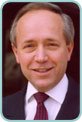
Michael Snyder - chairman of policy and resources committee at the Corporation of London
Michael Snyder
Question: As the new chairman of the Policy and Resources Committee at the Corporation of London, are there any specific policy areas you will be focussing on?
Michael Snyder: Three main areas really: firstly the infrastructure - for example vital issues such as transport and planning. The infrastructure also includes getting the new voting reforms implemented in the City, which is extremely important. The new system, which will be used for the first time in March 2004, will broaden the electorate and ensure that it more accurately reflects the composition of the modern business City.
My second priority is to work with City businesses and to influence Whitehall, Westminster and most importantly Brussels. It is essential that constructive and regular dialogue between the City and decision-makers is maintained in a variety of arenas on a number of salient issues.
Outreach to the boroughs which neighbour the Square Mile will also be important, and this is my third priority. There are areas where regeneration is needed and we are already working here. I myself have been a long-standing member of the Thames Gateway London Partnership and I was involved in the formation of Gateway to London, which is the inward investment arm. I was also chairman of the London-Lea Valley Partnership which worked towards inward investment in the Lea Valley and in Tower Hamlets.
We're also continuing to work on the 'Heart of the City' initiative which seeks to encourage involvement by City firms in the community. This is a combined initiative of the lord mayor, the governor of the Bank of England and the chairman of the Financial Services Authority. It's about encouraging the businesses which are already active in this field to do more and about encouraging other businesses to also take part. This is an example of the City being a good citizen for London.
Another example of good citizenship is how the Corporation of London, through the Bridge House Estates Trust Fund, is now the largest grant-giving body for London-only causes. The Corporation is also the third largest contributor to the Arts in the country and its Barbican Centre helps maintain London's world-class reputation for culture. That's a facility that we provide but that all of London, the UK and indeed the world can enjoy.
Question: What are you going to be doing to make sure that London remains as a global financial centre?
Michael Snyder: The markets and the volume of trading that we have in the Square Mile demonstrate that we are the world's leading international financial and business centre. We also have more banks in the Square Mile than in New York and more banks in the Square Mile than they have in Tokyo.But to keep that place we must make sure that we have the facilities - that's the premises that world-class businesses need in world-class cities. This means we've got to get the planning right and we're working to increase the capacity of big buildings. But we also need to make sure that as the needs of businesses change, so too do the services we provide: it's a process of constant evolution.
We're also concerned about security. This is a prime concern amongst our constituents - the businesses and residents here. We are therefore extending the security zone to the west and putting more policemen on the streets to increase their presence.
We are also influencing where we can on transport. We are working very hard to secure improvements to the existing infrastructure and to get vital new projects such as Crossrail in place to link Heathrow with the City and Stratford. By doing that you would get much-needed regeneration in the boroughs by linking Eurostar with Crossrail and the Docklands Light Railway. This would bring a substantial impulse to regeneration without the Government needing to do much more in the way of further schemes. The private sector would provide the fundamentals.
It's clear that we also need extra river crossings - this is on the agenda of Thames Gateway and we totally support that.
In terms of congestion charging, we are interested to see that it is working so well and there is no reason why it shouldn't. There will of course be hiccups and no doubt the system will have to be amended in certain ways, but one of the things we really do want to see is the zone extended to the east to encompass Tower Bridge. This is currently outside the zone and we're concerned about the wear and tear on the bridge.
We are always looking to make improvements for City workers: for example we recently created another 600 motorbike and scooter spaces because of the extra number of City workers using this method of transport - and we staged free tutorials for safer scooter riding. (By the way, those classes took place in Guildhall yard on the very site of the Roman amphitheatre, which, given the agility needed by modern scooter riders, somehow seemed appropriate!).All these areas are very important and will help London to remain as a world-class city.
Question: There was a raft of press stories late last year about lots of traders losing their jobs and firms having to make cutbacks. What would you like the government do to help reverse this trend?
Michael Snyder: Well I think we have to accept that we are in a world market. We are the leading world centre so we have to accept that these markets will dictate the tone. The stock exchange is doing well in terms of trading and the currency transactions are holding up reasonably well.
Having said that, clearly the corporate finance area and floatations and so on are considerably reduced. This just happens I'm afraid and I'm not sure that the government could or should do anything about it. Clearly managing the economy properly is really important. We have low interest rates and the value of the pound is down now against the euro which may well help with the exports.
Whilst I think it's very incumbent on the government and the Bank of England to manage the economy, I don't think there is anything that the government could or should do in terms of the international markets.
Question: You mentioned Crossrail earlier. It's been mentioned as a possible victim of SRA cuts. How will you go about persuading the government of its importance?
Well it's crucial for the regeneration reasons I mentioned earlier. But it's also absolutely vital in terms of making it easier to travel in and out of the city and particularly to link the City to one of the world's busiest airports - Heathrow. Improving London's transport infrastructure is vital if we are to continue to attract new international businesses and retain those that are already here.
Transport is constantly mentioned as an issue by all businesses when we go on our after-care visits. We hear this all the time - it is a real issue for people who work here. We are trying to encourage the government to make a decision, to take the lead. We must make sure that Crossrail in some form at least is given approval so it can be progressed. After all, we've been waiting for a long time and frankly, it won't be ready for another nine or ten years even if they give the go-ahead today - so they need to get on with it.
Question: The City must have been badly affected by the Central Line closure. What's your view on that?
Michael Snyder: Obviously every transport system has its risks and these risks need to be balanced against the needs of the people who use it. The inconvenience and loss of economic activity as a result of it not operating has to be remembered.
So while I'm not suggesting that anybody takes risk with anybody else's life, I do feel it is quite important that they do have some balance in what they're doing. I do actually believe that the government pushed very hard to get this done as quickly as possible - but it was very distressing for a lot of people who work in the City.
Question: Are you in favour of greater airport capacity in the south east?
Michael Snyder: We are, broadly. We think that Heathrow needs to maintain itself as the primary hub because it's no good coming into Heathrow and then having to fly out of Gatwick or Stansted - this is not a particularly attractive proposition. I think the primary interchange capability needs to be at Heathrow and we think that that hub needs to be expanded.
We do support expansion in the south east because we have got to equip London with the best possible transport links. It has to be done against the backdrop of minimising the effect on people's lives however - perhaps more can be done on that, maybe on operational methods rather than restricting capacity.
Question: You were talking about Brussels earlier, how much is the City affected by EU regulation?
Considerably. There is a Financial Services Action Plan of 42 points. We've got to make sure that the markets and the operators within those markets are able to come to reasonable conclusions for themselves rather than over-regulating.
Clearly if self regulation does not work, then it's always open to governments to legislate. But we do feel that participators in markets need to be listened to and need to be understood. They, after all, are the experts and we've got to make sure that those sort of issues are understood in Brussels and that takes quite a considerable amount of work.
Furthermore we are primarily the only wholesale markets in Europe and therefore getting the distinction is also quite important.
Question: How receptive have you found Brussels to be in terms of accepting your arguments? Can you compare it to Westminster?
Michael Snyder: Well I think that the government appreciates our involvement in this area. There isn't just one City player - there are a variety of different markets and a variety of different views. I think they appreciate our role as the 'business authority for the business district' and I believe that the Bank of England appreciates our role as well.
So in terms of influencing the UK government I think we work quite well and closely together and I would hope to do that whatever the flavour of government. I believe it is essential that avenues of communication between the City and Westminster are kept open. Therefore, the creation of the Associate Parliamentary Group on Wholesale Financial Markets and Services, is a very positive development.
In terms of Europe and how much they welcome our involvement, I suppose that once one can get them to understand the issues, from the genuinely different perspective of the wholesale markets, then there tends to be more realisation and more understanding. I feel that we have to work very hard and we have to work with other countries and other markets in Europe to try and ensure that it isn't just the UK that is understanding these matters but other countries as well. By working together I think that we will have more effect. My predecessor Judith Mayhew spent a considerable amount of time on this.
Question: What effect do you think the war in Iraq has had on the City?
Michael Snyder: Uncertainty naturally unsettles markets because people never know how long a war will last. So I would personally like to see a swift and lasting resolution to the issue and then I would hope that markets strengthen.
It's important to remember that global markets contribute to stability and good, well-functioning international markets are an important, if often overlooked, part of international relations. The City of London has always recognised this. The tragedy of 9/11 was awful in its human cost. But while we would not want to be complacent, it is also true that the world's international financial system did not collapse - and that was in large part due to the professionals across all parts of the global financial community. We saw how the City of London acted as the back-up for New York and it's clear that the sister cities of world finance provide invaluable support to each other.
One thing about the City of London is that we do welcome people from all over the world to work here. Most people feel very comfortable living and working in London. As a result this breaks down barriers between nations and as a community we work well together. It is fitting that one of our churches in Bishopsgate that had been bombed is now a centre for peace and reconciliation.
Question: What do you think the effect on London's tourism trade will be?
Michael Snyder: Well it already has had an effect on tourism. I don't think the Government can do anything to reverse it. Until the uncertainty is resolved, we are going to be as we are. The occupancy of hotels in London is obviously down which is very regrettable.
I think in terms of the City, what we can do is try and make the place as secure as possible for tourists and businesses. We are doing this by extending the security zone and putting more police on the streets and generally having increased awareness. We also have a pager system which notifies people if they should go out in the street or stay in the office and that sort of thing.
So I believe that while every one can do more and that you can never, ever have a foolproof system or set of procedures against terrorism, we are really working very hard to make it as safe as possible.
Question: What is your view on tall buildings in London? Will London one day have a skyline similar to Manhattan's?
Michael Snyder: Well the City has got to have the right type of premises - world class premises for world class businesses - and this is of fundamental importance to us. We don't believe in having tall buildings here, there and everywhere. They need to be in suitable locations. In the City we have made it clear where we think they ought to be and that's in a relatively compact zone towards the eastern side where they do not to interfere with the views of Tower Bridge, St Paul's Cathedral and the Tower of London.
I think we do need these buildings and that they should be clustered and for a particular purpose. We need tall buildings for businesses and we have to make them available in the Square Mile - indeed Canary Wharf is doing the same. There's no competition with Canary Wharf - there is room enough for all of us.
But it's important to remember we don't just do sky scrapers - we do ground-scrapers as well. Look at Broadgate - I think that's one of the best developments that I've seen for a very long time. This is a very big-scale building but I think it fits very well into the city scene.
|