|
Blair plays down 'damp squib' war advice
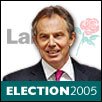 |
| PM: "No smoking gun" |
Tony Blair has played down the release of the attorney general's advice on Iraq, dismissing it as a "damp squib".
The prime minister had previously insisted it would break long-standing precedents to publish the confidential advice.
The leaked document revealed the attorney general's advice on the war was a "damp squib" rather than a "smoking gun", Blair also said.
At the press conference in London, the prime minister also received strong backing for his position from Gordon Brown and Patricia Hewitt.
The renewed questioning followed the publication of a leaked document which appeared to show that Lord Goldsmith was initially more cautious about the legal justification for war than his final statement to Cabinet and parliament suggested.
The launch of Labour's business manifesto was overshadowed by the continuing row over the controversial decision to use military force against Saddam Hussein.
Sent on March 7, 2003 from Lord Goldsmith to the prime minister, the document says that relying on the first United Nations security council resolution, 1441, would need "strong factual grounds".
"I remain of the opinion that the safest legal course would be to secure the adoption of a further resolution to authorise the use of force," it adds.
Damp squib
But both Lord Goldsmith and the prime minister have said the document does not show that the war was illegal.
"This so-called smoking gun has turned out to be a damp squid because he did advise it was lawful to proceed," Blair said.
"And in the end, once he advised that, the question then before everybody was political.
"Did we think we should proceed not withstanding the fact we couldn't get a second UN resolution.
"And I take the view then, I take it now, that it was better for this country's security and the security of the world to remove Saddam rather than have him in power."
Cabinet support
Seeking to close down the argument, senior members of the Cabinet also gave their support to the prime minister.
Asked if he would have handled things in the same way as Blair, the chancellor said: "Yes."
"The assumption this morning on the radio and in some of the newspapers is that the Cabinet only had one piece of paper before it and only had one discussion. This is completely untrue," Brown added.
"The Cabinet had full discussions on numerous occasions with all members of the Cabinet involved in that discussion, on all the issues relating to Iraq."
The chancellor said the attorney general answered Cabinet questions on the legality of the war.
"This was the most difficult decision a Cabinet could make," added Brown.
"But the decision was made in an honest, principled and clear way with all the evidence before us and with the full facility for discussion.
"And I can say this; I not only trust Tony Blair but I respect Tony Blair for the way he went about that decision involving all members of the Cabinet.
"So once and for all the myth that there was no Cabinet involvement in this discussion should be set aside."
And the trade secretary said that her background in human rights had meant she was concerned about the issue of international law.
Hewitt she said the issue was "the judgement that we had to arrive at as to whether going in to Iraq was the right thing to do", rather than the legality issue which the attorney general has answered questions on.
Leaked advice
The leaked document said that a second United Nations security council resolution authorising the war was the "safest legal course".
"I remain of the opinion that the safest legal course would be to secure the adoption of a further resolution to authorise the use of force," it adds.
"I accept that a reasonable case can be made that resolution 1441 is capable in principle of reviving the authorisation in 678 without a further resolution.
"However, the argument that resolution 1441 alone has revived the authorisation to use force in resolution 678 will only be sustainable if there are strong factual grounds for concluding that Iraq has failed to take the final opportunity [to disarm].
"In other words, we would need to be able to demonstrate hard evidence of non-compliance and non-cooperation."
Only 10 days after expressing caution about the case for war, Lord Goldsmith briefed the Cabinet and released a statement to parliament saying that the military action would be legal.
Reacting to the leak of his advice, the attorney general said that "far from standing up the case of the government's critics, [it] stands up the case the government has been making all along".
"Contrary to the allegations that have persistently been made, it does not say the war was unlawful but confirms the conclusion I reached was that a sufficient basis for the use of force was established without a second resolution," he said.
"Between March 7 and March 17, 2003, I asked for and received confirmation of the breach of UN security council resolutions.
"It was also necessary to continue my deliberations as the military and civil service needed me to express a clear and simple view whether military action would be lawful or not.
"The answer to the question 'was it lawful, yes or no', was, in my judgement, yes.
"And I said so to government, to the military, to Cabinet and publicly."
|


