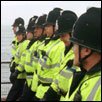
The Liberal Democrats have pledged to put 10,000 extra police officers on the streets, topping the government's promise to improve neighbourhood policing.
Mark Oaten, the Lib Dem home affairs spokesman, said the extra officers would be funded by scrapping the government's identity cards scheme.
His comments came as the government set out how it will deliver its pledge to provide every community in the country with its own dedicated neighbourhood policing team by 2008.
Government Response: Home Office
Charles Clarke, home secretary, said: "Neighbourhood policing is not a soft option - it is a hard edged strategy that recognises the importance of visible, accessible, responsive and intelligence-led policing to combat all crime, from nuisance neighbours to drug dealers.
"The government and the police service are absolutely committed to delivering effective neighbourhood policing. We have put the resources in place - we have record numbers of police officers supported by community support officers, and we are cutting paperwork to get officers back on the streets where they belong.
"But it must be a partnership - only by working hand in hand with local communities can we ensure that the police do not just provide a service to the community, but are a respected and integral part of it.
"Neighbourhood policing is about moving from policing by consent to policing with co-operation - actively engaging local people, winning their hearts and minds and responding to their needs and concerns. I believe that people do want to play a more active role in how their communities are policed and that involvement is crucial to cutting crime and making neighbourhoods safer."
Party Response: Liberal Democrat
Mark Oaten, Liberal Democrat home affairs spokesman, said: "Highly visible community policing is a top priority for the Liberal Democrats. The government’s proposals build on some excellent local projects, but they only go so far.
"We would fund 10,000 extra police officers over and above the government’s commitment by scrapping the unnecessary and illiberal identity cards scheme. We are also committed to delivering on the government’s pledge for 20,000 additional community support officers.
"It is shocking that the government admits that 12,000 officers are currently tied up with backroom bureaucracy. We would cut that red tape and enable police to stay on patrol for longer by using the latest technology."
Stakeholder Response: Association of Chief Police Officers
Matt Baggot, ACPO lead on neighbourhood policing and Chief Constable of Leicestershire Constabulary, said: "Rolling out neighbourhood policing across the service is a priority and I welcome the commitment and support of the government.
"Getting the right numbers and the right people into the right places is crucial for providing safer communities and instilling public trust and confidence in policing.
"Those teams will be getting to know their communities and vice versa, and we are confident that by working along side the public, we can bring more offenders to justice.
"A professional police service, modern, well-equipped, visible and accessible, delivering what the public wants, is central to tackling crime and the fear of crime. Many police forces are already extending neighbourhood policing, and where partnerships are operating effectively with local authorities and other agencies, a real difference is being made.
"The funding for additional community support officers to work as part of neighbourhood teams where appropriate is welcome, although we do have concerns that forces will be stretched if they are required to match fund against the government’s commitment.
"Local chief constables need flexibility if they are to use the resources to the maximum effect. We certainly share, however, a desire for greater collaboration. And there must be the infrastructure, the IT and resources in place to support the roll out of neighbourhood policing.
"We do not underestimate the need to tackle organised crime or provide better call management if neighbourhoods are to be made safer. Community support officers will also need to be supervised and accommodated effectively.
"Freeing up police officers from unnecessary paperwork and administration is something we are all working towards, but we must be careful not to equate the reduction in bureaucracy with deployment back on the frontline. More effective than having simply greater numbers on the streets is having the right people and the right numbers deployed in the right places, where the public want it and where they need it."